
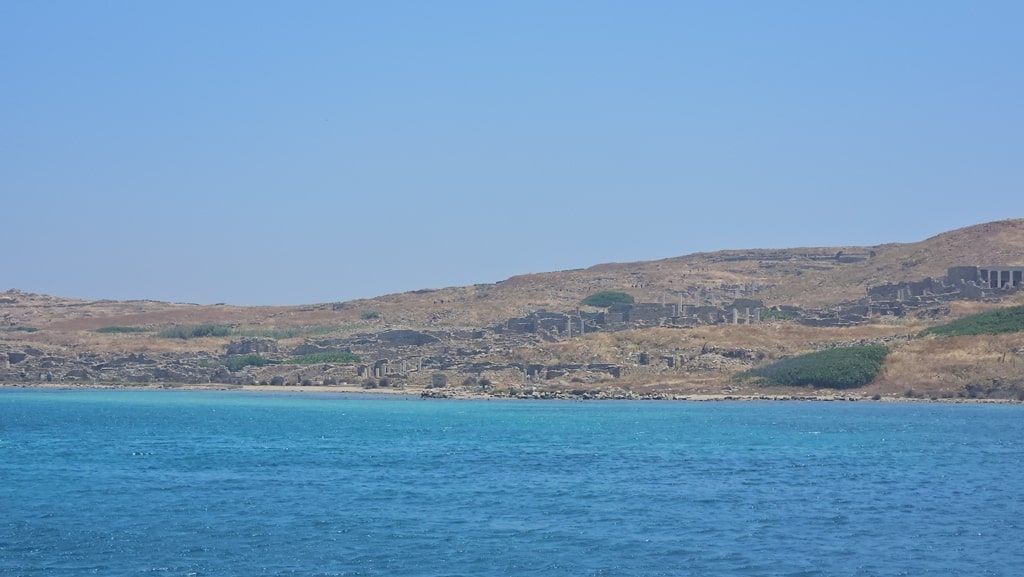
I’ve been to Delos several times, and it’s one of those places that truly deserves a spot on your Greece itinerary. Just a short boat ride from Mykonos, this small uninhabited island is one of the most important archaeological sites in Greece — and one of the most fascinating day trips you can take in the Cyclades.
Once a major religious center dedicated to Apollo and Artemis, Delos is now an open-air museum filled with ancient temples, mosaics, marble lions, and sea views everywhere you look. It’s compact enough to explore in a few hours, yet full of incredible detail; you’ll want to take your time wandering through the ruins.
In this guide, I’ll cover how to get to Delos, what to expect when you visit, and the most important things to see once you’re there — along with a few tips from my own visits over the years.
Want to see what visiting Delos is really like?
Watch my YouTube video for real footage of the archaeological site, practical tips, and everything you’ll see on the tour.
Disclosure: This post contains affiliate links. That means I may earn a small commission if you book through them — at no extra cost to you. Thank you for supporting Greece & Beyond and helping me keep this site going!
A Guide to Delos Island
How to Visit Delos
The island of Delos is protected as an archaeological site, and overnight stays are not allowed. The only way to visit is by organized boat — either independently or as part of a guided tour.
The easiest and most popular way to get there is from Mykonos, as it’s the closest island, only about 30–40 minutes by boat from the Old Port. Boats usually run daily from around 9:00 a.m. to 12:00 p.m., with returns in the early afternoon. You can book ferry tickets at the harbor or online in advance, but during summer it’s best to reserve ahead, as trips often sell out quickly.
If you prefer everything organized for you, join a guided Delos tour from Mykonos — it includes the round-trip ferry, a licensed guide, and sometimes your entrance ticket to the site (€20, or €10 reduced). It’s the easiest way to learn about the island’s history without worrying about logistics.
Check prices and availability for the Original Morning Delos Guided Tour from Mykonos
If you want to combine culture with relaxation, there’s also the Delos & Rhenia Islands Boat Trip, which includes a visit to the ruins of Delos plus swimming and BBQ lunch in the turquoise waters off Rhenia, one of my personal favorites on a warm summer day.
See details for the Delos & Rhenia Islands Boat Trip with lunch
You can also reach Delos on full-day cruises from nearby islands like Paros and Naxos, which combine stops in Delos and Mykonos — a great option if you’re based elsewhere in the Cyclades.
From Naxos: Delos and Mykonos Full-Day Boat Trip
The Mythology of Delos
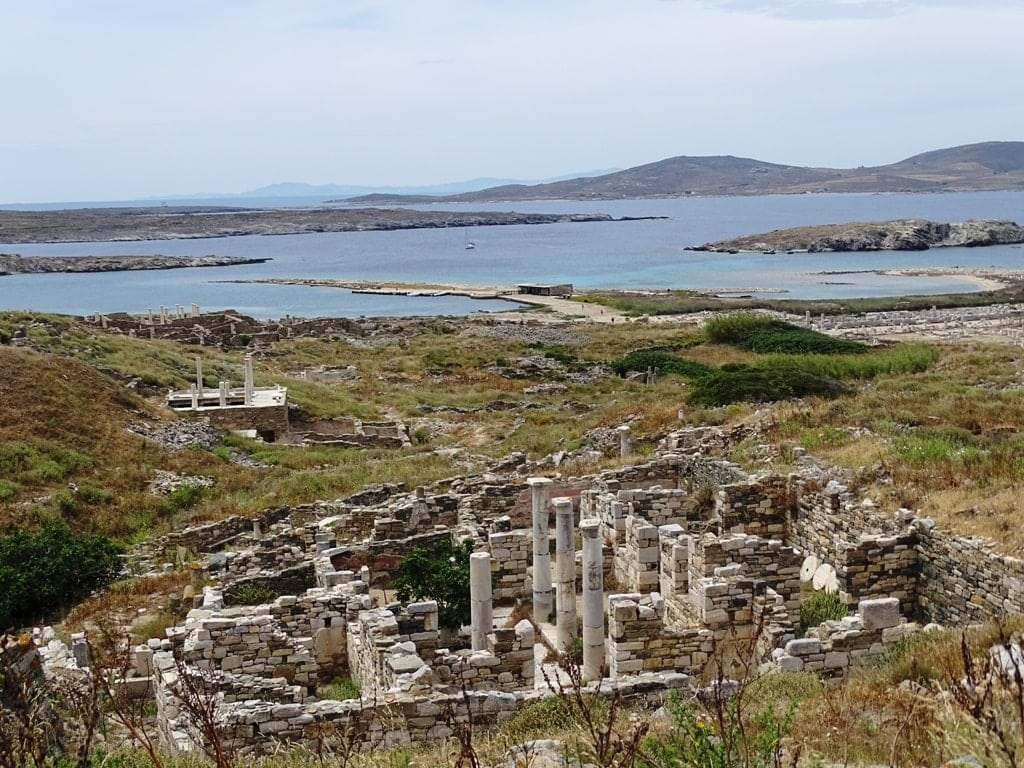
According to Greek mythology, Delos was once an invisible floating rock in the Aegean Sea. When Leto, the mother of Apollo and Artemis, was forbidden by Hera to give birth anywhere on solid ground, Zeus asked Poseidon to anchor the island so she could find refuge.
Leto gave birth to the divine twins under a palm tree, and the island was instantly filled with light, which is how it got its name Delos, meaning “the visible one.” From that moment, Delos became one of the most sacred places in ancient Greece, a sanctuary dedicated to Apollo, the god of light and music.
A Short History of Delos
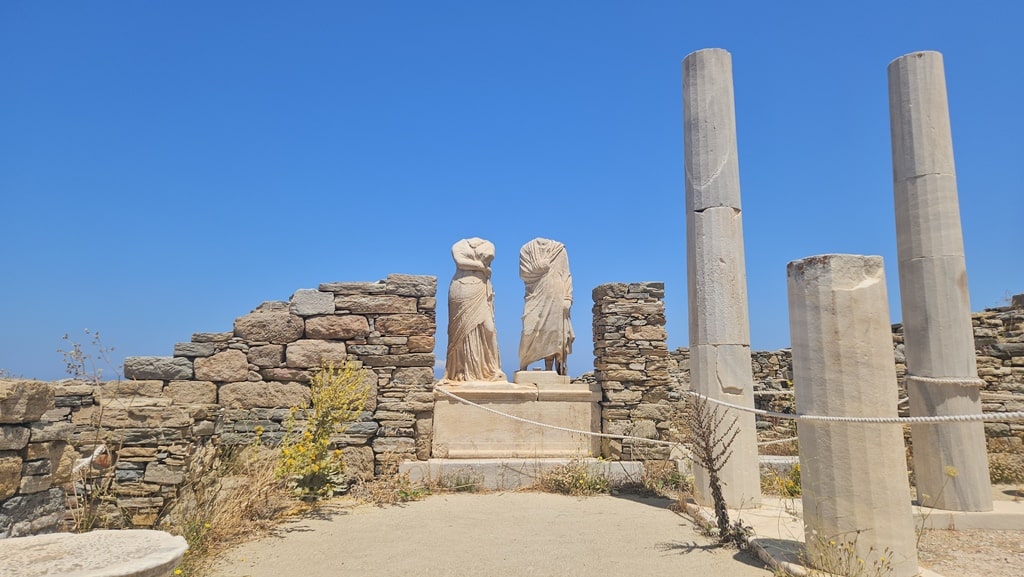
Delos has been inhabited since at least the 3rd millennium BC, but it became truly significant in the 9th century BC, when it developed into a major religious center dedicated to Apollo and Artemis.
In ancient times, the island was considered so sacred that no one was allowed to be born or die on Delos — all births and burials had to take place on nearby islands. This rule helped keep the island “pure” for worship and gave it a special, neutral status in trade and politics.
By the 5th century BC, Delos was at its peak. It became the headquarters of the Delian League, an alliance of Greek city-states led by Athens, and its harbor turned into one of the busiest trading centers in the Aegean.
Under Roman rule, Delos continued to thrive as a free port — with ships bringing goods and people from across the Mediterranean. But after attacks during the Mithridatic Wars (88–69 BC), the island’s prosperity declined, and by the early Middle Ages, it was gradually abandoned.
Things to See on Delos Island
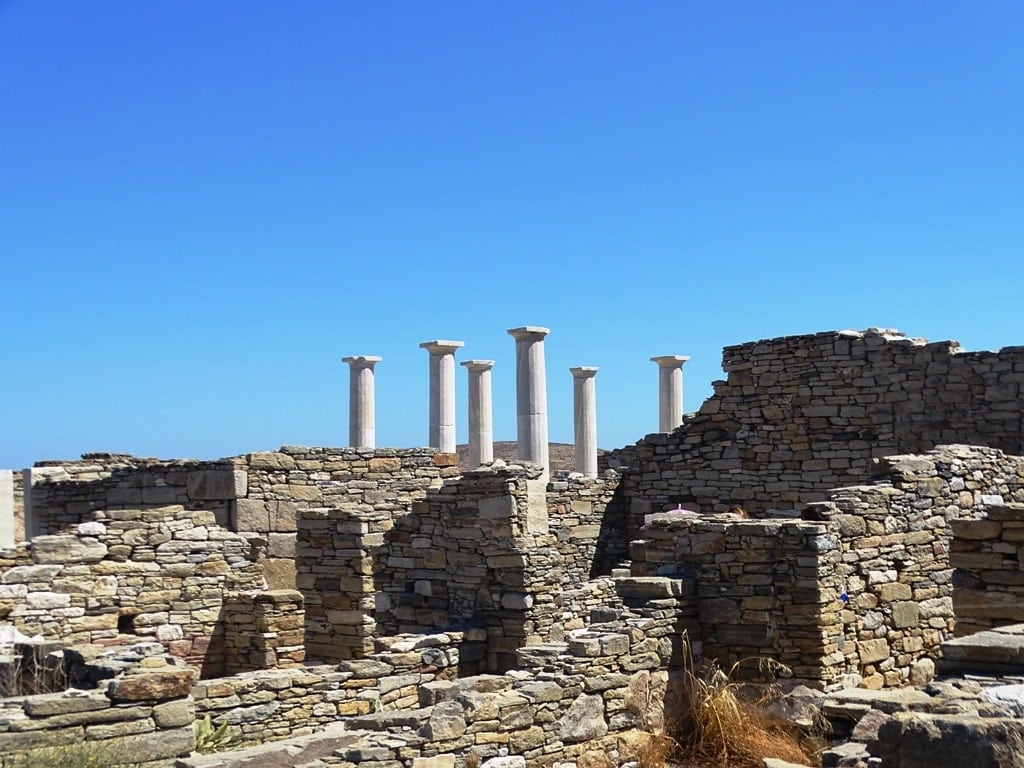
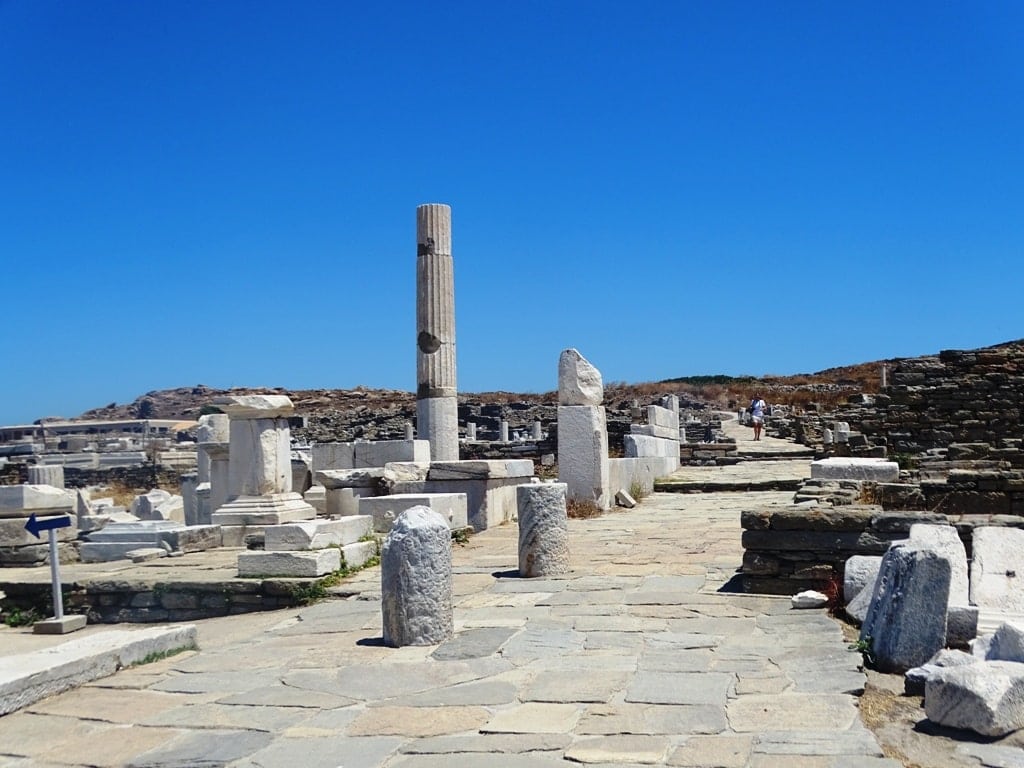
For such a small island, Delos has an incredible amount to see. It’s like walking through an open-air museum where every corner tells part of Greece’s story. Allow at least 2–3 hours to explore — more if you’re joining a guided tour or want to take your time photographing the details.
Here are some of the main highlights:
1. Sanctuary of Apollo
The heart of the site, where pilgrims once gathered to honor Apollo. You’ll see the remains of temples, altars, and votive offerings — all dedicated to the god of light and music.
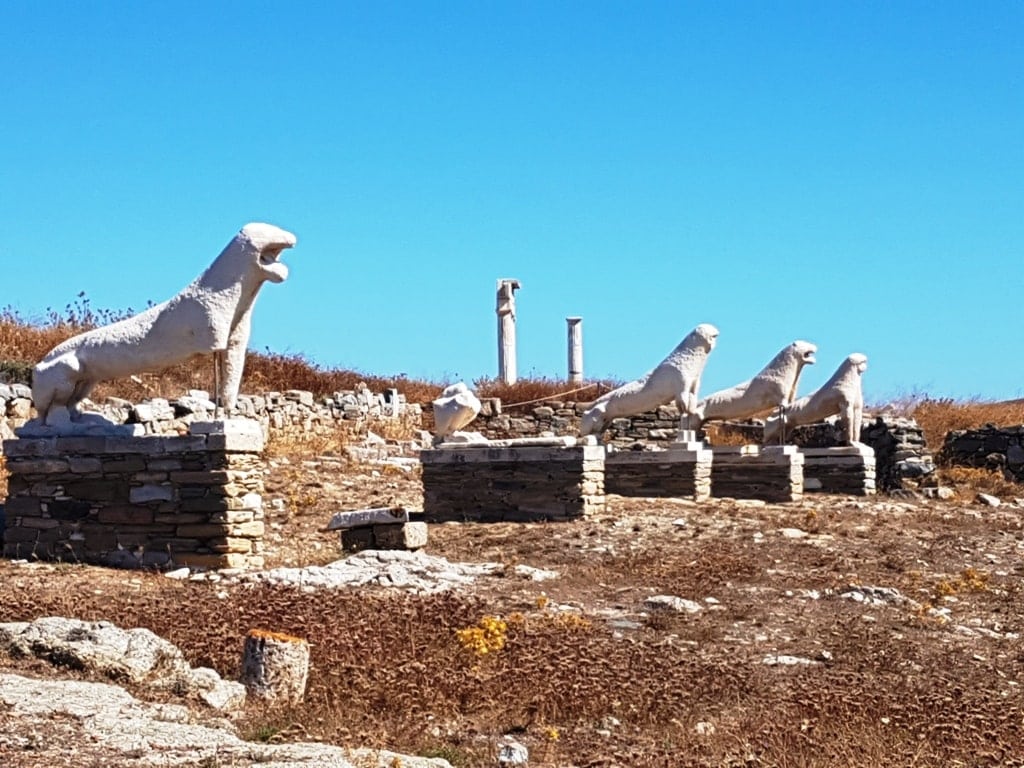
2. Avenue of the Lions
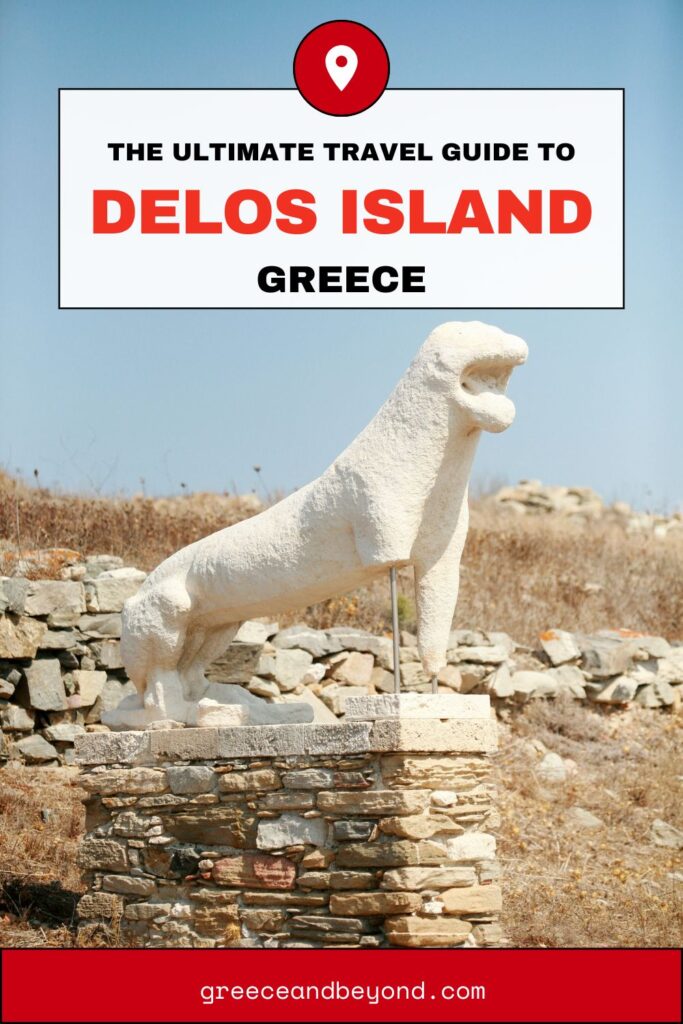
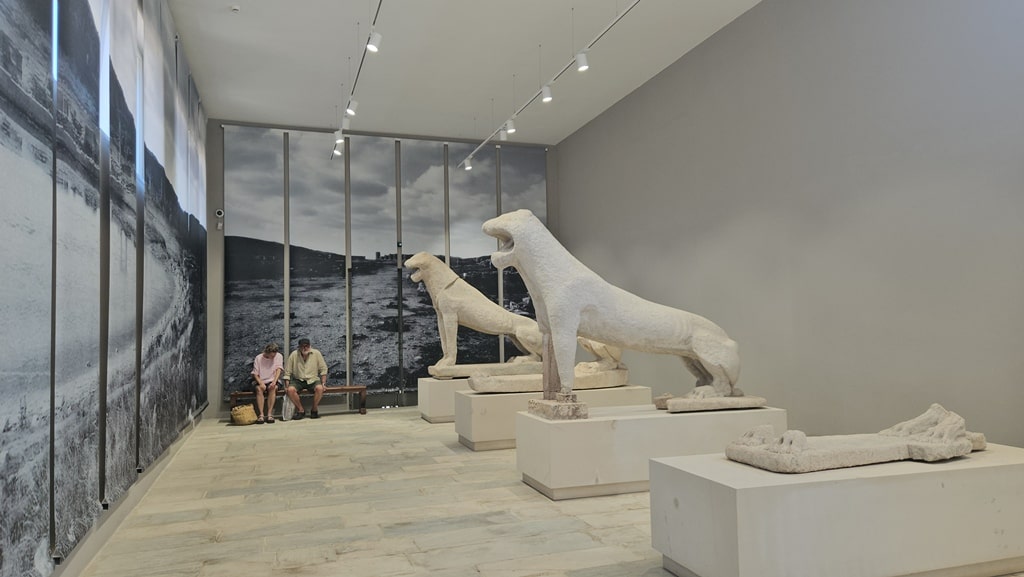
One of Delos’ most iconic sights. The marble lions were a gift from the people of Naxos in the 7th century BC, guarding the Sacred Lake where, according to myth, Leto gave birth to Apollo and Artemis.
3. Temple of Isis
Located on Mount Kynthos, this small sanctuary was dedicated to the Egyptian goddess Isis, reflecting the island’s cosmopolitan past. The short climb also rewards you with panoramic views over the Cyclades.
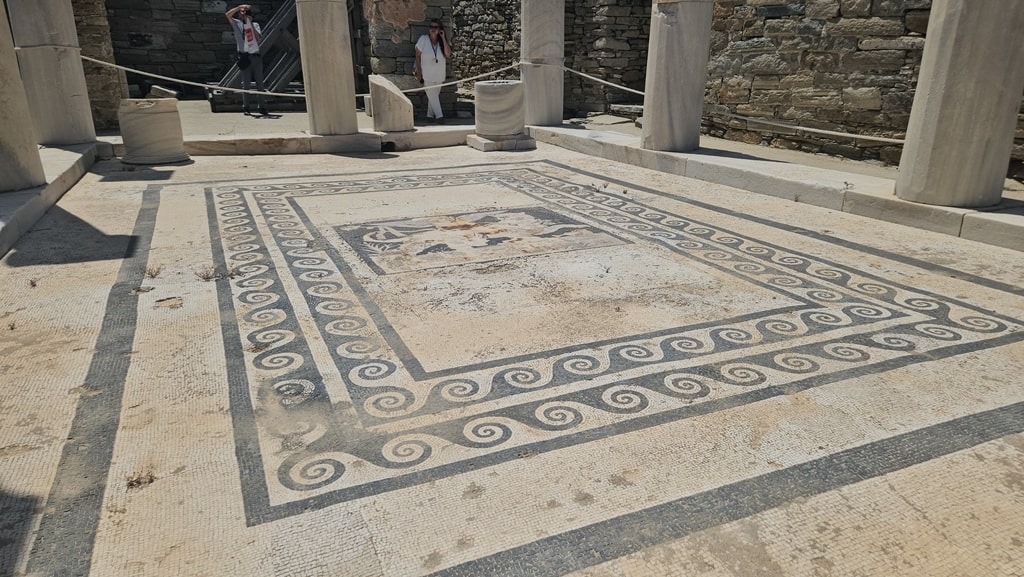
4. Theatre Quarter and Private Houses
Wander through ancient streets lined with mosaicked homes like the House of Dionysus and House of the Dolphins — stunning examples of Hellenistic art. The Ancient Theatre itself is still beautifully preserved.
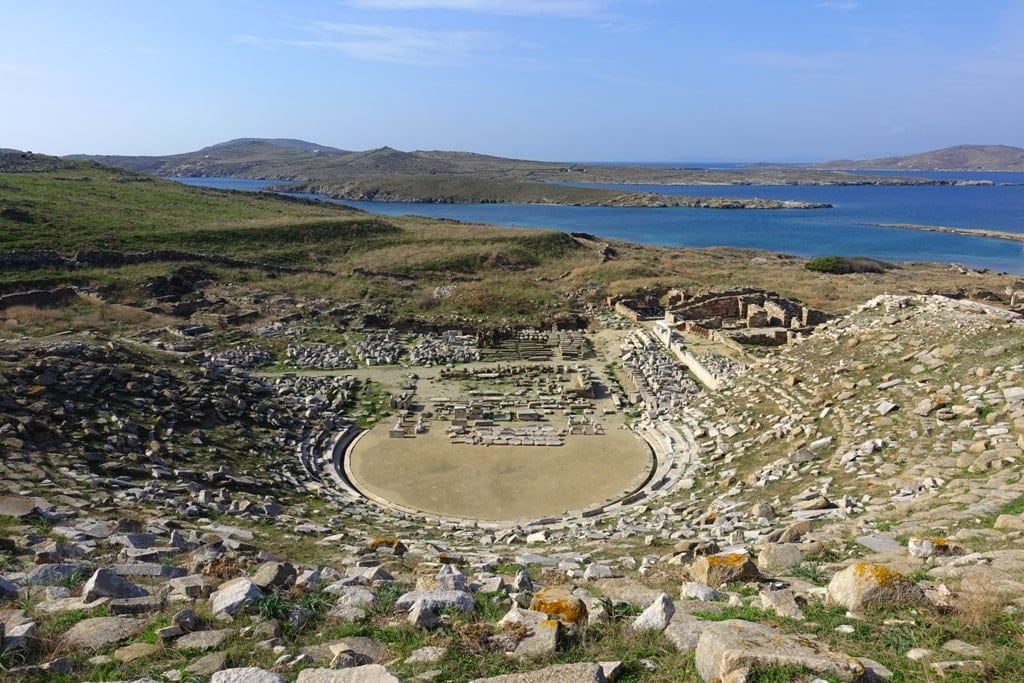
5. Agora and Commercial Buildings
A reminder of Delos’ time as a major trading hub, these public squares were once full of merchants and travelers from across the Mediterranean.
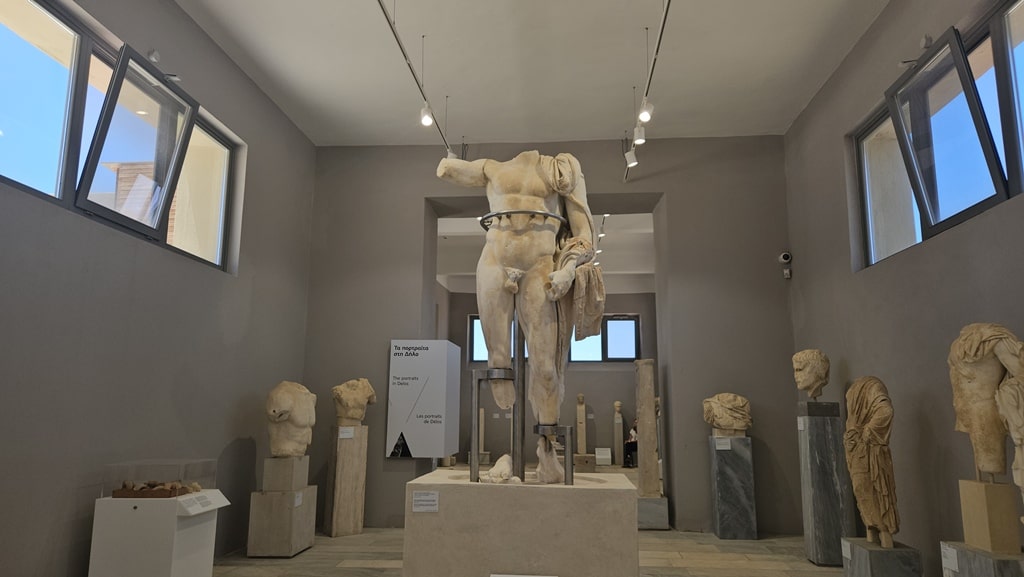
6. Archaeological Museum of Delos
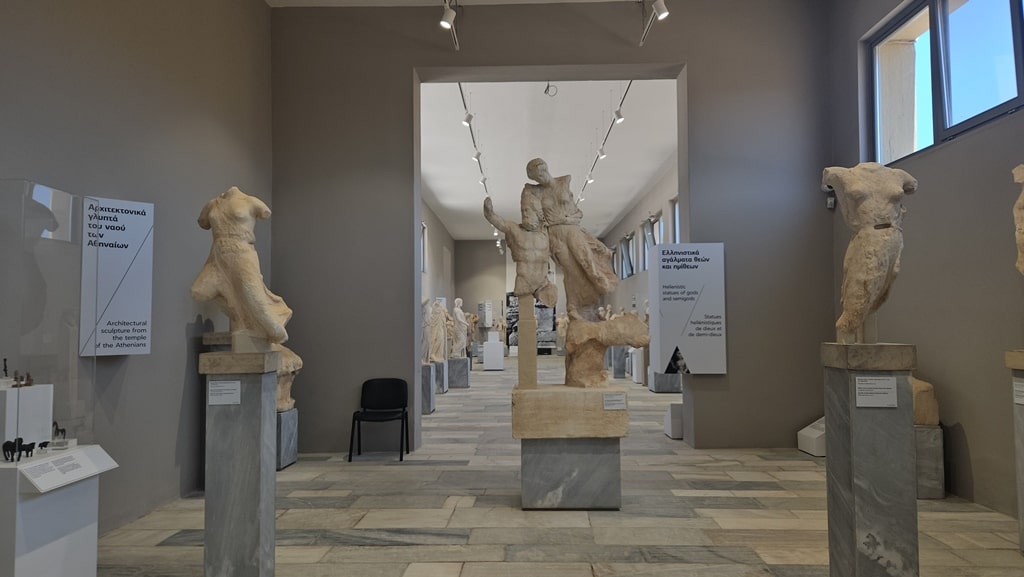
Don’t miss the small but excellent on-site museum, home to many of the original statues, mosaics, and artifacts found on the island. It’s one of the most important archaeological collections in Greece.
Tips for Visiting Delos
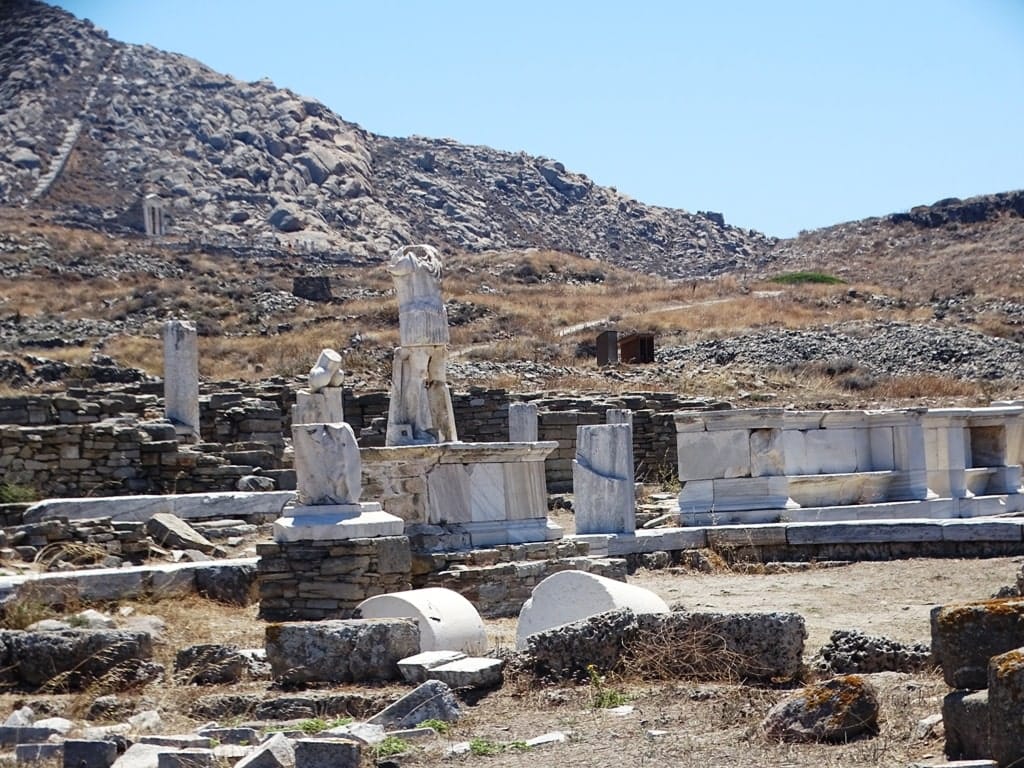
Visiting Delos feels like stepping back in time, but a few practical tips will make your trip much smoother.
- Go early. The first boats from Mykonos usually leave around 9:00 a.m., and mornings are cooler and quieter before the large tour groups arrive.
- Wear comfortable shoes. You’ll be walking on uneven ancient stones, and there’s some uphill terrain, especially if you climb Mount Kynthos.
- Bring sun protection. There’s almost no shade, so pack a hat, plenty of water, and sunscreen.
- Carry some cash. The small on-site kiosk and ticket booth may not always accept cards.
- Allow at least 2–3 hours. The site is larger than it looks, and you’ll want time to explore both the ruins and the museum.
- Don’t miss the last boat. Double-check the return time.
- Buy your ticket in advance. If you’re not joining a guided tour, prebook your ferry online to skip the queues in high season.
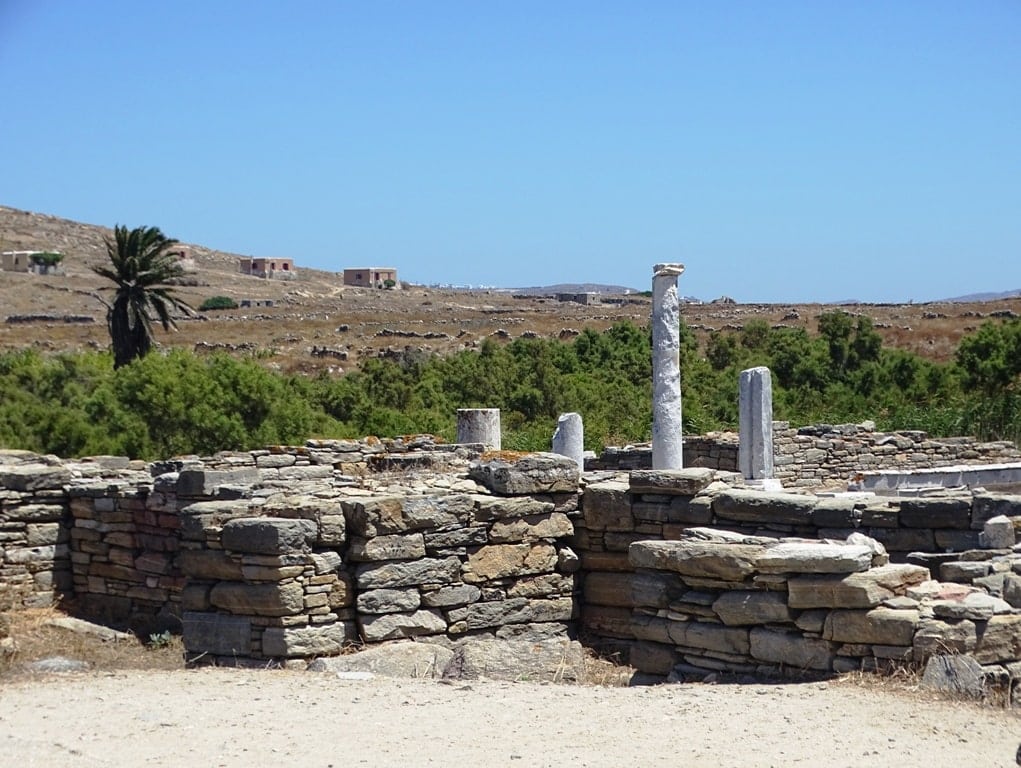
Delos is one of the most impressive archaeological sites in Greece and a must-see if you’re staying in Mykonos or nearby islands. The site is large, well-preserved, and easy to explore in half a day. Whether you visit on your own or with a guided tour, it’s a fascinating glimpse into ancient Greek history and mythology.