
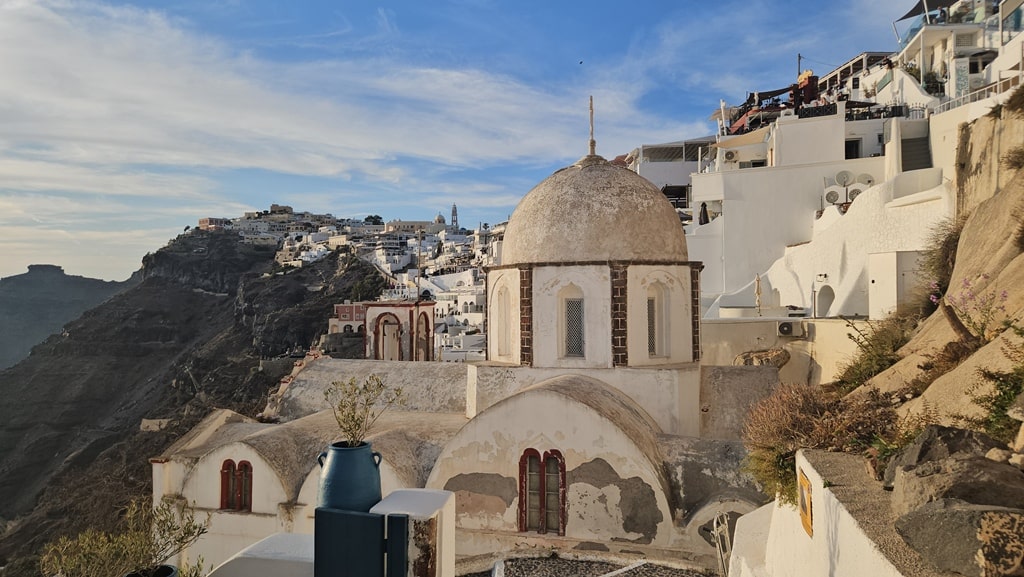
Santorini is one of those places that truly lives up to the photos, dazzling white houses, blue-domed churches, and caldera views that make you stop in your tracks.
But here’s the thing: as stunning as it is, Santorini is also one of the easiest islands to get wrong if you’re not prepared.
I’ve visited countless times, and every trip teaches me something new: how to avoid the crowds, how to find good food without paying too much, and when to actually enjoy those postcard sunsets in peace.
So here’s a practical, real-world guide to Santorini, packed with the tips I wish every visitor knew before they arrived.
If you’d like to see what visiting the island actually looks like, watch my full video “Things to Know Before Visiting Santorini” — I’ve linked it below. It covers everything from planning tips to the biggest mistakes to avoid, so you can experience Santorini like a pro.
Disclosure: This post contains affiliate links. That means I may earn a small commission if you book through them — at no extra cost to you. Thank you for supporting Greece & Beyond and helping me keep this site going!

Things to Know before Visiting Santorini
How to Get to Santorini
Santorini sits about 200 kilometers southeast of Athens, right in the middle of the Aegean Sea. You can reach it either by plane or by ferry, and each option offers a very different kind of experience.
Flying is by far the quickest and easiest way — flights from Athens take around 45 minutes, and there are also direct routes from several European cities during the summer. It’s the best choice if you’re short on time or want to maximize your days on the island.

If you prefer something slower and more scenic, ferries are a great alternative. They depart mainly from Piraeus, but also from Rafina, and the journey takes between five and eight hours depending on the vessel. Fast ferries shave off a couple of hours, but they can be more expensive and less stable in rough seas. Regular ferries are larger and more comfortable if you don’t mind a longer ride.
The nice thing about taking the ferry is that it connects you easily with other islands like Mykonos, Naxos, Paros, and Crete. So it’s perfect if you’re planning an island-hopping itinerary.

Just keep in mind that in summer, ferries can sell out, especially around weekends, so it’s best to book your tickets in advance. And always check for potential schedule changes or delays — strong winds are common in the Aegean, and they sometimes affect crossings.
Looking for ferry tickets? Click here for the ferry schedule and to book your tickets.
Local tip: if you take the ferry, sit on deck as you approach Santorini. Seeing the cliffs of the caldera rising from the sea is one of the most breathtaking arrivals you can experience in Greece.
Understanding the Island
Most people imagine Santorini as one small island, but it’s actually part of a small archipelago formed by a massive volcanic eruption around 1600 BCE. The main island is called Thera, and that’s where most visitors stay, but there are also several smaller ones: Thirassia, Nea Kameni (the volcano), Palea Kameni, and Aspronisi.
The eruption shaped everything that makes Santorini famous today: the steep cliffs, the black and red volcanic beaches, and the deep blue caldera that curves dramatically around the island. When you’re standing in Oia or Fira looking out at that view, you’re actually looking into the remains of one of the biggest volcanic explosions in human history.
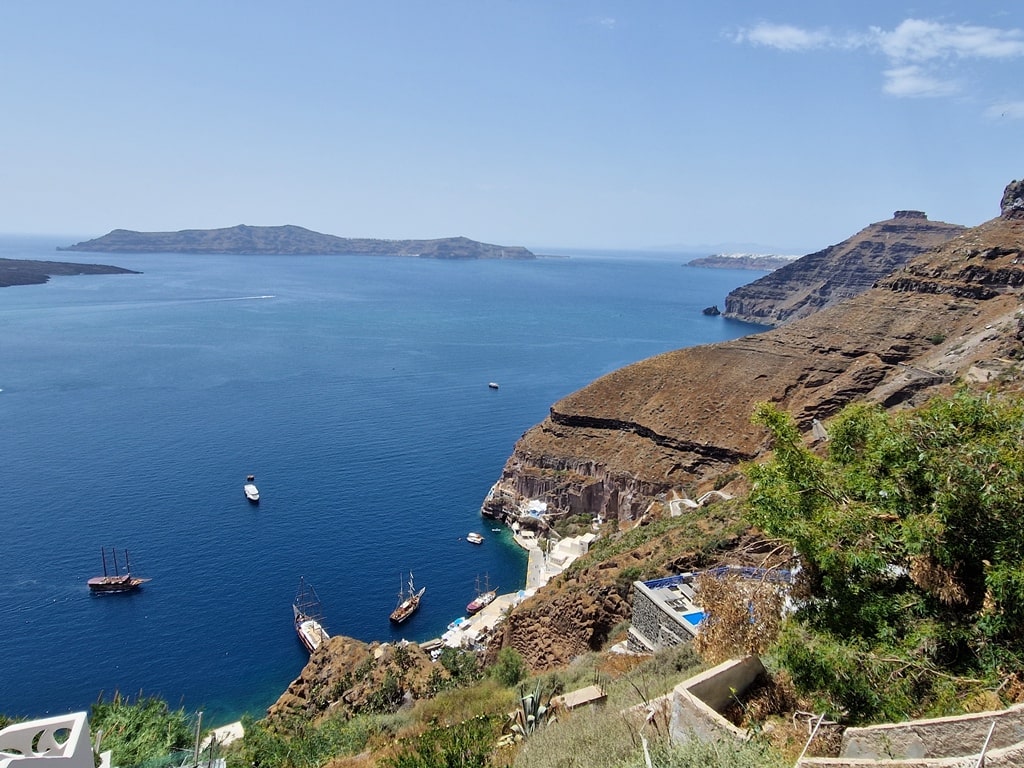
It’s also important to understand the island’s layout when planning your stay. The west side, where the cliffs are, offers those postcard-perfect views of the caldera and the sunset, but no beach access. The eastern side, on the other hand, is flat, with long beaches like Kamari and Perissa that are perfect for swimming and more relaxed days by the sea.
So before booking your accommodation, decide what kind of trip you want: dramatic views and luxury hotels perched on the cliffs, or easy beach days and a more laid-back atmosphere.
Recommended tours to do in Santorini
Catamaran Cruise with Meals and Drinks (sunset option also available)
Volcanic Islands Cruise with Hot Springs Visit
Santorini Highlights Tour with Wine Tasting & Sunset in Oia
Santorini Half-Day Wine Adventure Tour
Santorini Horse Riding Trip from Vlychada to Eros Beach
Where to Stay in Santorini
Where you stay in Santorini will completely shape your experience. The island may be small, but every area feels different, from the luxury cliffside villages to the relaxed beach towns and quiet traditional settlements inland.
If it’s your first time on the island, you’ll probably want to stay somewhere along the caldera for those unforgettable views. Oia is the most iconic choice, famous for its sunsets and blue-domed churches. It’s as beautiful as it looks in photos — but also the most expensive and busiest place on the island.
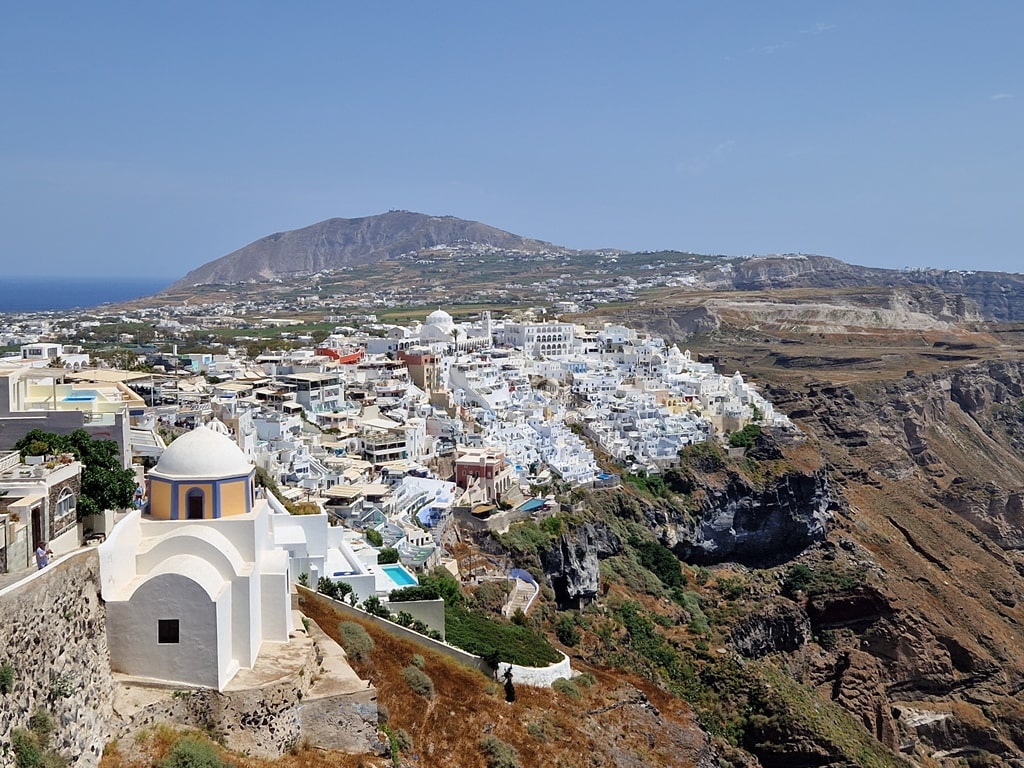
A more central and convenient option is Fira, the island’s capital. It’s lively, full of restaurants, shops, and bars, and it’s the main transport hub, which makes it easy to explore the rest of Santorini without a car. If you want the same views but a quieter atmosphere, nearby Imerovigli and Firostefani are great alternatives; they’re within walking distance from Fira but feel more peaceful.
On the opposite side of the island, you’ll find the beach towns — Kamari, Perissa, and Perivolos. They don’t have caldera views, but they’re perfect if you prefer easy beach access, a more relaxed pace, and better value for money. You’ll find plenty of hotels, family-run tavernas, and beach bars that stay open late.
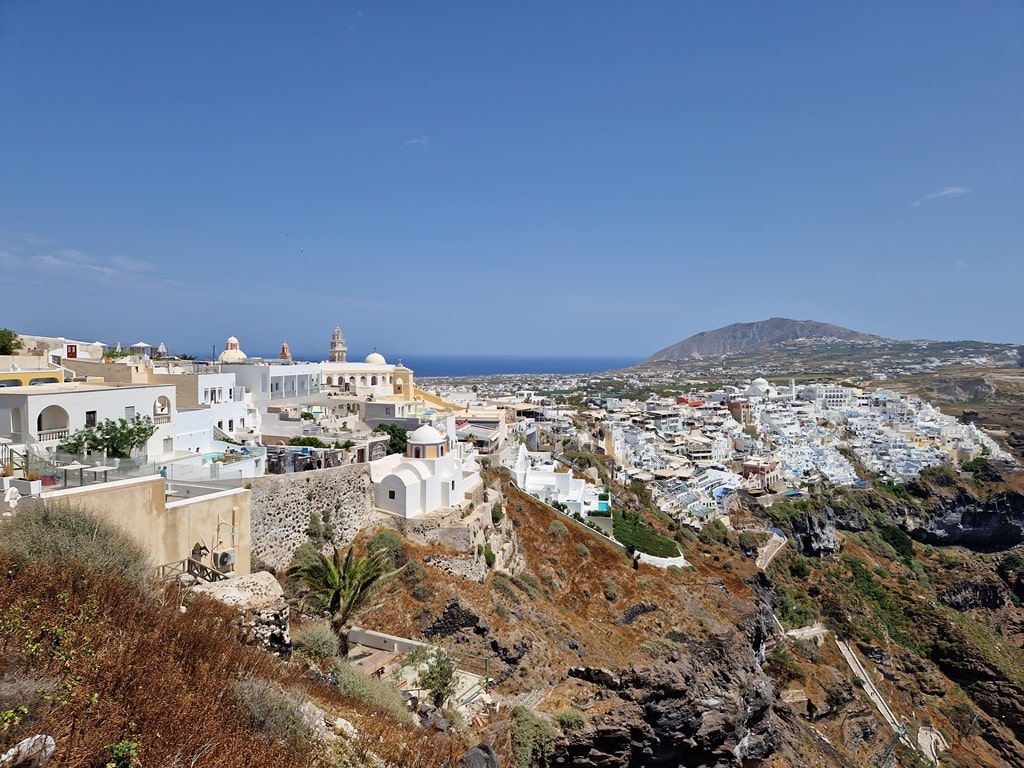
And then there are the lesser-known inland villages like Pyrgos and Megalochori, where time seems to move a little slower. These are great choices if you’re looking for something more authentic, with traditional houses, quiet streets, and local tavernas where you can still hear mostly Greek spoken around you.
Local tip: If you’re visiting for the first time, stay along the caldera side for at least a night or two to experience the views, then move to the beach or countryside for a more relaxed end to your trip.
How Many Days to Spend in Santorini
You can get a taste of Santorini in just a few days, but how long you stay really depends on what kind of trip you want.
If you’re short on time, three days are enough to see the main highlights, explore Fira and Oia, enjoy a sunset dinner, and maybe take one excursion, like a boat trip or a winery visit. You’ll get the essential Santorini experience without feeling too rushed.

But if you can, four to five days is ideal. That gives you time to slow down a little, explore more of the island, and balance sightseeing with relaxation. You can hike the Fira–Oia trail, visit the volcano, spend a lazy afternoon at the beach, and still have time for wine tasting or a walk through traditional villages like Pyrgos or Megalochori.
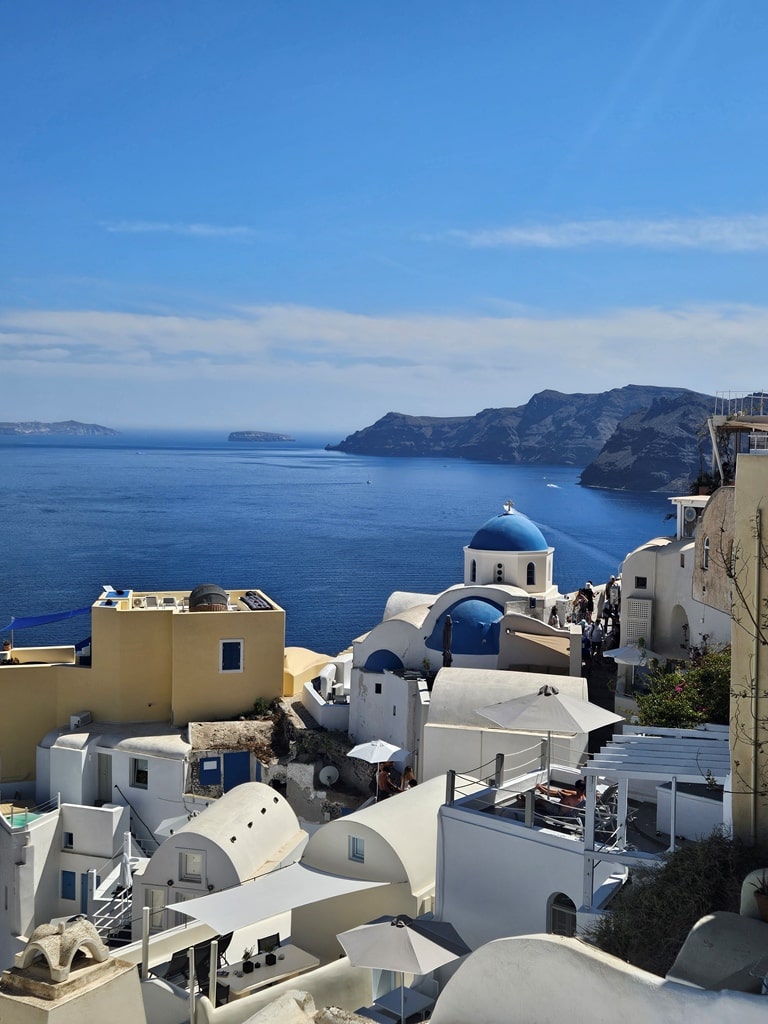
If you’re combining Santorini with other Greek islands, you don’t need to spend a full week here, but staying long enough to enjoy both the caldera side and the beaches makes all the difference.
Local tip: Avoid cramming too much into one day. Distances may look short, but traffic, narrow roads, and crowds, especially in summer, can slow you down more than you expect.
When to Visit Santorini
Santorini is beautiful year-round, but your experience can vary a lot depending on when you visit.
The best time to visit is during May, June, September, and October. These months offer the perfect balance of warm weather, calm seas, and fewer crowds. You’ll still get plenty of sunshine, but without the intense heat or packed streets of high summer.
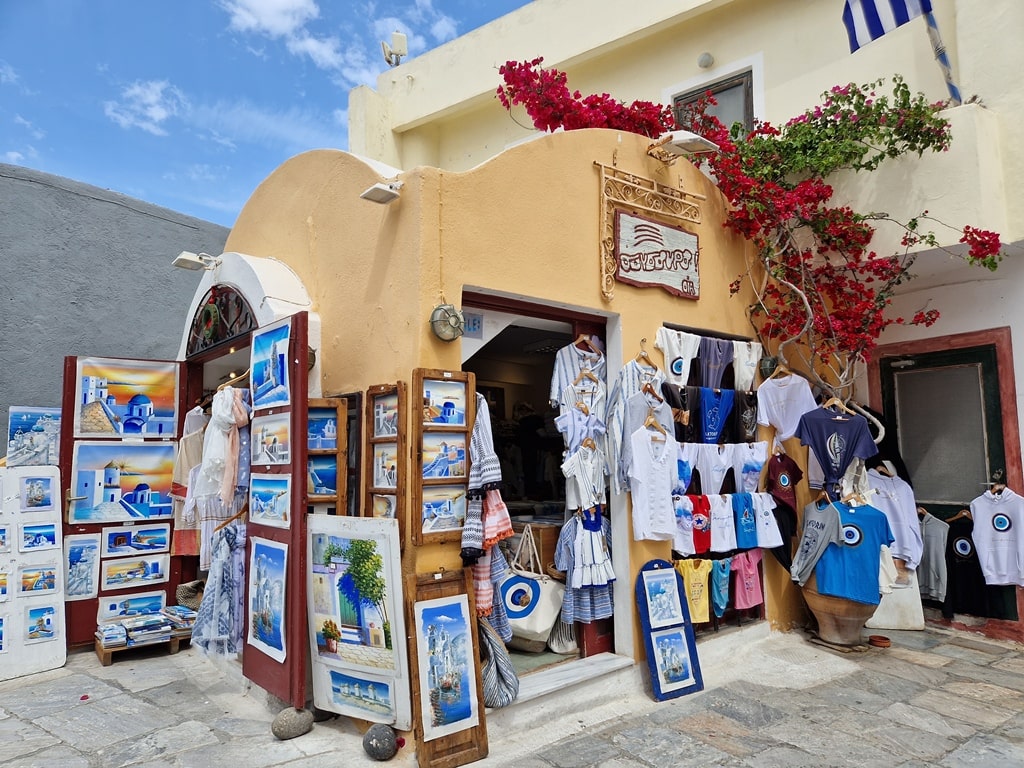
July and August are the peak months. Everything is open, and the island feels full of life, but it also means higher prices, heavy traffic, and temperatures that often climb above 35°C. If you’re visiting then, book hotels, restaurants, and tours well in advance, and plan your outdoor activities for early morning or late afternoon.
Winter (from November to March) brings a completely different atmosphere. It’s quiet and peaceful, with very few tourists, but also cooler weather and limited services. Many hotels and restaurants close, especially in Oia, though Fira stays partially active with a few places open year-round.
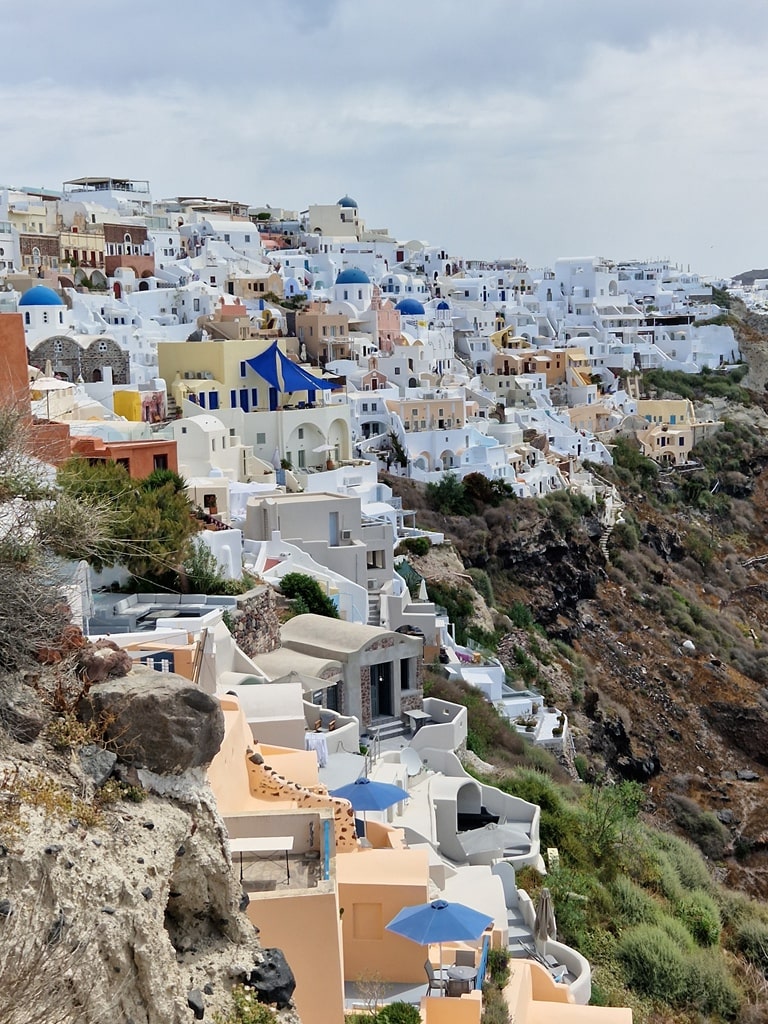
That said, Santorini is one of the few Greek islands that stays open all year round, which makes it a great choice if you want to experience a more local and slower-paced version of island life during the off-season.
If you want a lively atmosphere and long beach days, come in the summer. But if you prefer fewer crowds and better light for photography, go for spring or early autumn, that’s when Santorini really shines.
Getting Around Santorini
Getting around Santorini is fairly easy, but it helps to know your options before you arrive. The island’s villages are spread out, and while distances look short on the map, the roads are narrow and often winding along the cliffs — so travel times can surprise you.
The simplest way to move between the main towns is by public bus, operated by KTEL. Buses connect most villages, including Oia, Fira, Kamari, and Perissa, and they run frequently in summer. Tickets are inexpensive, but buses can get crowded, and they only accept cash. The main terminal is in Fira, so almost all routes start or end there, meaning you might need to transfer if you’re traveling between other villages. Click here for the Ktel website: https://www.ktel-santorini.gr/index.php/en/

If you want more freedom, renting a car, ATV, or scooter is a great option, especially if you’re staying outside the main towns or plan to explore beaches and smaller villages. Just keep in mind that parking can be tricky in Oia and Fira, and many of the streets are very narrow.
I recommend booking a car through Discover Cars, where you can compare all rental car agencies’ prices, and you can cancel or modify your booking for free. They also guarantee the best price. Click here for more information and to check the latest prices.
There are also taxis, but they’re limited and more expensive than you might expect. It’s always best to pre-book them, especially for airport or ferry transfers.
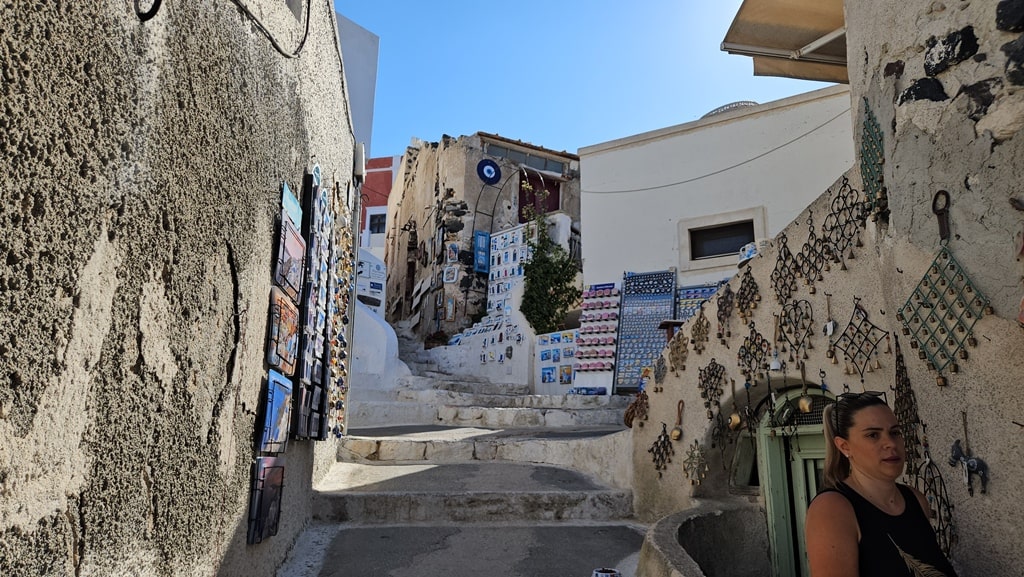
And if you enjoy walking, Santorini offers one of the most scenic trails in Greece — the Fira to Oia hike. It’s about 10 kilometers along the caldera cliffs and takes around 2–3 hours at a relaxed pace. Bring water, wear comfortable shoes, and go early in the morning or later in the day to avoid the midday sun. The views along the way are absolutely worth it.
Local tip: If you’re visiting in summer and renting a vehicle, book it in advance — demand is high, and prices rise quickly once you’re on the island.
What to Pack for Santorini
Packing for Santorini is all about comfort and practicality — the island’s beauty comes with plenty of stairs, sun, and uneven cobbled paths.
Start with light, breathable clothes; cotton or linen are perfect for the island’s warm, dry weather. A wide-brimmed hat, sunglasses, and good sunscreen are essentials, especially if you plan to walk a lot or take the Fira–Oia hike.

Bring comfortable walking shoes rather than sandals with thin soles. Even in the villages, streets can be steep or slippery, so something with grip makes a big difference. For evenings, pack a light jacket or shawl, as it can get breezy after sunset, especially along the caldera.
Of course, don’t forget your swimsuit, particularly if you’re staying on the beach side or planning a boat trip to the volcano and hot springs.
Santorini is fairly upscale, so if you like dressing up a little for dinner, bring one or two smart-casual outfits, nothing formal, just something you’ll feel comfortable wearing at a rooftop restaurant or wine bar.
And one last thing: carry some cash. While most hotels, restaurants, and shops accept cards, small cafés, beach bars, and public buses often don’t. Having a few euros handy will make things a lot easier.
If you’re visiting in winter, pack for mild but unpredictable weather. Temperatures can range between 10–17°C, and while the sun still shines most days, it can get windy or rainy. Bring a warm layer, a waterproof jacket, and closed shoes — especially if you plan to explore outdoors. Even with cooler weather, Santorini’s scenery is beautiful all year round, and it’s worth being comfortable while you enjoy it.
Practical Tips for Visiting Santorini
A little preparation goes a long way in Santorini — it’s one of those places where knowing a few practical details can make your trip much smoother.
Let’s start with the airport. Santorini International Airport was recently renovated and is now far more comfortable, with new seating areas and cafés, but it’s still quite small. During summer, it gets busy quickly, so arrive early for both domestic and international flights to avoid long queues.
When it comes to money, most hotels, restaurants, and shops accept credit or debit cards, but it’s always a good idea to carry some cash. Public buses, small tavernas, and a few family-run places still operate on a cash-only basis. You’ll find ATMs in Fira, Oia, and most larger villages.
In terms of costs, Santorini can be expensive, but it doesn’t have to be overwhelming. A coffee costs around three to five euros, while a casual dinner for two can range between 40 and 80 euros, depending on the location. Sunset-view restaurants are usually the priciest, but part of what you’re paying for is the view itself.

If you want to eat well without overspending, look beyond the main streets in Oia and Fira. Some of the best meals are found in local tavernas in Pyrgos, Exo Gonia, or Akrotiri, where the food is authentic and the prices far more reasonable.
Local tip: If you’re visiting in summer, book sunset restaurants a day or two in advance, especially in Oia. Walk-ins are almost impossible to get after 6 p.m.
Top Experiences in Santorini
There’s no shortage of amazing things to do in Santorini, from world-famous sunsets to quiet villages that most visitors never reach. The island might look small, but there’s plenty to fill your days.
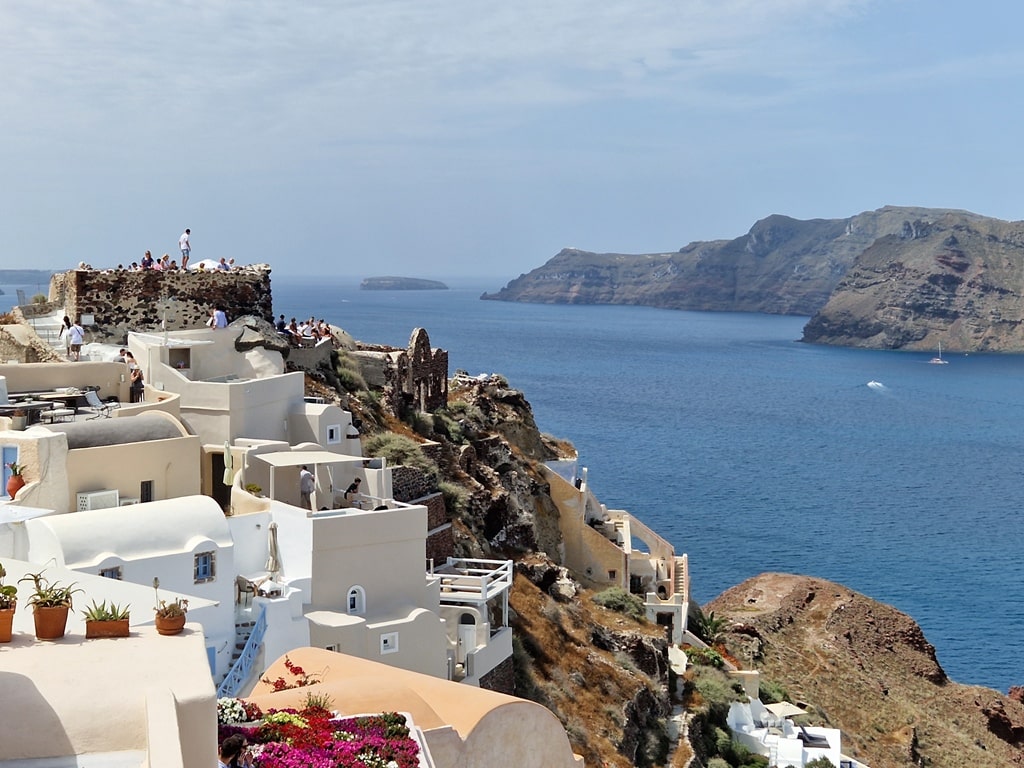
Start with the obvious, and still the most magical: watching the sunset in Oia. Yes, it gets crowded, but it’s one of those experiences that really is worth it. Go early, find a good spot along the castle ruins or a quiet terrace, and stay until the last bit of light disappears behind the sea.
If you enjoy walking, the Fira to Oia trail is a must. It’s about 10 kilometers along the caldera cliffs and takes two to three hours, depending on your pace. The views are spectacular the whole way, and it’s one of the best ways to see the island’s landscape up close.
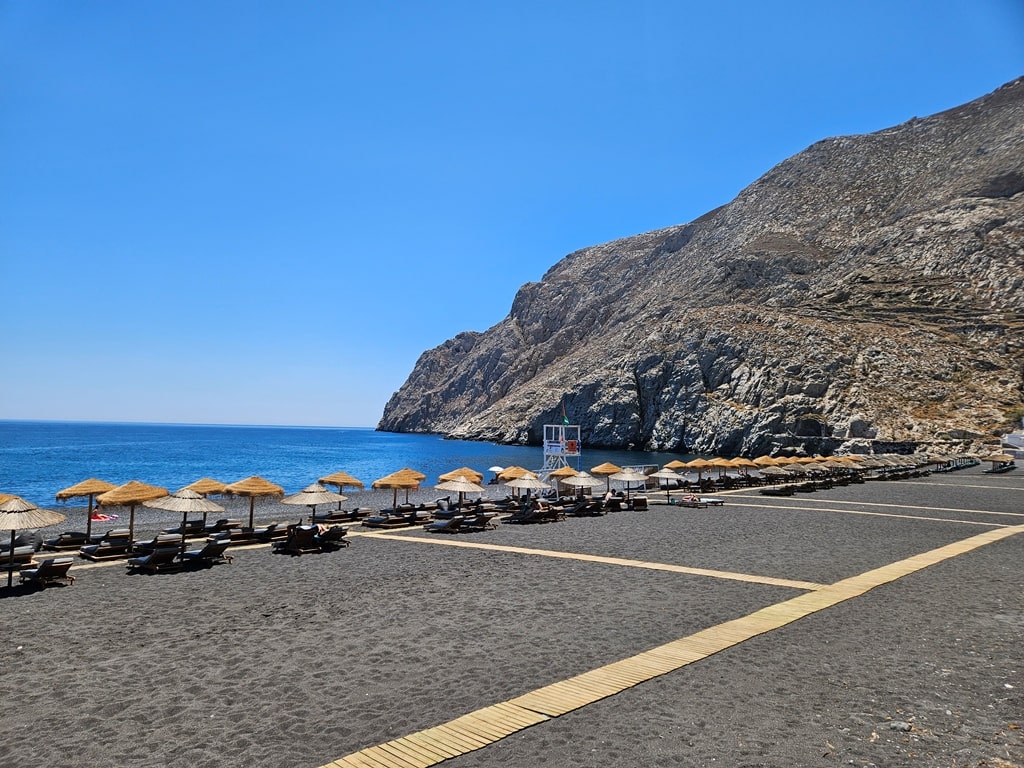
Santorini’s beaches are completely different from what you’ll find on most other Greek islands. Head to Vlychada for its moonlike cliffs, Kamari for black sand and plenty of cafés, or Perissa for a more relaxed, local vibe. The water is warm from June to October, and the beaches on the east and south coasts are perfect for swimming.
A boat tour to the volcano and hot springs is another great way to see the island from a new perspective. You’ll sail past the caldera, walk on volcanic soil, and even swim in the thermal waters near Palea Kameni.

If you love wine, make time for a tasting. Santorini is famous for its Assyrtiko, a crisp white wine grown in volcanic soil. Visit Santo Wines for sweeping caldera views, or Argyros Estate for a more intimate experience where you’ll learn about the island’s unique cultivation methods.
And for history lovers, Ancient Akrotiri is not to be missed. Often called the “Pompeii of the Aegean,” this Minoan city was buried under volcanic ash around 1600 BCE and preserved almost perfectly. The site is covered and easy to visit even in summer.
To understand Akrotiri’s discoveries even better, stop by the Museum of Prehistoric Thera in Fira. It houses some of the most important finds from the excavation — including beautifully preserved frescoes and everyday artifacts that reveal how advanced this ancient civilization was.

Finally, take some time to slow down and explore inland. Villages like Pyrgos and Emporio offer a completely different side of Santorini, narrow alleys, small squares, and traditional houses where you can still get a glimpse of everyday island life away from the crowds.
Mistakes to Avoid in Santorini
Even with the best plans, there are a few common mistakes that can make your Santorini trip more stressful than it needs to be. Most of them are easy to avoid once you know what to expect.
The first one is trying to do too much in one day. Distances on the map might look small, but the roads are narrow, parking is limited, and traffic in summer can be heavy. Give yourself time to slow down and enjoy each place properly. Santorini rewards travelers who don’t rush.
Another common mistake is underestimating the heat. Sightseeing in the middle of the day, especially around Oia or Akrotiri, can be exhausting. Plan outdoor activities early in the morning or later in the afternoon, and always carry water with you.
If you’re driving, avoid taking cars into the narrowest streets of the traditional villages; they were never built for modern vehicles. Park at the entrance and explore on foot.
Don’t forget to book transfers, tours, and restaurants in advance during high season. Santorini is busy from May to October, and popular sunset-view spots in Oia or along the caldera fill up fast.
And while we’re on that topic, please don’t ride the donkeys up the cliff in Fira. It’s a tradition that’s best left in the past. You can take the cable car or walk instead.
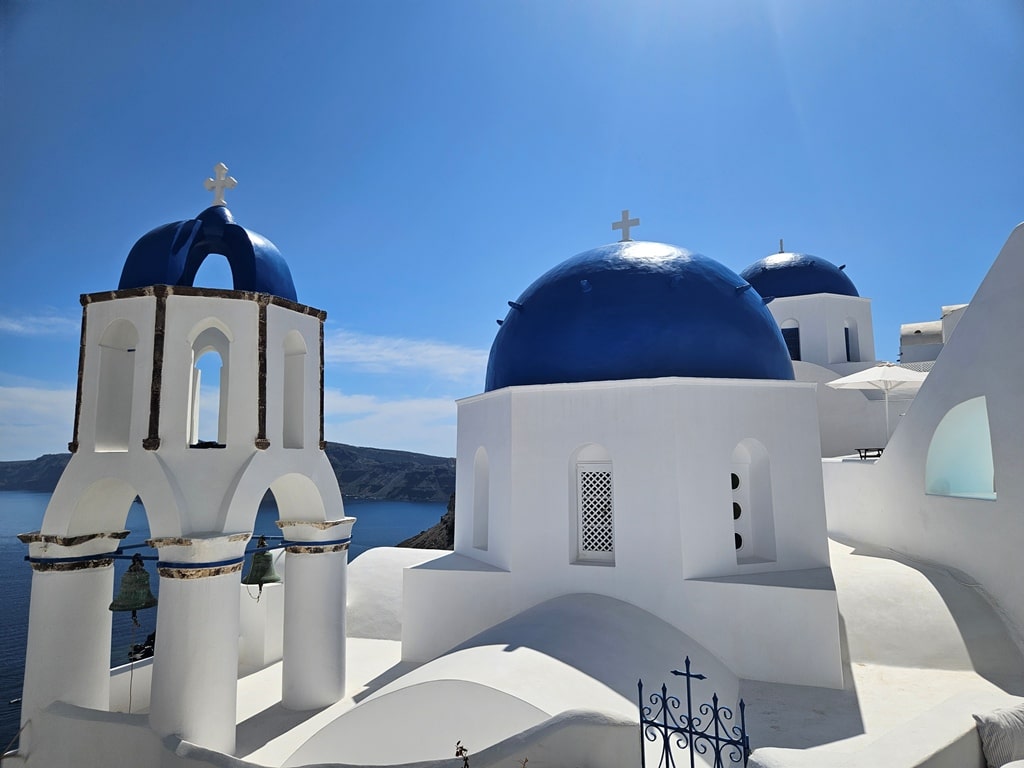
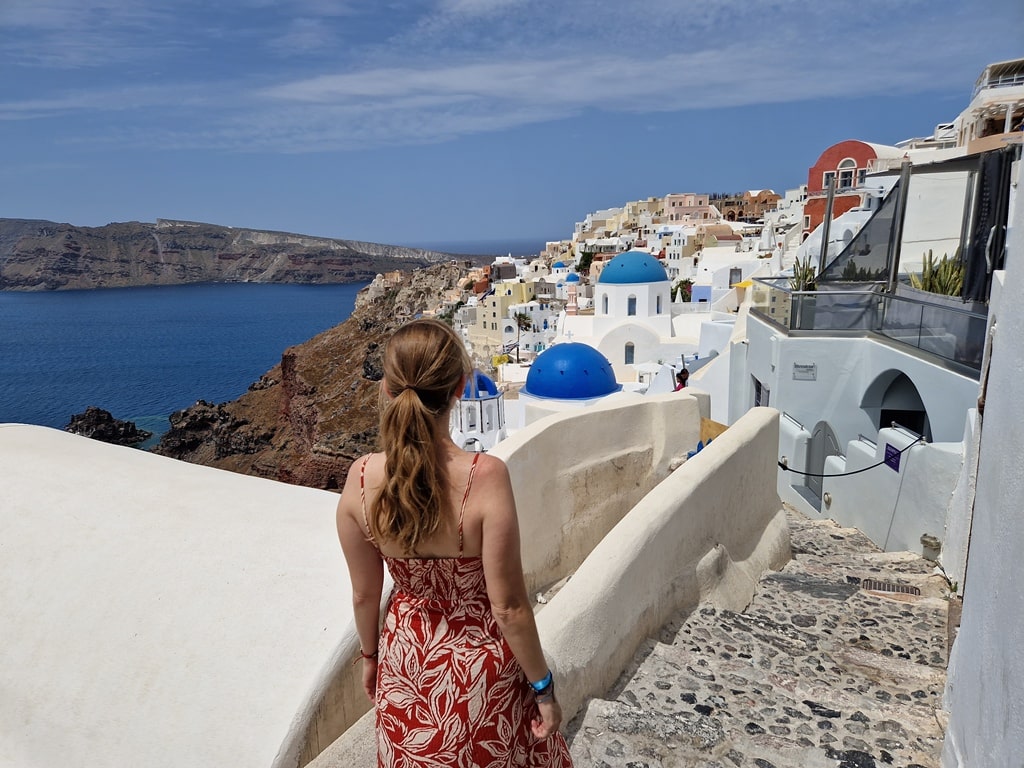
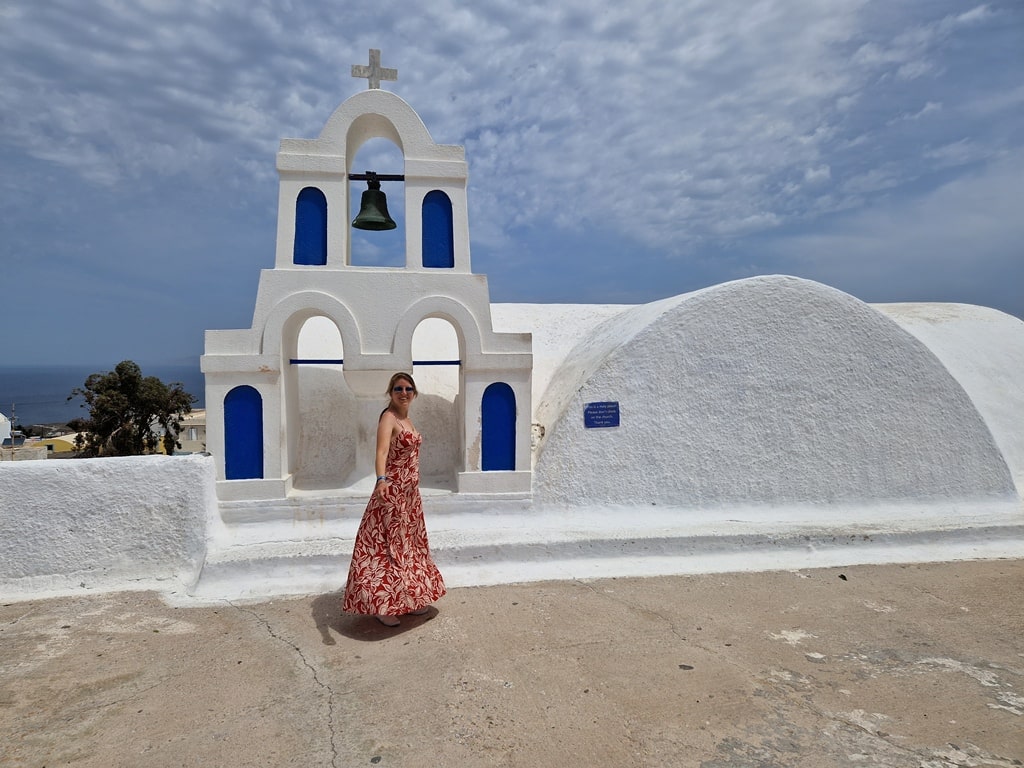
One more thing that surprises many visitors: those blue-domed rooftops are not photo spots. Many of them belong to churches or private homes, so climbing on them for pictures is considered disrespectful. You can get incredible photos from public paths and terraces, and you’ll be helping to preserve the beauty of the island for everyone.
Lastly, keep in mind that Santorini is a small island with a strong local community. Be respectful when visiting residential areas, keep noise low, use bins, and stay on marked paths. The island’s charm comes from its authenticity, and small acts of care from visitors make a big difference.
Santorini is one of those places that truly deserves its reputation — dramatic views, incredible food, and a sense of magic that’s hard to put into words. But it’s also a destination that rewards preparation. Knowing where to stay, how to get around, and what to expect makes all the difference between a trip that feels rushed and one that feels effortless.