

Planning a visit to the Acropolis? This 2,500-year-old wonder is one of the most breathtaking places in Greece — but also one of the easiest to get wrong if you don’t plan ahead.
I’ve been there more times than I can count, and every single visit still feels special — but I’ve also seen many visitors struggle with long lines, midday heat, or confusion about tickets. So in this guide, I’m sharing everything you need to know to make your visit smooth and memorable: when to go, how to skip the lines, what tickets to buy, and which entrance to use.
Whether it’s your first time or a return visit, these tips will help you explore the Acropolis like a local — not a lost tourist.
If you’d like to see what it’s really like to visit, you can check my video on YouTube: “Acropolis of Athens, What you Need to Know Before you Visit”
Disclosure: This post contains affiliate links. That means I may earn a small commission if you book through them — at no extra cost to you. Thank you for supporting Greece & Beyond and helping me keep this site going!

- Tips for Visiting the Acropolis
- Plan Your Trip to Greece – Like a Local
- Acropolis Opening Hours
- How to Skip the Lines and Book Your Tickets Smart
- Which Acropolis Ticket Should You Choose?
- Free Admission Days
- How to Get to the Acropolis (and Which Entrance to Use)
- Do You Need a Tour of the Acropolis?
- Is It Difficult to Get Up to the Acropolis?
- Accessibility: Visiting the Acropolis with Mobility Challenges
- How Much Time Do You Need at the Acropolis?
- Facilities: Toilets, Water & Food Rules
- What’s Not Allowed at the Acropolis
Tips for Visiting the Acropolis
Acropolis vs Parthenon: What’s the Difference?

Let’s start with one of the biggest misconceptions I hear all the time — the Acropolis and the Parthenon are not the same thing.
The Acropolis is the entire rocky hill and the complex of ancient buildings on top of it. The word “Acropolis” literally means high city in Greek, and almost every ancient city in Greece had one. But this one in Athens is by far the most famous.
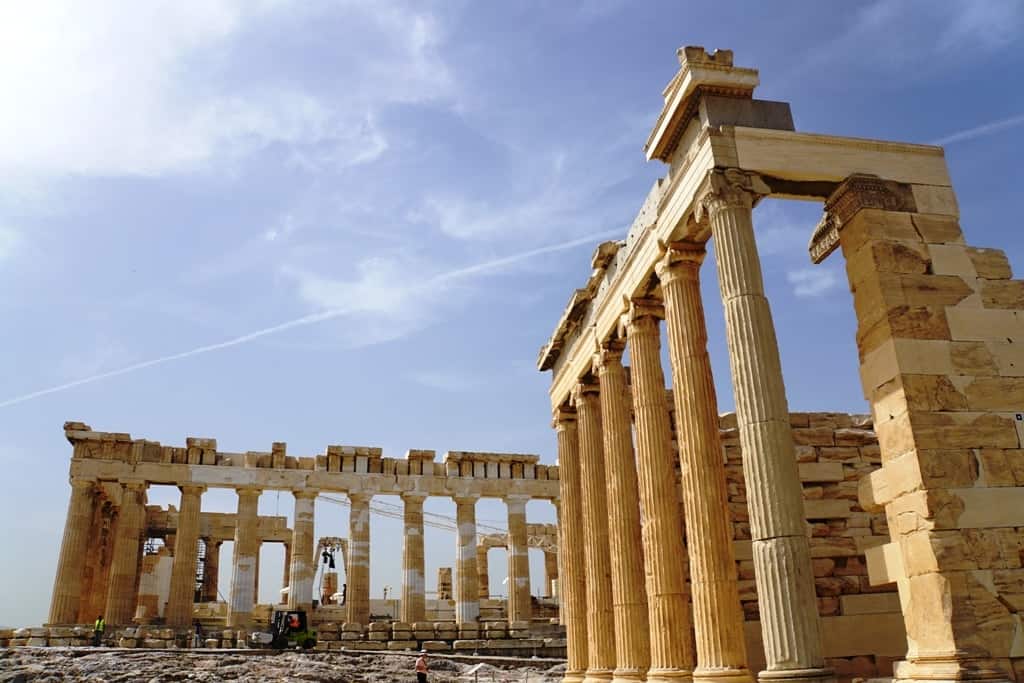
The Parthenon, on the other hand, is the star of the show — the large temple you see in almost every photo of Athens. It was built in honor of the goddess Athena, the city’s protector.
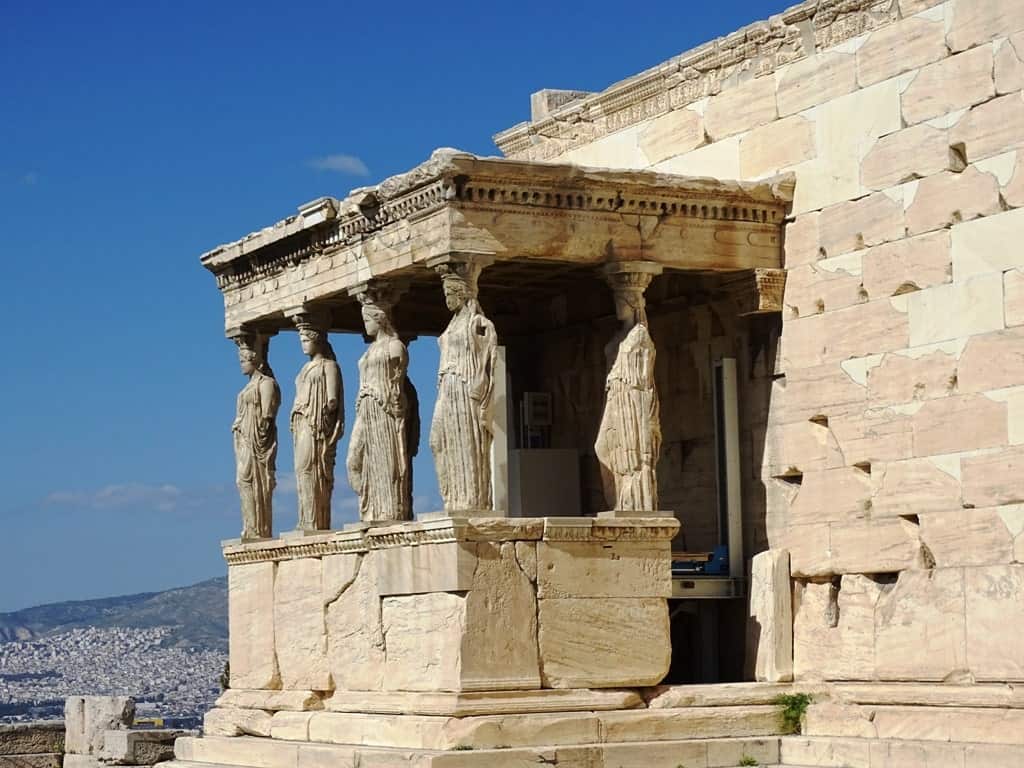
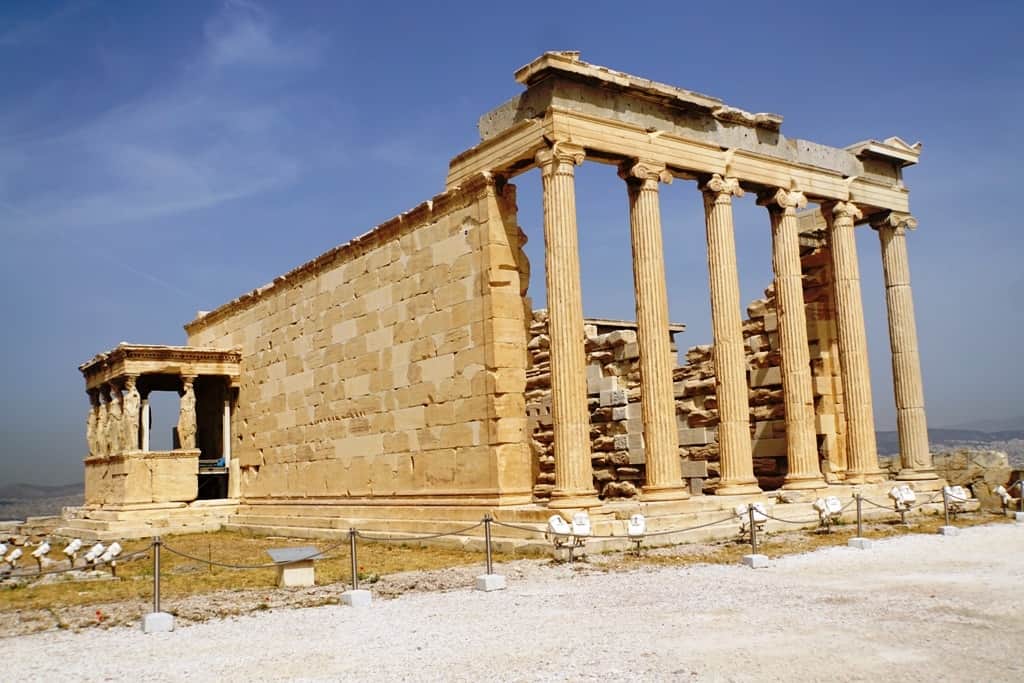
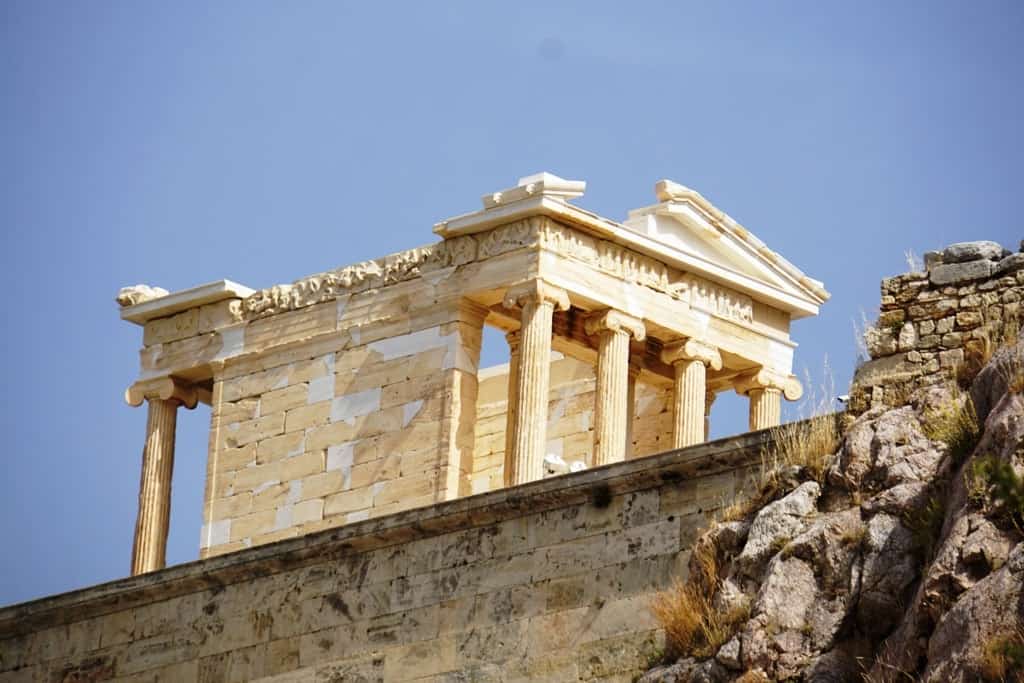
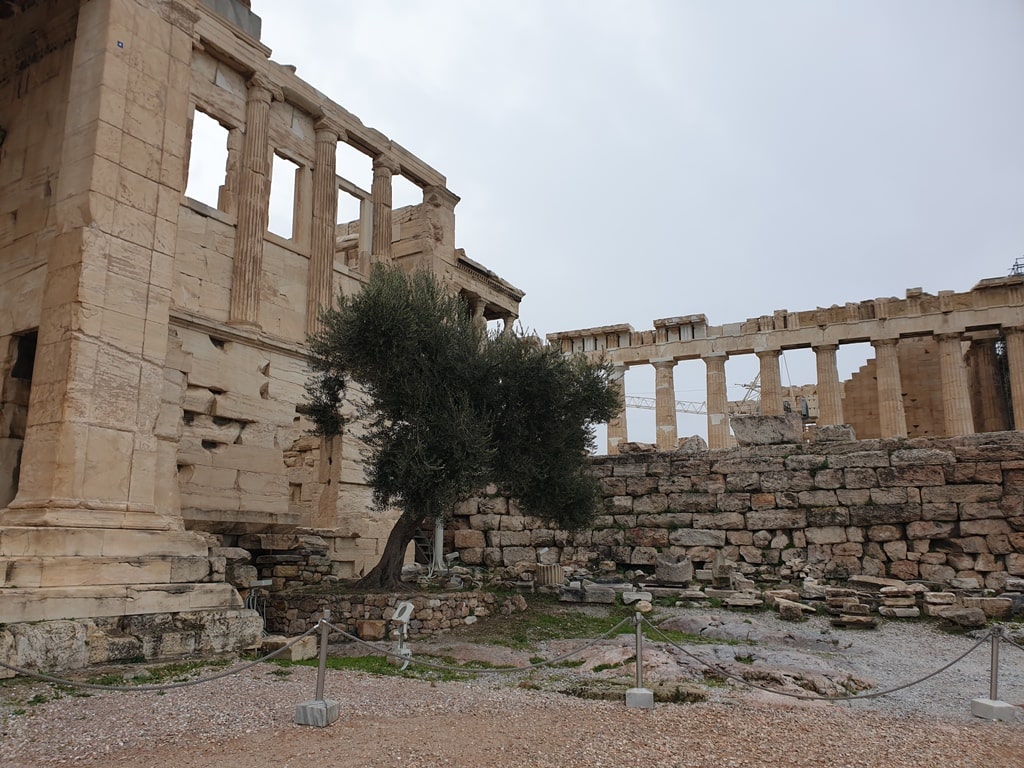
Understanding this small detail helps you appreciate how much more there is to see once you’re up there — from the Erechtheion with its graceful Caryatids to the grand Propylaea gate and the Temple of Athena Nike.
The Best Time to Visit the Acropolis

Timing is everything when it comes to visiting the Acropolis. I’ve gone in every season and at almost every hour of the day — and trust me, it can be a completely different experience depending on when you go.
If you want to avoid the crowds and the heat, go as soon as it opens at 8 AM. Early morning is the best time for clear photos, cooler weather, and a much calmer atmosphere. You’ll often share the site with just a few other early risers and the occasional cat wandering among the ruins.
If you’re not an early bird, the late afternoon (after 5 PM) is another great option. The light gets softer, the crowds thin out, and the view of Athens as the sun starts to set is magical.
In summer, the midday hours can be brutal — the marble reflects the heat, and there’s almost no shade. Occasionally, during extreme heatwaves, the site may even close for a few hours around noon.
If you’re visiting between November and March, the weather is much milder, and the crowds are smaller, so you can explore comfortably even in the middle of the day.
Try to avoid weekends and public holidays, when tour groups and school trips tend to fill the site. A weekday morning is your best bet for a peaceful visit.
Acropolis Opening Hours
Before you go, double-check the opening hours — because arriving too early or too late can easily ruin your plans (I’ve seen it happen more than once!).
From April 1 to August 31, the Acropolis is open from 8 AM to 8 PM, giving you plenty of time to explore before or after the midday heat.
From November 1 to March 31, the site closes earlier, at 5 PM — so plan your visit accordingly.
During September and October, the closing times shift gradually as the days get shorter, so it’s best to confirm the exact schedule before you go.
Keep in mind that the last entry is 30 minutes before closing — guards will not let you in after that time.
The Acropolis is closed on specific public holidays:
- January 1
- March 25
- May 1
- Easter Sunday (Greek Orthodox)
- December 25 and 26
It’s also worth knowing that some days throughout the year offer free entry for everyone (I’ll cover those later on in this guide).
How to Skip the Lines and Book Your Tickets Smart

Let me tell you, the lines at the Acropolis can be long. Especially in summer, I’ve seen people waiting under the sun for over an hour just to buy a ticket. The easiest way to avoid that? Book your ticket online in advance.
Since 2024, there’s a daily visitor cap of 20,000 people, and entry is now organized by hourly time slots. That means walk-ins aren’t always guaranteed, particularly during peak months.

When you book online, you’ll choose a specific entry time — and you must enter within that one-hour window. Your ticket is valid from 15 minutes before to 15 minutes after your selected time. For example, if your slot is 9:00–10:00 AM, you can enter between 8:45 and 10:15 AM.
If you want those perfect early morning or late afternoon hours, make sure to book a few days ahead — those are always the first to sell out.
You can buy your official tickets directly from the Hellenic Heritage e-Ticket platform or book a skip-the-line guided tour, which includes your entry and helps you make the most of your visit without any stress.

Which Acropolis Ticket Should You Choose?
If you only plan to visit the Acropolis itself, get the single-entry ticket (Acropolis & Slopes). The full price is €30 and the reduced price is €15. You can buy it at the site or online via the official e-ticketing platform. Booking online is best in high season because of timed entry and daily visitor limits.
Where to buy: the Hellenic Ministry of Culture’s official portal: hhticket.gr. hhticket.gr
Free Admission Days
Everyone gets free entry on:
- 6 March (Melina Mercouri Day)
- 18 April (International Monuments Day)
- 18 May (International Museums Day)
- Last weekend of September (European Heritage Days)
- 28 October (national holiday)
- 1st and 3rd Sunday of the month from November until March
Full details about who qualifies for free or reduced admission year-round (e.g., age, nationality, seniors, etc.) are listed on the Ministry’s official page.
How to Get to the Acropolis (and Which Entrance to Use)

Getting to the Acropolis is easier than many visitors think — but taking the right route can save you both time and energy.
If you’re using the Athens Metro, take Line 2 (the red line) and get off at Acropoli Station. From there, it’s just a 5-minute walk to the main entrance. This is the simplest and most direct route, and it drops you right by Dionysiou Areopagitou Street, one of the most scenic pedestrian streets in Athens.
If you want a slightly longer but more atmospheric walk, hop off at Monastiraki Station (on Line 3, the blue line) and stroll through Plaka — Athens’ oldest neighborhood. It’s a beautiful approach, especially early in the morning when the streets are quiet.
You can also take a taxi, just ask the driver to drop you off at Dionysiou Areopagitou Street, near the Acropolis Museum. This is the most convenient drop-off point and ideal if you’re short on time or visiting in the heat.
If you’re staying in Plaka, Koukaki, or Monastiraki, you can easily walk to the Acropolis. Follow the pedestrian streets — it’s one of the most enjoyable walks in Athens, lined with neoclassical houses, views of the Parthenon, and street musicians playing bouzouki in the background.
Now, something many people don’t realize: there are two entrances to the Acropolis.
- The Main Entrance (on the west side) leads straight to the Parthenon and the other major monuments, but it’s usually the busiest.
- The Side Entrance (on the south slope, next to the Acropolis Museum) is usually quieter and gives you access through the Theatre of Dionysus and the Odeon of Herodes Atticus.
If you can, start your visit from the top — see the Parthenon and main temples before the crowds build up, and then take your time exploring the south slope on your way down.
Do You Need a Tour of the Acropolis?

You don’t have to join a tour to enjoy the Acropolis, but having a guide can completely change the experience.
If you love history or want to really understand what you’re looking at, a guided tour brings the ruins to life. I’ve done the Acropolis both ways — on my own and with a licensed guide — and I can tell you, the difference is huge. The stories, symbolism, and small details that guides share help you see the site as more than just stone ruins.
If you prefer to explore at your own pace, you’ll still find informational signs around the site, and you can use an audio guide app for a more affordable alternative.
For first-time visitors, I usually recommend a skip-the-line guided tour — it saves time at the entrance and ensures you don’t miss the key monuments.
Recommended Guided Tours to the Acropolis:
Option 1: Acropolis & Parthenon Guided Walking Tour
Perfect if you want to dive deep into ancient history while walking through one of the world’s most iconic landmarks. Book here.
Option 2: Acropolis + Acropolis Museum Combo Tour
Explore BOTH the legendary Acropolis site and its world-class museum with an expert guide. Ideal for those who want the full picture! Book here.
Both tours are skip-the-line, fully guided, and packed with fascinating stories! Highly recommended for first-timers and history lovers.
Is It Difficult to Get Up to the Acropolis?
Reaching the top of the Acropolis isn’t a hard hike, but it does require a bit of effort, especially on a hot summer day.
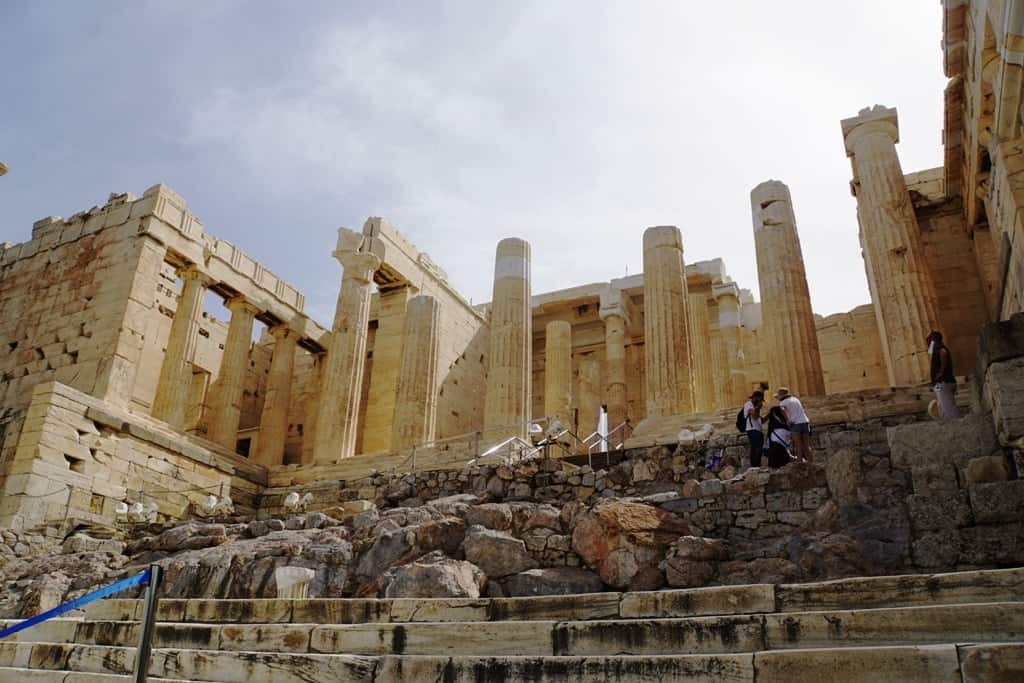
The path is uphill with some uneven marble steps that can get slippery, particularly after rain. Take your time, wear comfortable walking shoes, and bring water, especially if you’re visiting during the warmer months.
If you enter from the main gate, expect about a 10–15-minute walk to the top at a steady pace. From the south slope entrance, it might take a few minutes longer, but you’ll pass through the Theatre of Dionysus and Odeon of Herodes Atticus, which makes the climb more interesting.
It’s not strenuous, but it’s definitely not a stroll either. The key is to go slow, take breaks if you need to, and enjoy the views along the way, they get better with every step.
Accessibility: Visiting the Acropolis with Mobility Challenges
If you or someone in your group has limited mobility, the good news is that the Acropolis is partially accessible and there are facilities in place to help visitors enjoy the site safely.
A special elevator is available for wheelchair users, visitors with mobility issues, and parents with multiple infants. It’s located about 350 meters from the main entrance and provides direct access to the top level of the site.
To use the elevator, it’s best to call ahead and confirm availability:
+30 210 3214172 or +30 210 9238470
Keep in mind that it does not operate during strong winds or extreme weather for safety reasons.
Once at the top, you’ll find some wheelchair-friendly paths near the key monuments, but because the Acropolis is an ancient site with uneven terrain and marble surfaces, not every area is accessible.
If you plan to visit with someone who has mobility challenges, I recommend combining your visit with a guided accessibility-friendly tour; they’ll handle logistics and help you get the most out of the experience comfortably.
How Much Time Do You Need at the Acropolis?

Most visitors spend about 2 to 2.5 hours exploring the Acropolis, that’s usually enough to walk through the main monuments, take photos, and enjoy the panoramic views without feeling rushed.
If you’re visiting in summer, aim to go early in the morning or late in the afternoon, when the sun isn’t too strong. That way, you can take your time and still avoid the midday heat and big crowds.
If you’re combining the visit with the Acropolis Museum, plan for an additional 1.5 to 2 hours. The museum is just a few steps away and absolutely worth visiting.
Facilities: Toilets, Water & Food Rules
A little planning goes a long way when it comes to comfort at the Acropolis.
You’ll find toilets at three points:
- Right before entering the main entrance,
- Near the South Slope entrance, and
- A small one at the top, close to the Parthenon.
It’s best to use the facilities before you start exploring, the lines can build up during busy hours.
As for food, eating is not allowed inside the archaeological site. The goal is to protect the ruins and keep the area clean. You can enjoy a snack or coffee before entering, as there are benches and cafés nearby (especially around the Acropolis Museum).
Only water is allowed inside the site, and you’ll definitely need it. Bring a reusable bottle. there’s a drinking fountain near the Parthenon where you can refill. If you forget, small kiosks near the entrances sell bottled water.
What’s Not Allowed at the Acropolis
The Acropolis is one of the most important archaeological sites in the world, so there are a few simple rules to protect it and to make sure everyone has a good experience.
Here’s what not to bring or do during your visit:
- No food or drinks other than water.
- No climbing or touching the ruins — guards will remind you if you forget!
- No high heels or large bags, as they can damage the ancient stones or block walkways.
- No selfie sticks, tripods, or drones — they’re not permitted for safety and preservation reasons.
- No pets, unless they’re certified service animals.
It’s all about preserving the site and keeping it enjoyable for everyone. Follow these few rules, and you’ll have a smooth visit without any issues.
Visiting the Acropolis is one of those experiences you never forget — no matter how many times I go, I still feel a sense of awe every single time I reach the top and see the Parthenon glowing in the sun. With a bit of planning, getting your ticket early, wearing the right shoes, and timing your visit well, it’s an easy and rewarding experience.
thanks for the information
Thank you!