
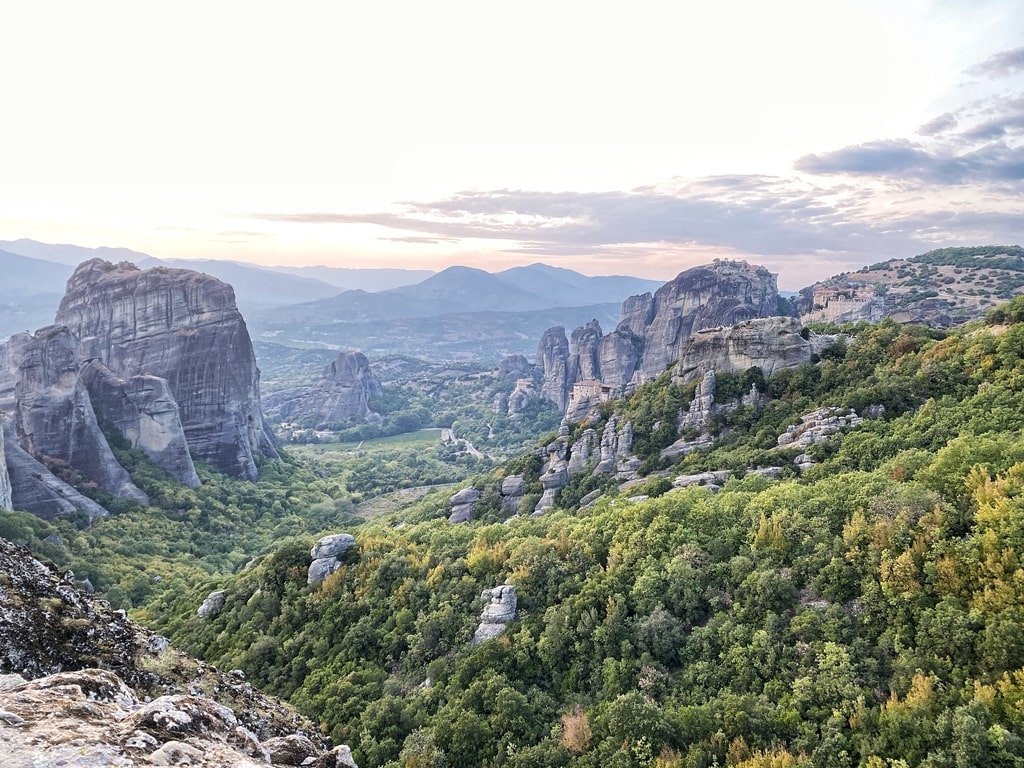
Some places truly take your breath away — and Meteora is one of them.
I’ve been lucky enough to visit Meteora many times, and every single time, I’m amazed all over again. Giant rock pillars rise out of the valley, with centuries-old monasteries perched impossibly on top. It’s unlike anywhere else in Greece — or the world.
Monks began settling here as early as the 9th century, and while more than 20 monasteries were built over the centuries, only six remain active today. And the best part? You can even visit Meteora on a day trip from Athens — yes, it’s a long day, but completely doable with the right planning.
In this guide, I’ll show you exactly how to make it happen: how to get there, what to see, the best tours I recommend, and my top tips for getting the most out of your time.
Disclosure: This post contains affiliate links. That means I may earn a small commission if you book through my links — at no extra cost to you. Thanks for supporting Greece & Beyond.
Want to See Meteora Before You Go?
I filmed my own Meteora experience on a guided bus tour from Athens, so you can see exactly what the journey looks like — the monasteries, the views, and everything in between.
👉 Watch the video here on YouTube
And don’t forget to subscribe for more real travel tips from Greece!
How to Get from Athens to Meteora (for a Day Trip)
Meteora might feel like it belongs in a fantasy world, but getting there from Athens is very doable — even in a day. I’ve done it myself multiple times using different methods: by train, bus, car, and guided tour.
Here are the best options, with pros and cons based on my own experience:
Guided Tour by Bus (Best Value & Hassle-Free)
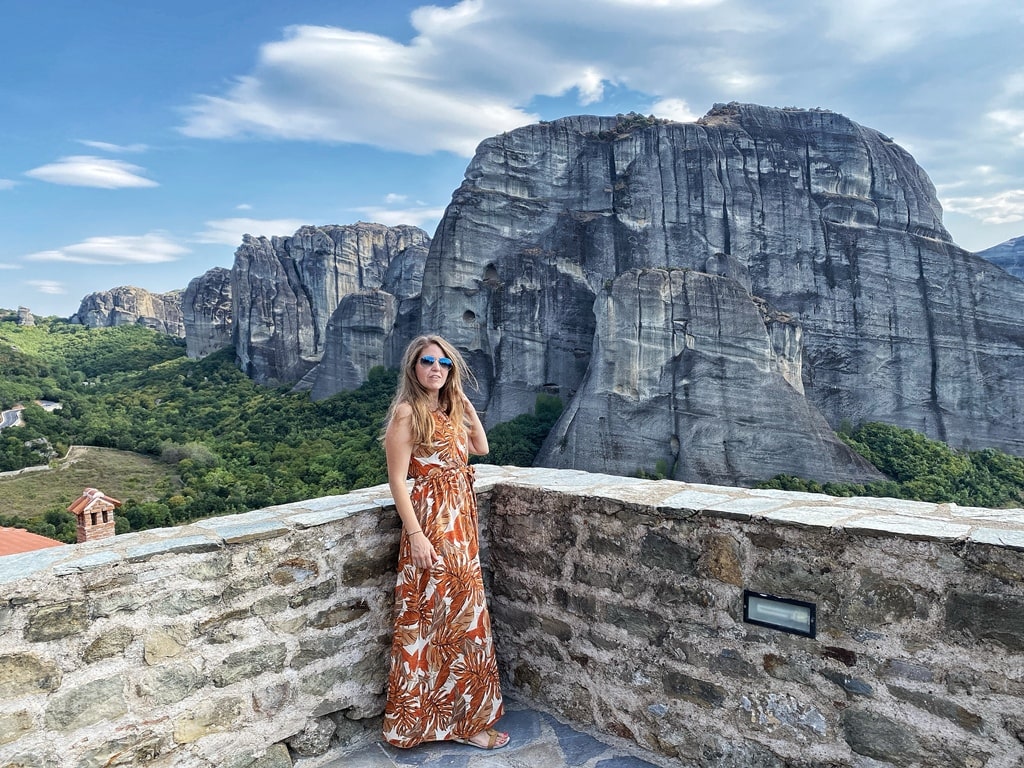
If you’re looking for the easiest and most budget-friendly way to visit Meteora in a day, a guided bus tour is your best bet.
Since the new highway opened, the journey by bus takes about the same time as the train — but costs much less. This tour includes round-trip transportation, visits to the six active monasteries, and entry into three of them, plus plenty of photo stops at stunning viewpoints along the way.
- Comfortable ride
- No train changes
- Great for budget travelers
- Perfect if you don’t want to plan logistics yourself
👉 Book the Guided Bus Tour to Meteora — this is the one I’ve personally taken and recommend.
My tip: If you’re only in Greece for a short time, this tour gives you the most without feeling rushed.
Guided Tour by Train (Scenic but Currently Includes a Bus Transfer)
Taking the train from Athens to Meteora is a scenic and popular option — but it’s important to know that the route currently includes a train-to-bus connection.
Your day starts at Larissa Station, the central train station of Athens. The train departs at 06:58 AM for Kalambaka. Around 09:45 AM, the train stops at Paleofarsalos, where you’ll switch to a connecting bus (provided by Hellenic Train) that will take you the rest of the way to Kalambaka. The bus is air-conditioned and clearly marked with a “HELLENIC TRAIN” sign in the front window.
When you arrive in Kalambaka, your local guide will be waiting at the station holding a sign with your name. From there, you’ll begin a small-group tour by minibus to visit Meteora’s monasteries and viewpoints. After the tour, you’ll return to the station for your evening trip back to Athens.
- Comfortable ride with scenic views
- Small-group guided tour of the monasteries
- More expensive than the bus option
- There is a train to bus connection
👉 Book the Train + Meteora Guided Tour
My tip: Personally, I recommend the bus tour instead — it’s much simpler.
Train travel in Greece can be unpredictable (strikes do happen), and the required change to a bus at Paleofarsalos makes the journey less relaxing. Plus it is much more expensive. If you’re looking for a smoother, more reliable experience, the guided bus tour is the better choice.
Renting a Car (Great for an Overnight Trip, Not Ideal for a Day Trip)
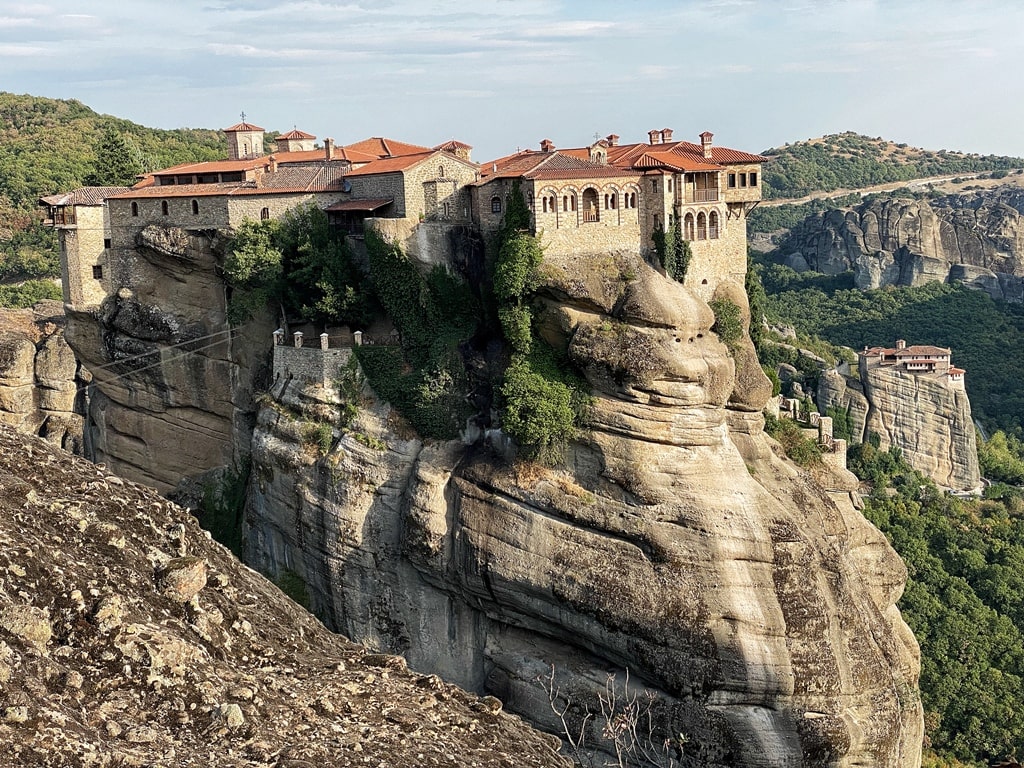
Driving from Athens to Meteora takes about 4.5 to 5 hours each way, which makes it too much for a day trip, in my opinion. You’ll spend most of your time on the road and feel rushed once you arrive.
But — if you’re planning a road trip through mainland Greece, or combining Meteora with places like Delphi, Thermopylae, or Northern Greece, renting a car gives you the freedom to explore at your own pace and stop at scenic spots along the way.
Local tip: Roads in Meteora are steep and winding, especially near the monasteries. Be confident behind the wheel, and avoid driving at night if possible.
👉 Check car rental prices on Discover Cars
They let you compare agencies, include free cancellation, and often have the best rates.
Private Driver (Most Comfortable — Best for Small Groups)
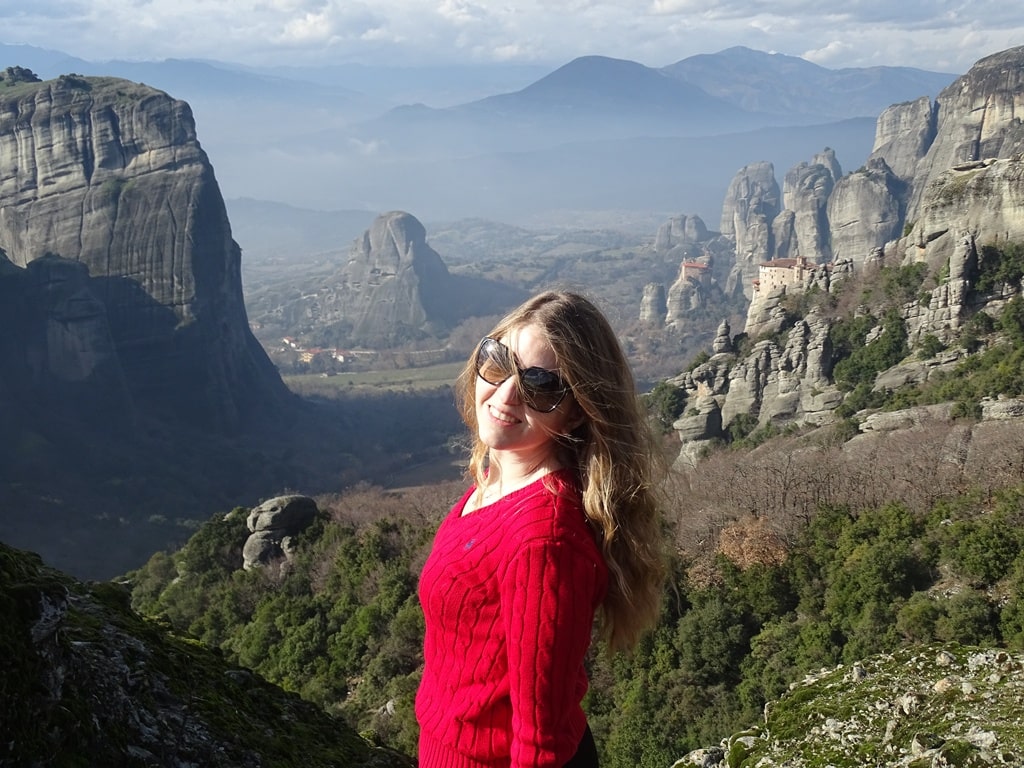
If you want to avoid the hassle of public transport or group tours, hiring a private driver is the most comfortable (and flexible) way to visit Meteora from Athens in one day.
You’ll be picked up directly from your hotel, enjoy a smooth ride in a private vehicle, and have time to explore the monasteries at your own pace — either on your own or with a local guide upon arrival.
This option is more expensive, but if you’re traveling as a group of 3–4, the cost can be split and becomes much more reasonable.
- Door-to-door service
- No train or bus transfers
- Customizable timing
- Great for families or small groups
👉 Book a private day trip to Meteora
My tip: This is ideal if you value comfort and flexibility — especially if you’re short on time but still want a peaceful experience.
Tips for Visiting Meteora
A few things to keep in mind before your trip — especially if you’re visiting for just one day:
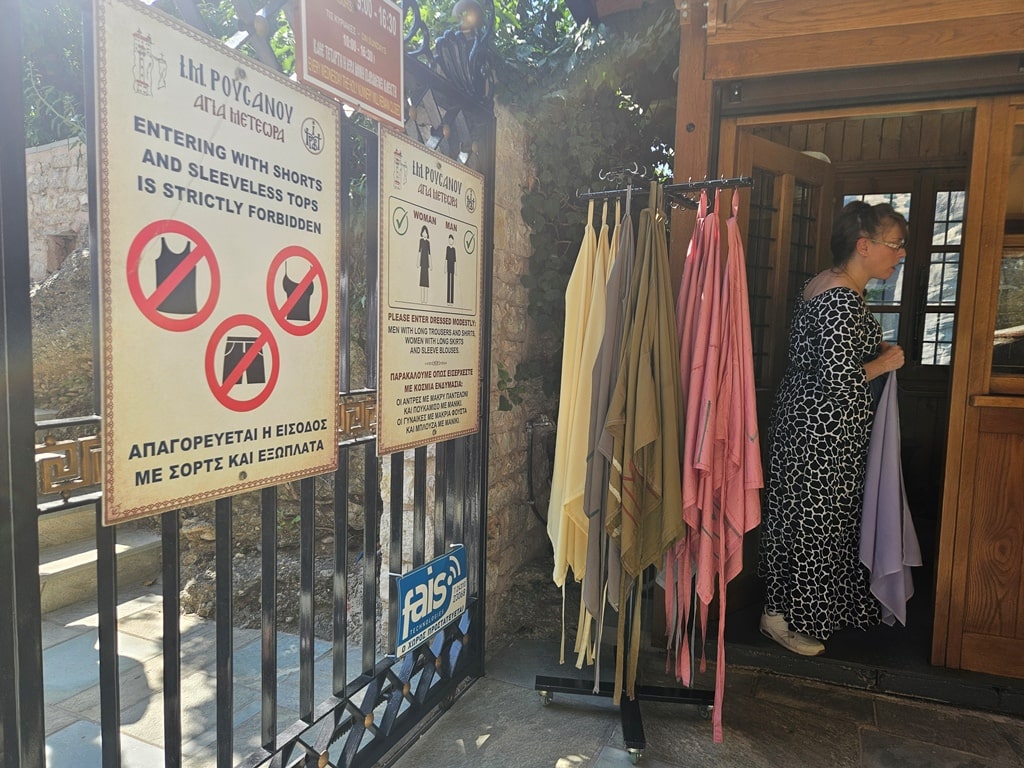
Dress Code (Very Important)
- Men must wear long pants.
- Women must wear skirts below the knee and cover their shoulders.
- All monasteries provide wraps at the entrance, but it’s best to bring your own just in case.
Entry Fee
- Entry to each monastery costs €5, cash only.
- If you plan to visit 3 or more, bring enough small change with you.
Opening Hours
- Not all monasteries are open every day — each one closes 1–2 days per week on rotation.
- If you’re traveling independently, check ahead to avoid missing one you really want to visit.
- If you’re booking a guided tour, don’t worry — the itinerary is planned around the opening hours, so you’ll always get to visit the most impressive ones that are open that day.
Wear Comfortable Shoes
- Be prepared for lots of steps and uneven paths.
Sturdy, supportive shoes are a must — some staircases are steep and can be slippery.
Bring Water & Snacks
- There are limited options near the monasteries, so pack a bottle of water and something small to eat — especially if you’re doing a full-day trip.
Local tip: If you book a day trip between November and February you might also see the sunset from Meteora.
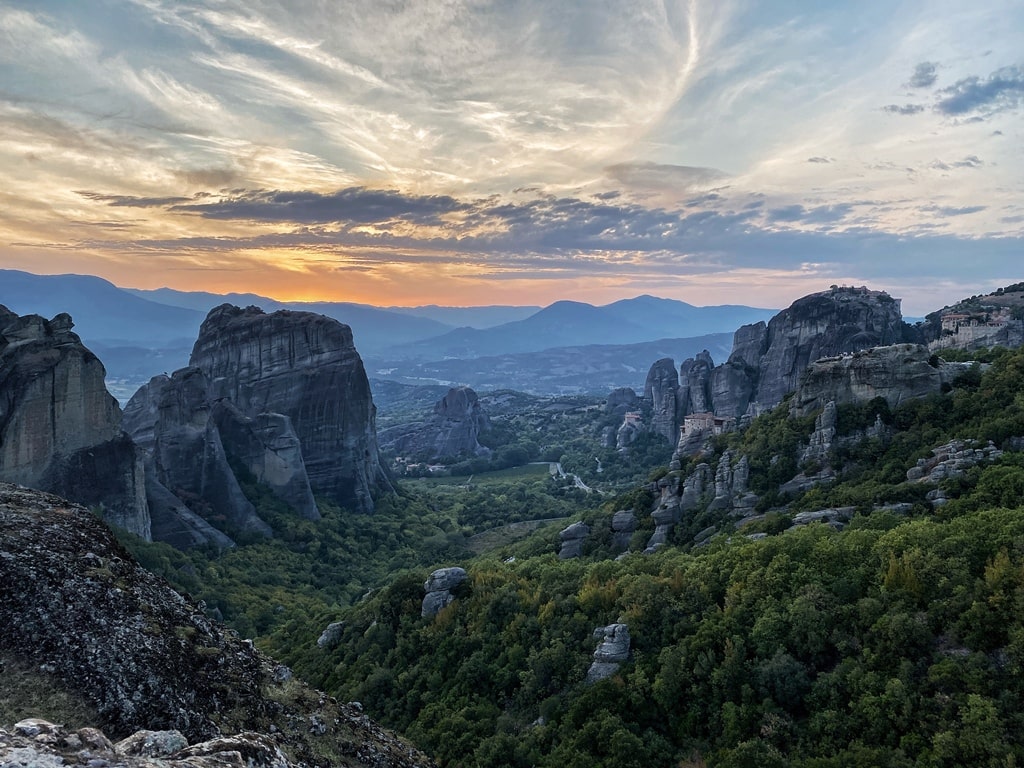
A Quick Guide to the Monasteries of Meteora
There are six active monasteries in Meteora today — and each one is truly unique. Some are grand and dramatic, others are quiet and tucked into the cliffs. You probably won’t go inside all of them in one day, but trust me — just seeing them from the outside is an experience on its own.
Here’s a quick intro to each, so you know what makes them special:
Great Meteoron Monastery
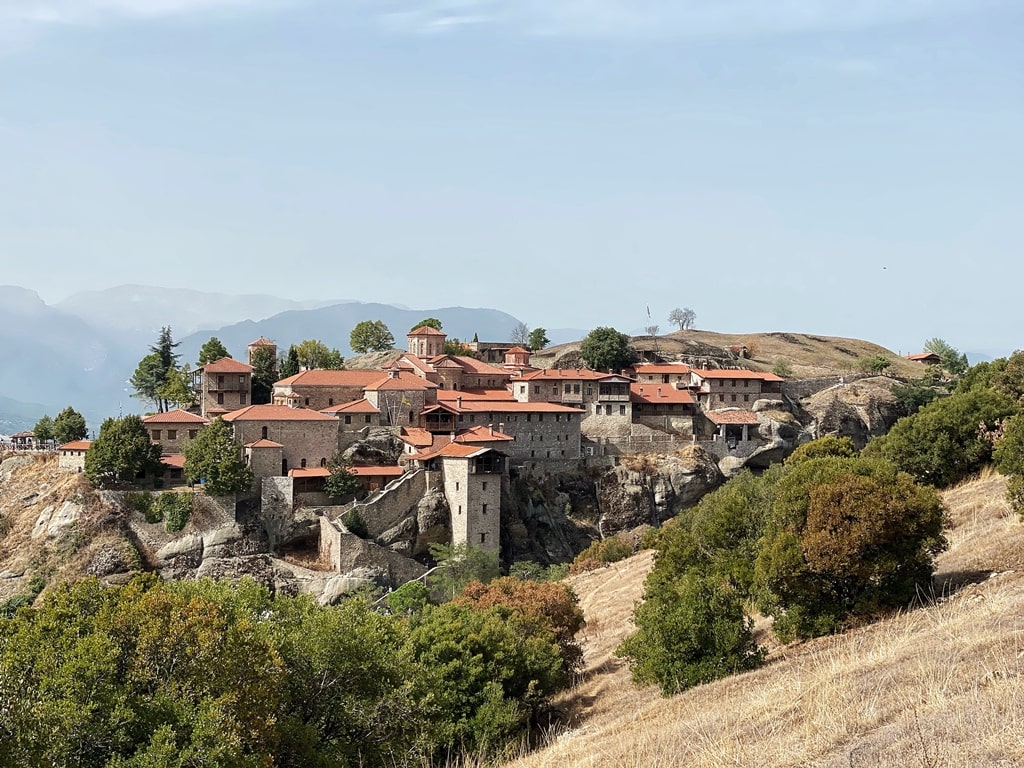
This is the biggest and oldest monastery in Meteora, and one of the most visited. It was founded in the 14th century and sits on the highest rock, so be prepared for a bit of a climb. But once you’re up there, the views are incredible. Inside, you’ll find a small museum, old wine cellars, and some truly stunning frescoes that have been beautifully preserved.
If you’re into history, this one is a must — it really gives you a sense of how life here once was.
Opening Times: April 1st to October 31st, 09:30 to 15:00, Closed on Tuesdays.
November 1st to March 31st, 09:30 to 14:00, Closed on Tuesdays, Wednesdays, and Thursdays.
Varlaam Monastery
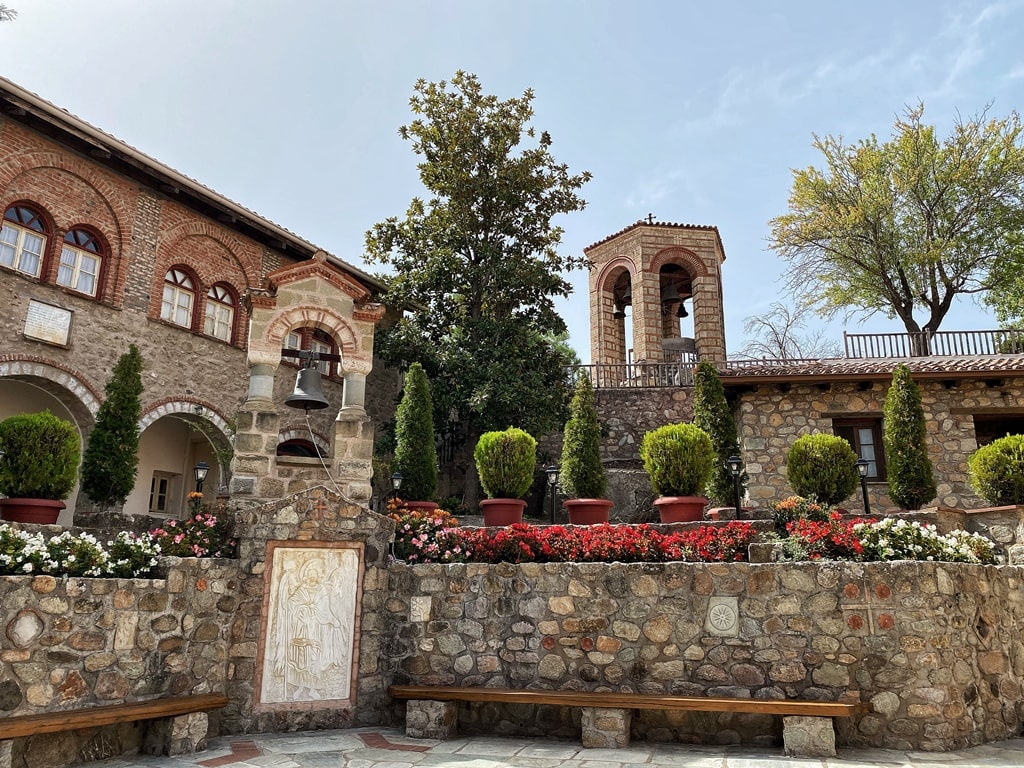
Right across from Great Meteoron is Varlaam, the second-largest monastery. It’s slightly easier to reach, and also full of treasures — from religious relics and manuscripts to beautiful art inside the chapel. It has some of the best panoramic views over the valley and is almost always included on guided tours. It’s a favorite for photographers and history lovers alike.
Opening Times: April 1st to October 31st, 09:00 to 16:00, Closed on Fridays.
November 1st to March 31st, 09:00 to 15:00, Closed on Thursdays and Fridays.
Roussanou Monastery
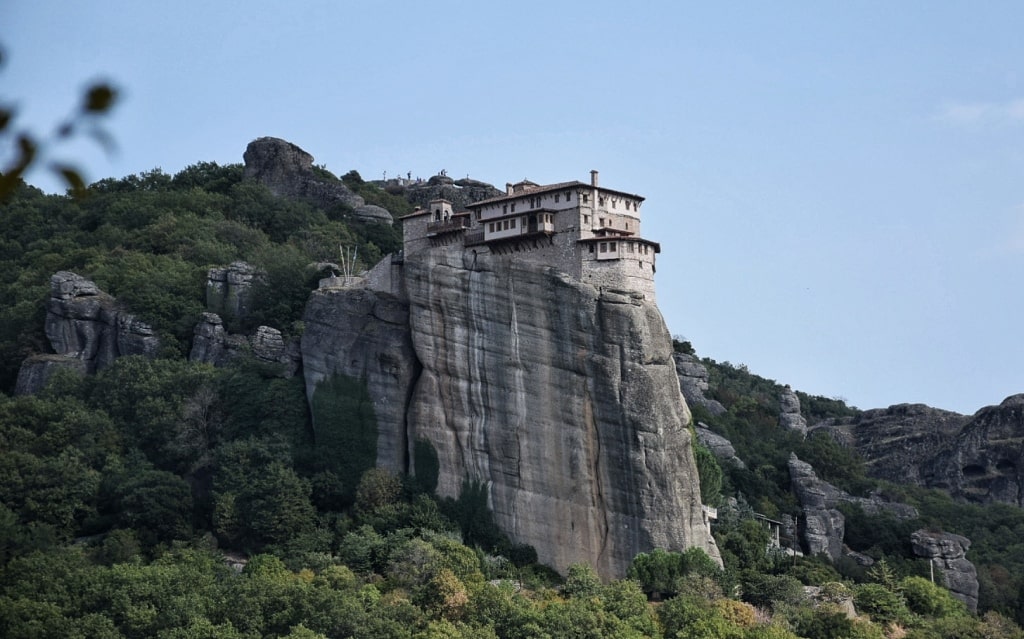
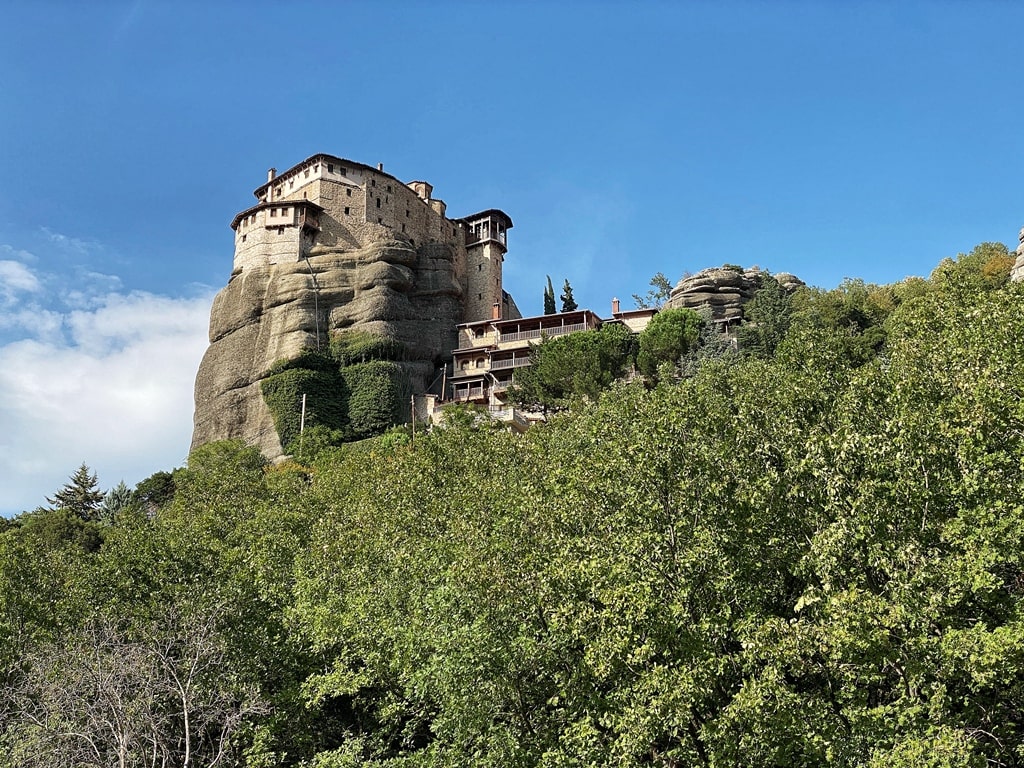
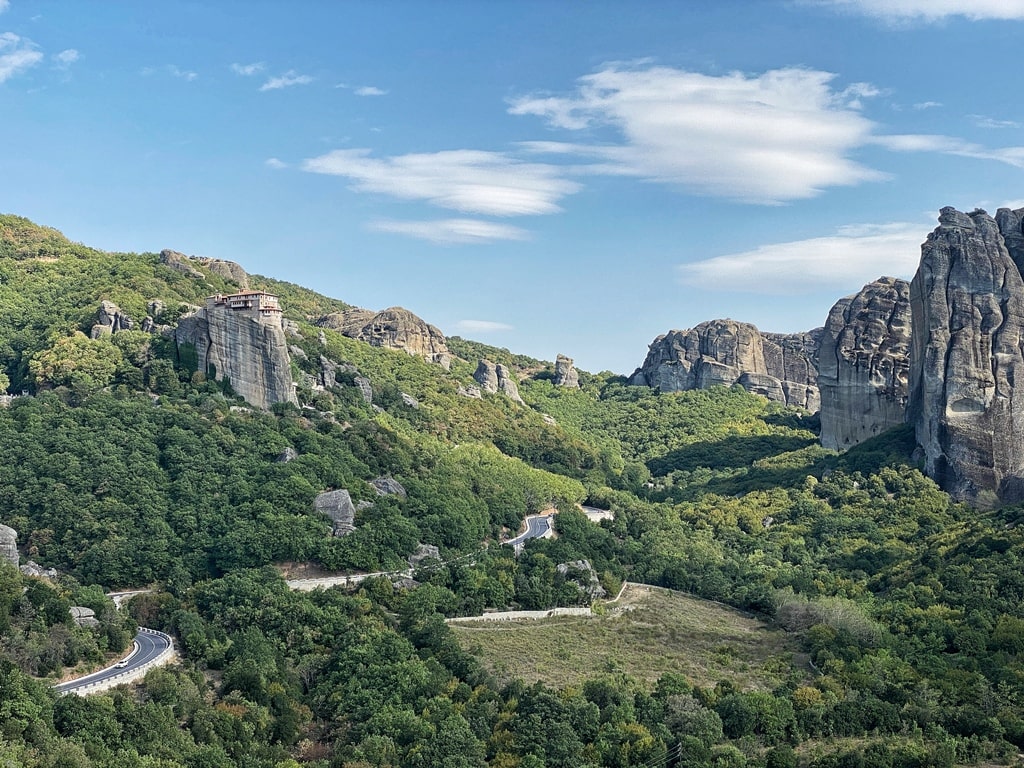
Roussanou is one of the most picturesque — and it’s run by nuns, which gives it a slightly softer, more peaceful energy. The building itself is perched beautifully on a narrow rock, and it’s easier to access than most of the others. Inside, you’ll find colorful frescoes and a small but very well-kept chapel. I always recommend this one to people who want something a bit quieter and reflective.
Opening Times: April 1st to October 31st, 09:00 to 15:30, Closed on Wednesdays.
November 1st to March 31st, 09:30 to 14:00, Closed on Wednesdays.
Holy Trinity Monastery
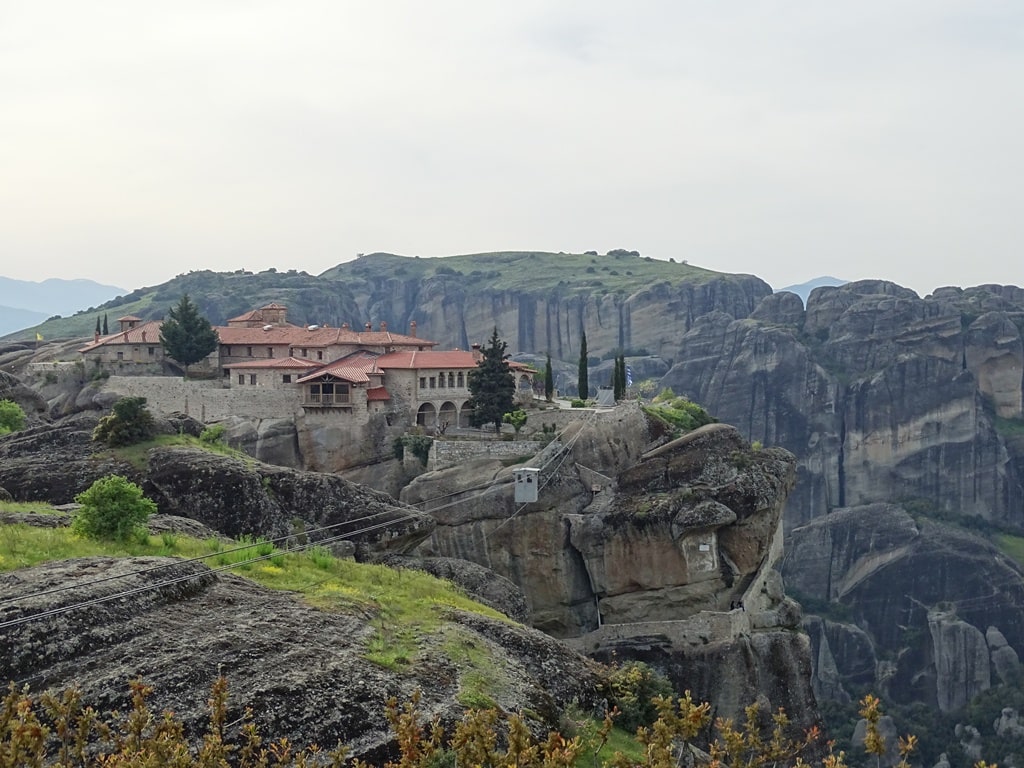
This is the most dramatic-looking of all — perched high on a slender rock, completely surrounded by space and sky. It’s also the one that appeared in the James Bond film For Your Eyes Only. Getting there is a bit of a workout (lots of stairs!), but it’s absolutely worth it. The views from the top are unforgettable, and it’s one of the most atmospheric places in all of Meteora.
Opening Times: April 1st to October 31st, 10:00 to 16:00, Closed on Thursdays.
November 1st to March 31st, 10:00 to 16:00, Closed on Thursdays.
St. Nicholas Anapafsas Monastery
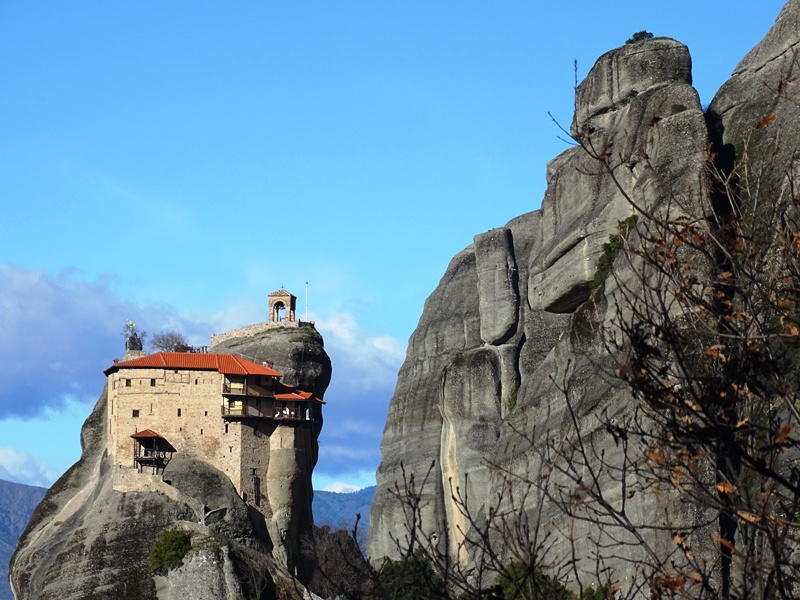
This is the smallest monastery, but it holds a special kind of charm. Inside, you’ll find rare frescoes by Theophanes the Cretan, one of the masters of Byzantine iconography. Because it’s often overlooked, it tends to be quieter, which makes it perfect for travelers who want a less touristy experience. It’s located close to the village of Kastraki, so it’s also convenient to reach.
Opening Times: April 1st to October 31st, 09:00 to 17:00.
November 1st to March 31st, 09:00 to 16:00.
St. Stephen’s Monastery
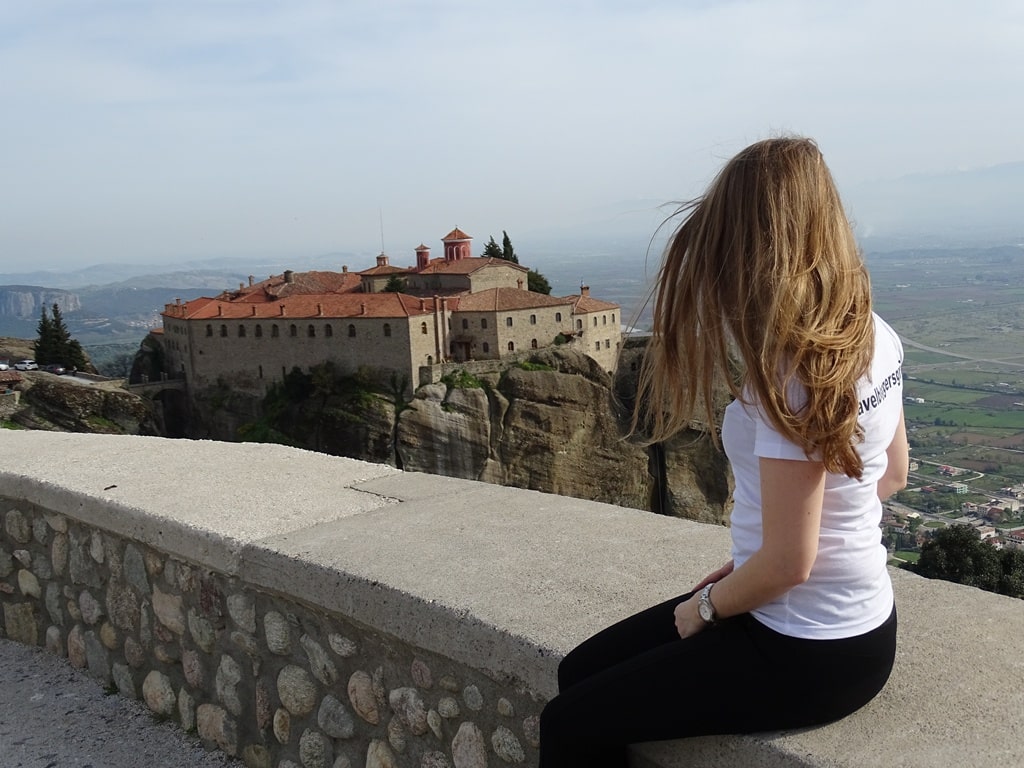
If stairs aren’t your thing, St. Stephen’s is your best bet. Instead of a long climb, you just cross a small bridge to enter. It’s now a convent run by nuns and is beautifully maintained. There’s a chapel, a small museum, and some lovely views from the courtyard. It’s a peaceful and accessible option — ideal for those who want to experience Meteora without too much physical effort.
Opening Times: April 1st to October 31st, 09:00 to 13:30 & 15:30 to 17:30, Closed on Mondays.
November 1st to March 31st, 09:30 to 13:00 & 15:00 to 17:00, Closed on Mondays.
My tip: If you’re doing a guided tour (which I recommend), they’ll choose the best 2–3 monasteries that are open on that specific day. Most tours include Varlaam, Roussanou, and either Great Meteoron or St. Stephen’s.
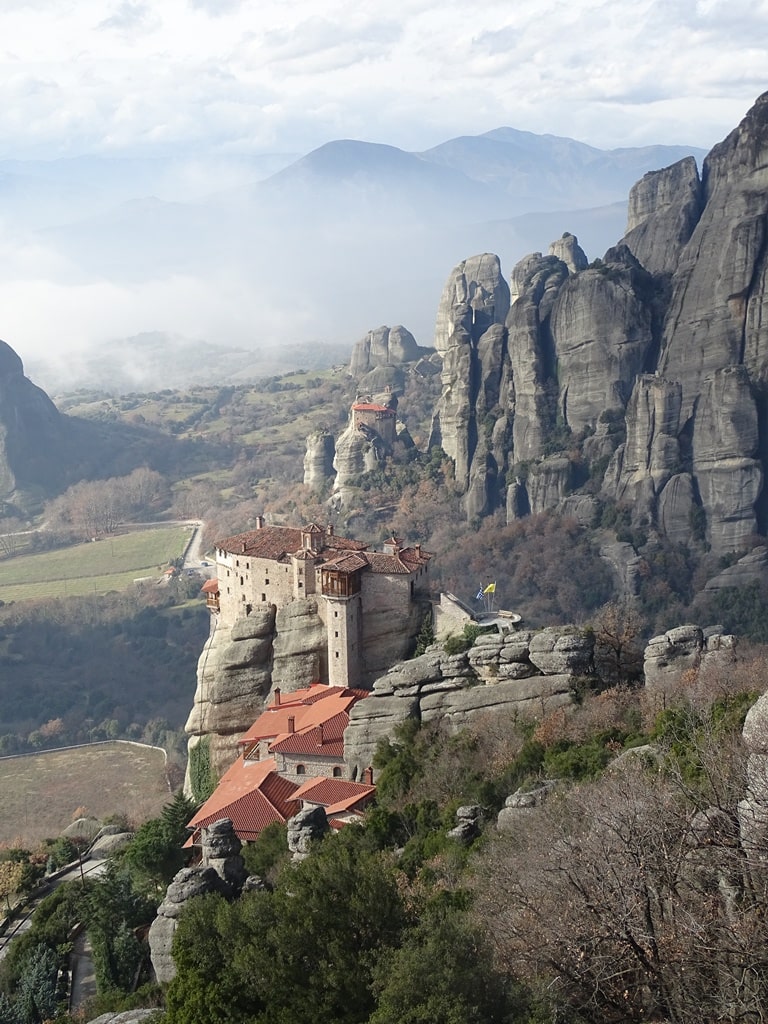
Meteora is one of those places that stays with you — long after you’ve left. No photo truly captures the scale, the silence, or the feeling of standing among those ancient rock pillars. Whether you visit on a day trip or stay overnight, I hope this guide helps you experience it in a way that’s meaningful and stress-free.
As someone who keeps going back, I can say with confidence: it’s worth every step, every early morning, and every winding road. Thanks for reading — and if you need more tips for planning your time in Greece, I’m always here to help.