

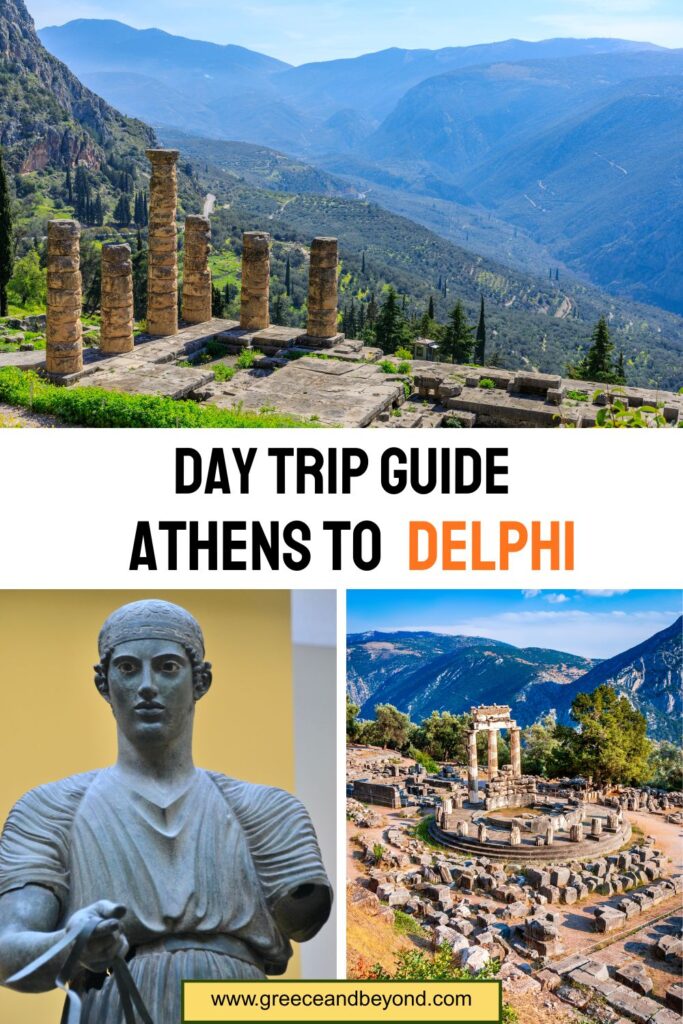
If you’re spending a few days in Athens and want to experience more of Greece’s ancient spirit, a day trip to Delphi is one of the best escapes from the city.
Only about two and a half hours from the capital, Delphi feels like a world away, a mountain sanctuary surrounded by cypress trees and myths.
I’ve visited Delphi many times over the years, and each visit feels just as magical as the first. The views, the silence, and the sense of standing somewhere sacred never get old. Whether you’re fascinated by history or love a good mountain drive, Delphi is one of those places that stays with you long after you leave.
In this guide, I’ll walk you through how to plan your Delphi day trip from Athens — how to get there, what to see, and a few local tips to make the most of your visit.
Want to see what a day trip to Delphi really looks like?
Watch my full video guide below, where I take you along the journey from Athens, walk through the ancient sanctuary, and share what it’s like to stand where the Oracle once spoke.
Don’t forget to subscribe to my YouTube channel, Greece and Beyond, for more travel guides and local tips from around Greece!
Disclosure: This post contains affiliate links. That means I may earn a small commission if you book through them — at no extra cost to you. Thank you for supporting Greece & Beyond and helping me keep this site going!
How to Get from Athens to Delphi
Getting to Delphi from Athens is easy, and there are a few ways to do it depending on your budget and travel style.
By Guided Tour
If you only have one day and don’t want to worry about transportation or tickets, a guided tour from Athens is the most stress-free option. You’ll travel in a modern air-conditioned coach, learn the history and mythology from an expert guide, and often have time for lunch or a quick stop in Arachova on the way back.
I’ve done this tour several times when friends visit, and it’s always a hit — relaxed, informative, and well-organized.
You can check out my recommended tour here:
Delphi Full-Day Guided Tour from Athens
By Private Day Trip
If you prefer a more comfortable and flexible experience, you can arrange a private day trip from Athens to Delphi.
This is a great option for couples, families, and small groups who want to travel at their own pace without joining an organised tour. You’ll be picked up directly from your accommodation in Athens and travel in a comfortable private vehicle with a professional driver.
A private trip also gives you more flexibility with your day, making it easy to combine Delphi with a stop in Arachova before returning to Athens.
→ Find out more about private day trips from Athens and request a personalised quote.
By Car
If you love the freedom of exploring at your own pace, driving is a great option. The journey takes about 2 hours and 15 minutes each way, and the last part of the drive is incredibly scenic, especially as you approach the mountain village of Arachova.
It’s worth stopping there for a quick coffee or lunch; it’s one of those cozy towns that feels straight out of a postcard.
That said, I usually don’t recommend renting a car just for a day trip, by the time you handle pick-up, drop-off, and parking, it can become more hassle than it’s worth. But if you’re already planning a road trip through Greece (for example, combining Delphi with Meteora or the Peloponnese), then it’s absolutely worth it.
I recommend booking a car through Discover Cars, where you can compare all rental car agencies’ prices, and you can cancel or modify your booking for free. They also guarantee the best price. Click here for more information and to check the latest prices.
By Public Bus (KTEL)
If you’re traveling on a budget, the KTEL intercity bus is a solid choice. Buses leave from Athens’ Liosion Bus Station several times a day, and the trip takes about 3 hours each way.
It’s a comfortable and affordable option if you don’t mind sticking to a fixed schedule.
You can check the latest timetable on the official KTEL website.
Tips for Visiting Delphi
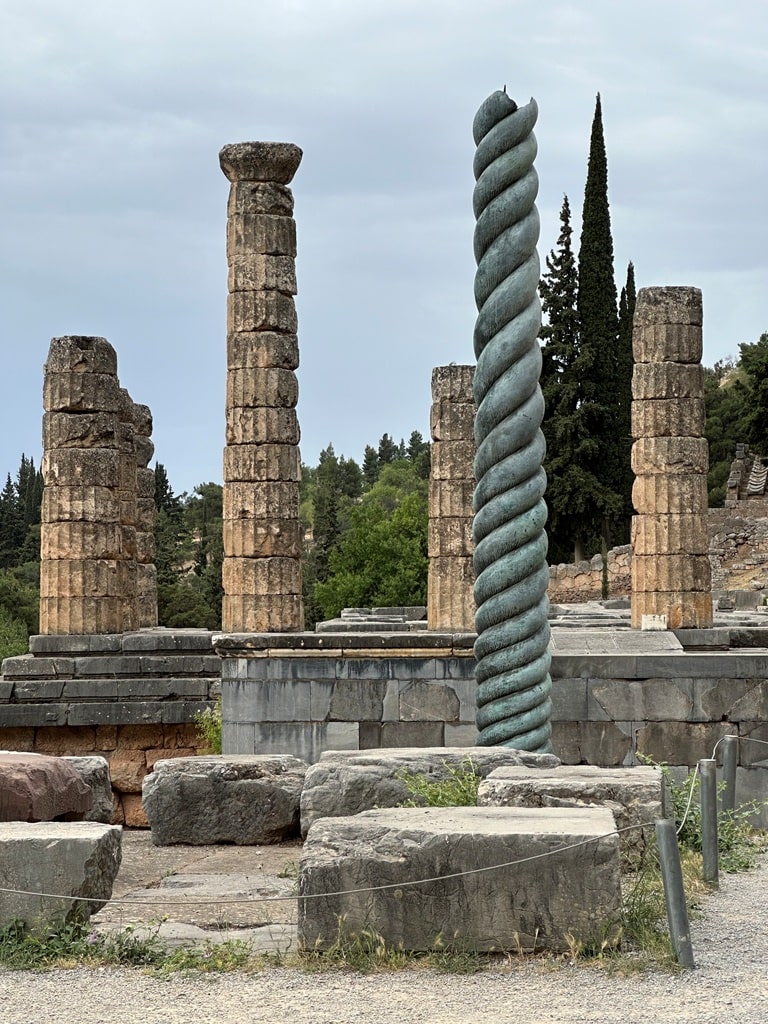
Delphi is one of those sites that’s best enjoyed slowly. It’s built on a hillside, so give yourself time to wander and take in the views. Here are a few simple tips to make your visit smoother and more enjoyable:
- Wear comfortable shoes. The terrain is uneven, and you’ll be walking uphill on ancient stone paths.
- Bring water, sunscreen, and a hat. There’s little shade on the site, especially in summer.
- Start early. Arriving when the site opens means cooler temperatures and far fewer crowds.
- Allow at least 2–3 hours to visit both the archaeological site and the museum; both are worth it.
- Combine your visit with Arachova. This charming mountain village is just 10 minutes away and perfect for a coffee, lunch, or even a quick stroll through its stone alleys.
- Visit in spring or autumn if you can. The weather is mild, and the mountain scenery is at its best.
If you’re visiting in summer, try to avoid midday; the heat can make the climb feel much harder.
Practical Information for Visiting Delphi
Before you go, here are the key details you need to plan your visit smoothly, including ticket prices, opening hours, and free admission days.
Opening Hours
- Summer (April 1 – October 31): 08:00 – 20:00 (last admission 19:40)
- Winter (November 1 – March 31): 08:30 – 15:30 (last admission 15:10)
- Tuesdays: 10:00 – 17:00 (last admission 16:40)
Closed on
- January 1
- March 25
- May 1
- Greek Orthodox Easter Sunday
- December 25 & 26
Special hours:
- Good Friday: 12:00 – 17:00
- Holy Saturday: 08:30 – 15:30
Tickets
- Full ticket: €20
- Reduced ticket: €10
The same ticket covers both the Archaeological Site and the Archaeological Museum of Delphi.
You can buy tickets at the entrance or book online via the official e-ticketing system of the Hellenic Ministry of Culture and Sports.
Free Admission Days
- March 6 (in memory of Melina Mercouri)
- April 18 (International Monuments Day)
- May 18 (International Museums Day)
- The last weekend of September (European Heritage Days)
- October 28 (National Holiday)
- Every first and third Sunday from November 1 to March 31
The Mythology of Delphi
Like many sacred places in Greece, Delphi’s story begins with a myth. According to legend, Zeus released two eagles from opposite ends of the world, one from the east and one from the west. They met exactly over Delphi, marking it as the center of the earth, or the “omphalos” (navel of the world).
The site was also believed to be where the god Apollo slew the giant serpent Python, who guarded the oracle of Gaia, the Earth goddess. After defeating Python, Apollo claimed the sanctuary as his own and established his oracle there, making Delphi the most important spiritual center of the ancient Greek world.
A Brief History of Delphi
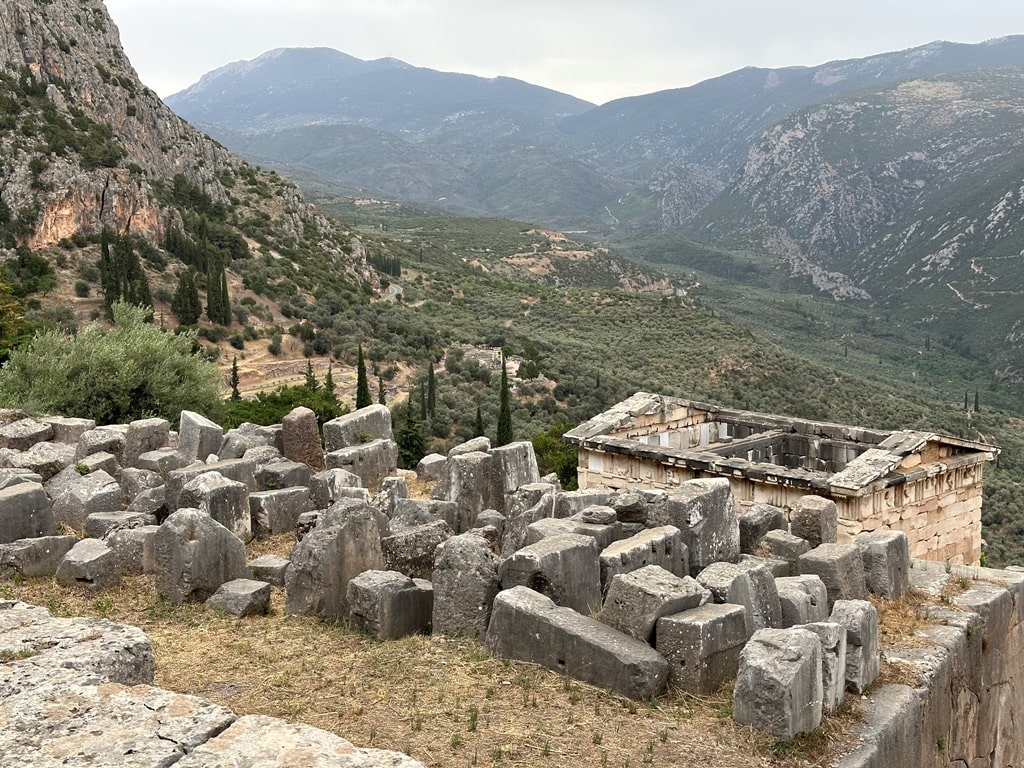
Perched on the slopes of Mount Parnassus, overlooking the valley of Phocis, Delphi has always felt like a place touched by something greater. Long before it became one of the most important sanctuaries of the ancient world, this area was already considered sacred.
Delphi began to flourish around the 8th century BC, when the cult of Apollo was established here. But the site’s roots go back even further; archaeologists have found traces of Mycenaean and even Neolithic settlements.
What made Delphi truly famous, though, was its Oracle. People from all over Greece, and beyond, would travel for days or weeks to ask Pythia, the high priestess of Apollo, for guidance. From generals and kings to farmers and traders, everyone wanted to hear the god’s will. Her answers were famously cryptic, and today we know that natural gases rising from the ground might have contributed to her trance-like state. But to the ancient Greeks, it was divine communication.

Delphi wasn’t only about prophecy. It was also a center of art, music, and athletics, hosting the Pythian Games every four years, second in prestige only to the Olympic Games. Over the centuries, the sanctuary grew under the influence of the Athenians, Macedonians, and Romans, until it finally declined when Emperor Theodosius banned pagan worship in 394 AD.
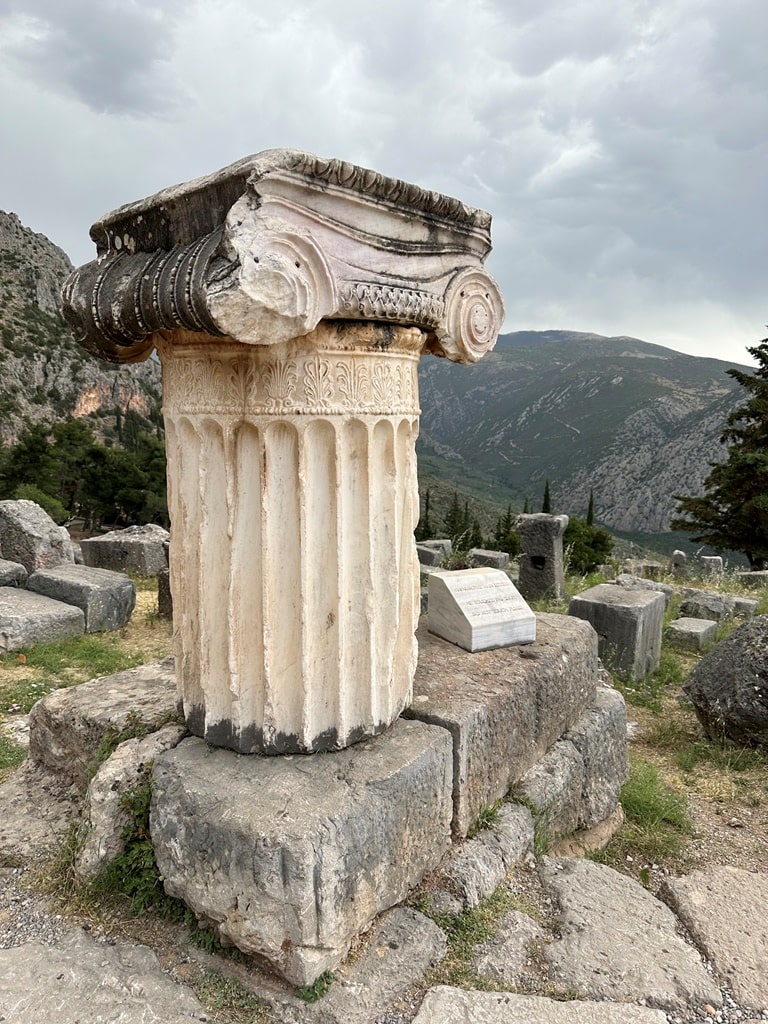
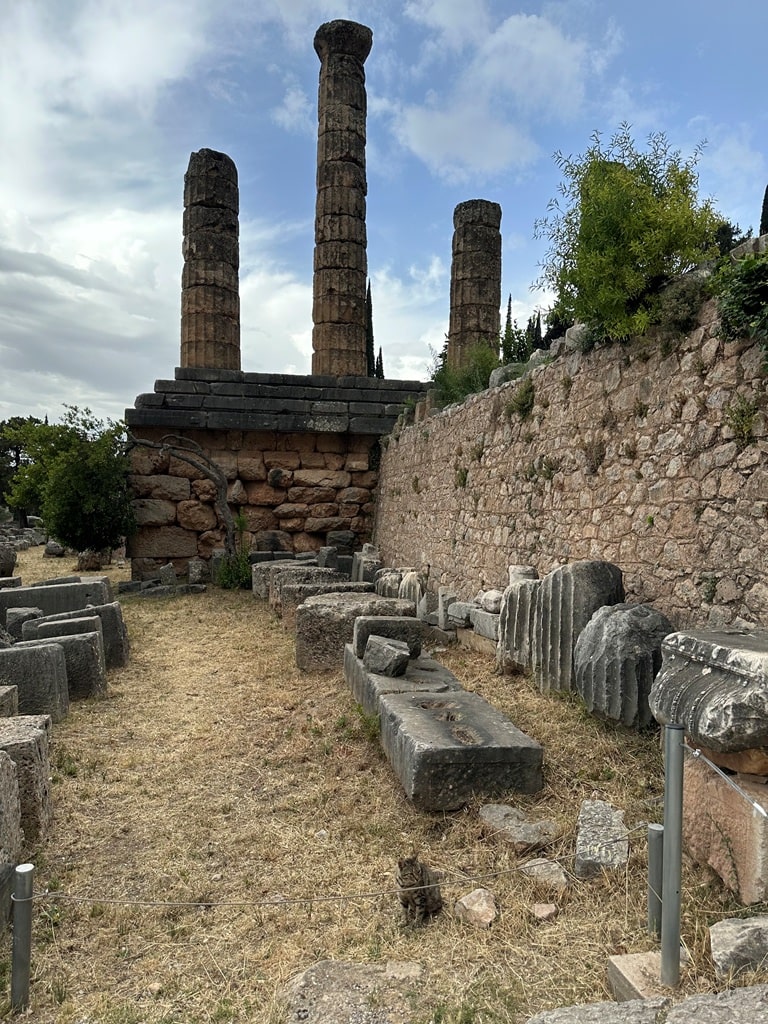
Even though the temples are now in ruins, Delphi still feels sacred. Standing among the columns of Apollo’s temple with the mountains all around you, it’s easy to understand why the ancients believed this was the “navel of the world.”
What to See in Delphi
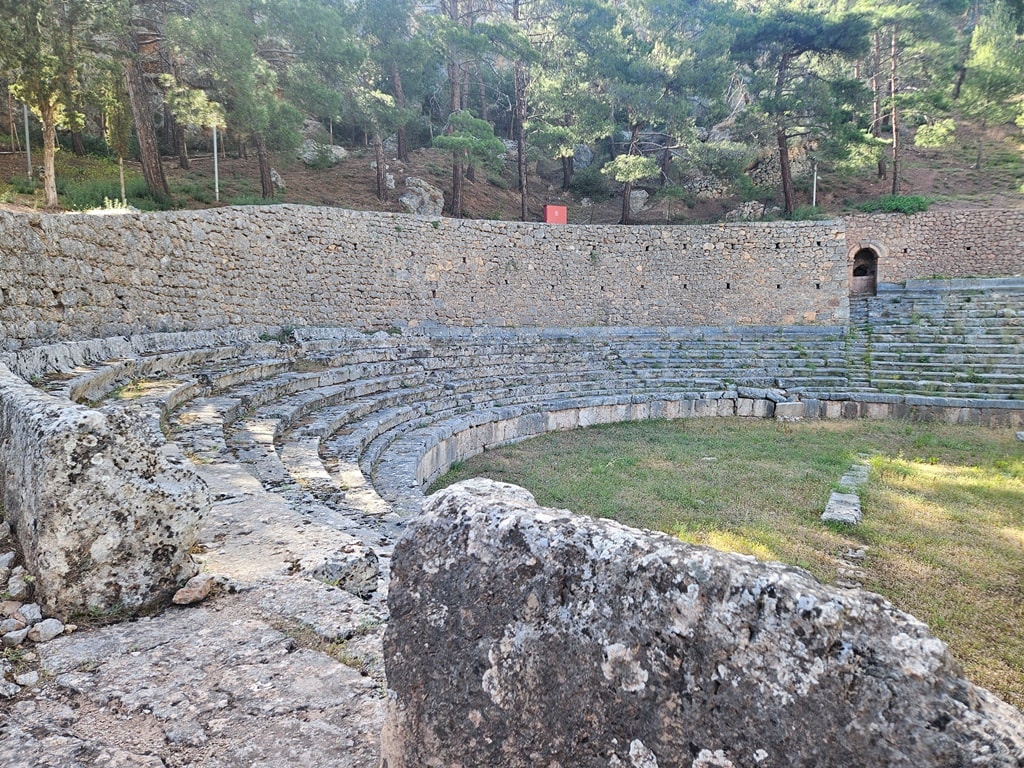
There’s a lot to take in at Delphi, but don’t worry, the site is well laid out and easy to explore, even if you only have a few hours. Here are the highlights you shouldn’t miss on your visit:
Sanctuary of Athena Pronaia
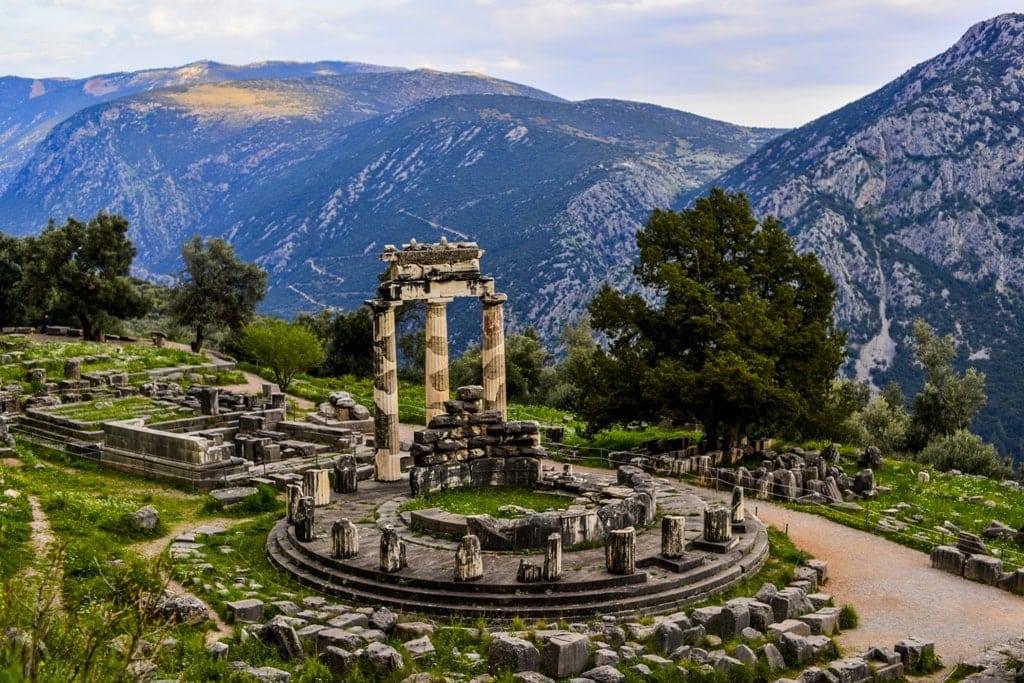
This is usually the first area you’ll see before entering the main site, and it’s one of the most photographed spots in Greece. The circular Tholos of Delphi, with its elegant columns, has become a symbol of the site.
Its exact purpose remains a mystery, but its beauty, especially with Mount Parnassus in the background, makes it unforgettable.
Temple of Apollo
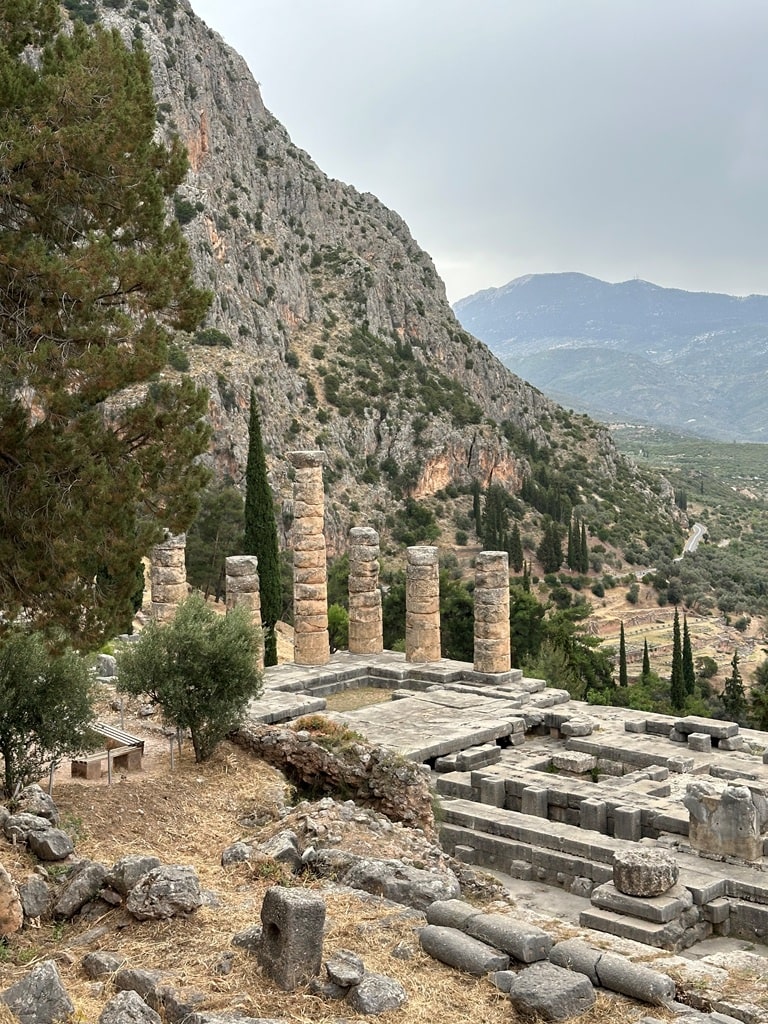
The heart of ancient Delphi. This is where the Oracle of Apollo once spoke through the priestess Pythia. Even in ruins, standing among the temple’s remaining columns feels powerful, especially when you think about how kings and generals once came here for divine guidance.
Treasury of the Athenians
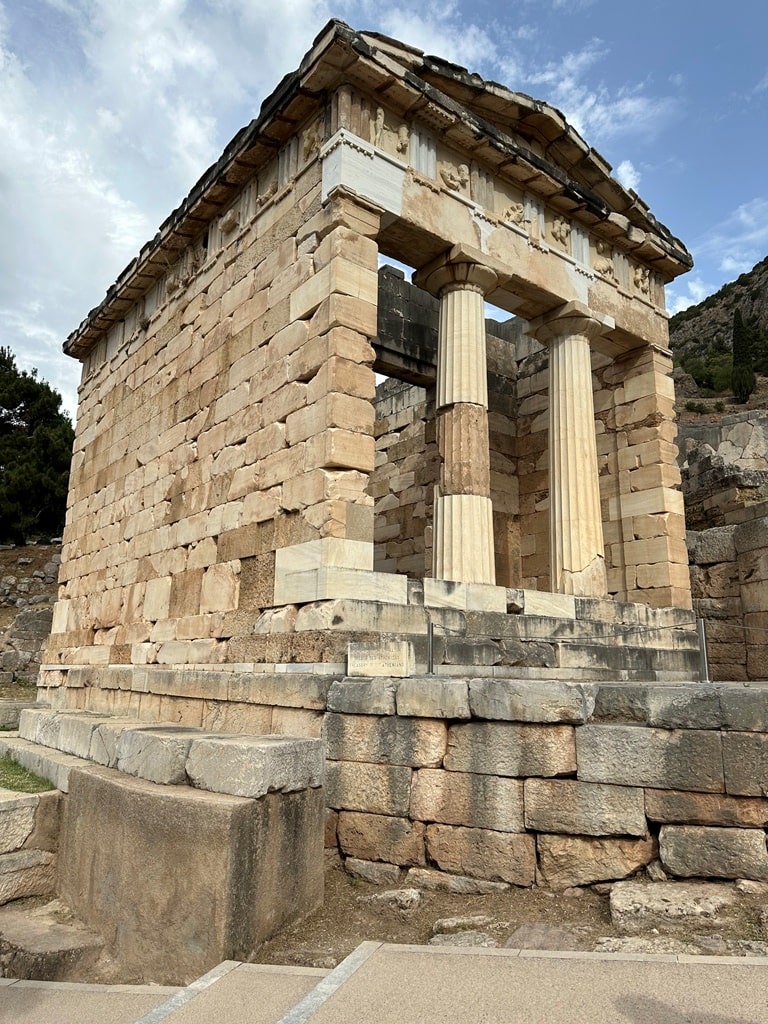
Built to celebrate Athenian victories and store offerings to Apollo, this small marble building has been beautifully reconstructed. It gives a real sense of what ancient Greek architecture looked like when it was new.
Theatre of Delphi
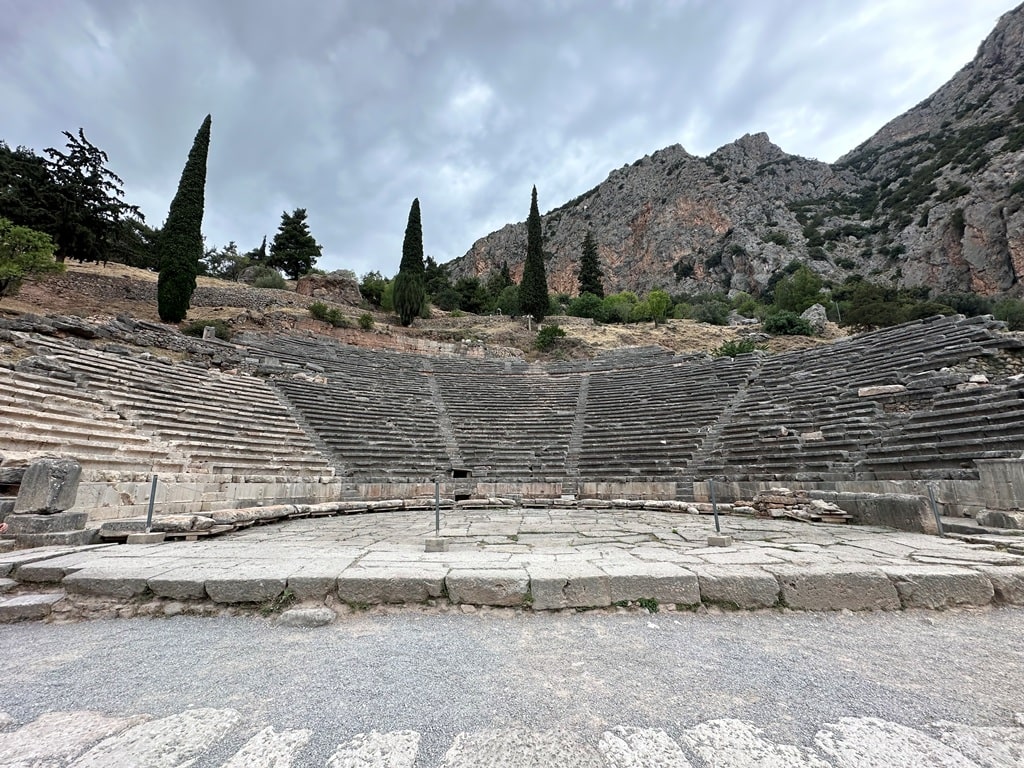
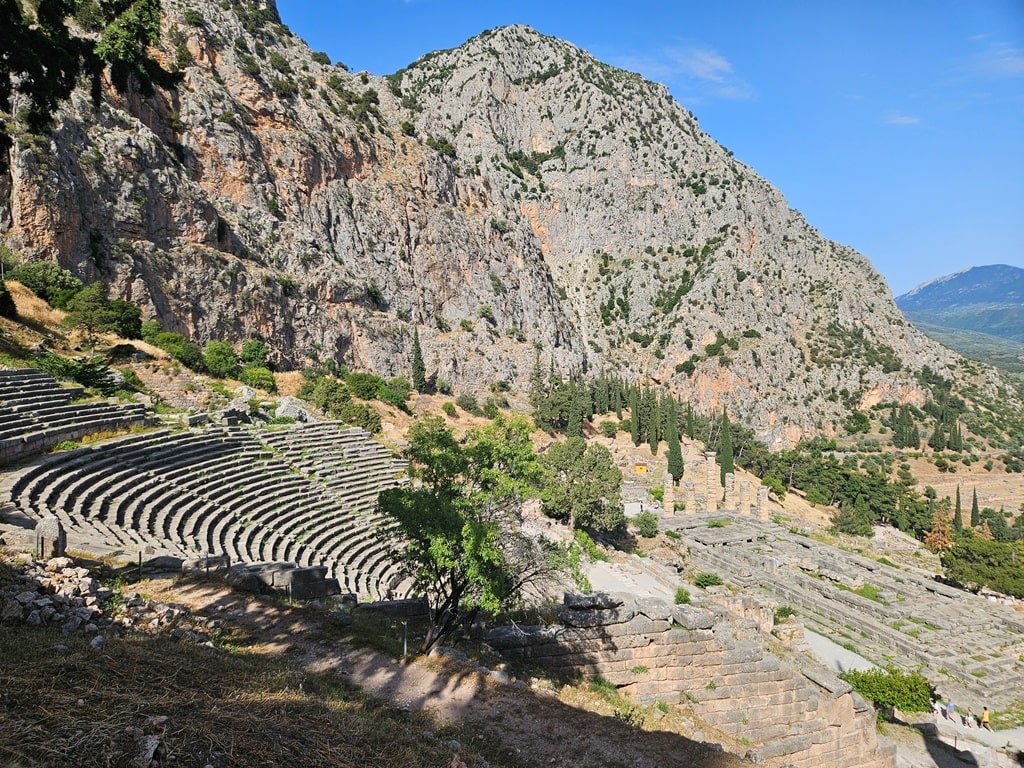
Just above the temple, the ancient theatre was where music and poetry competitions were held during the Pythian Games. Climb a few rows up and take a moment to look out; the view over the valley of olive trees, all the way to the sea, is simply breathtaking.
Stadium of Delphi
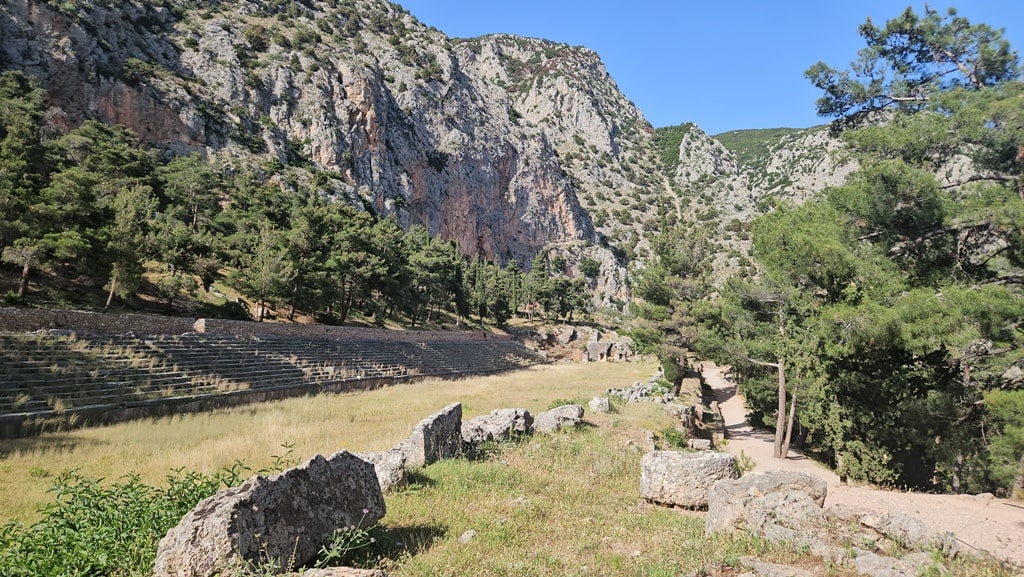
Keep walking uphill from the theatre to reach the stadium, one of the best preserved in Greece. It hosted athletic competitions, including foot races. Standing there, it’s easy to imagine the energy of thousands of spectators cheering below Mount Parnassus.
The Sacred Way
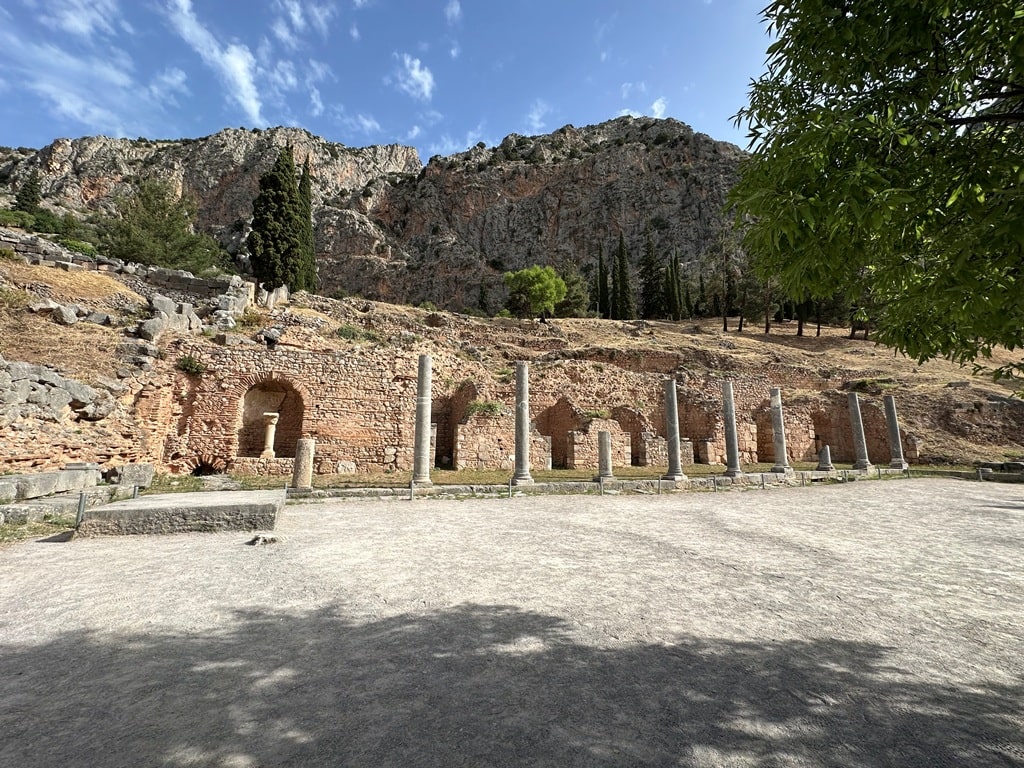
This winding ancient road once led pilgrims through the sanctuary, lined with statues, treasuries, and monuments dedicated by Greek city-states. Walking it today is like stepping back in time; every turn reveals a new perspective of the site.
Archaeological Museum of Delphi
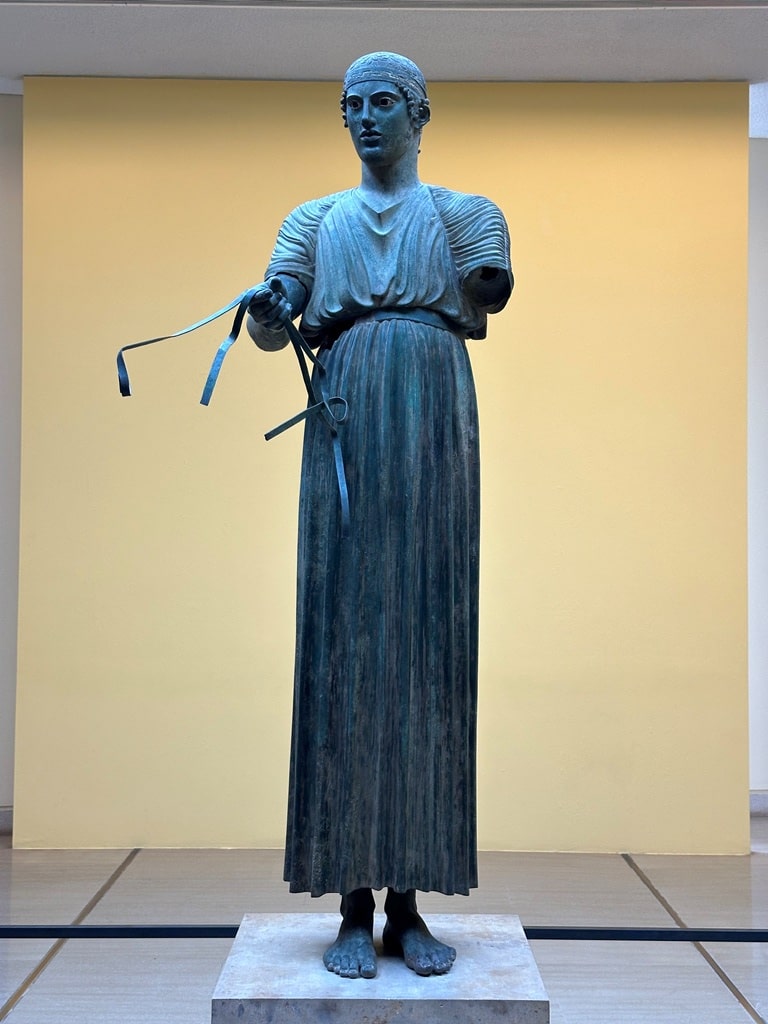
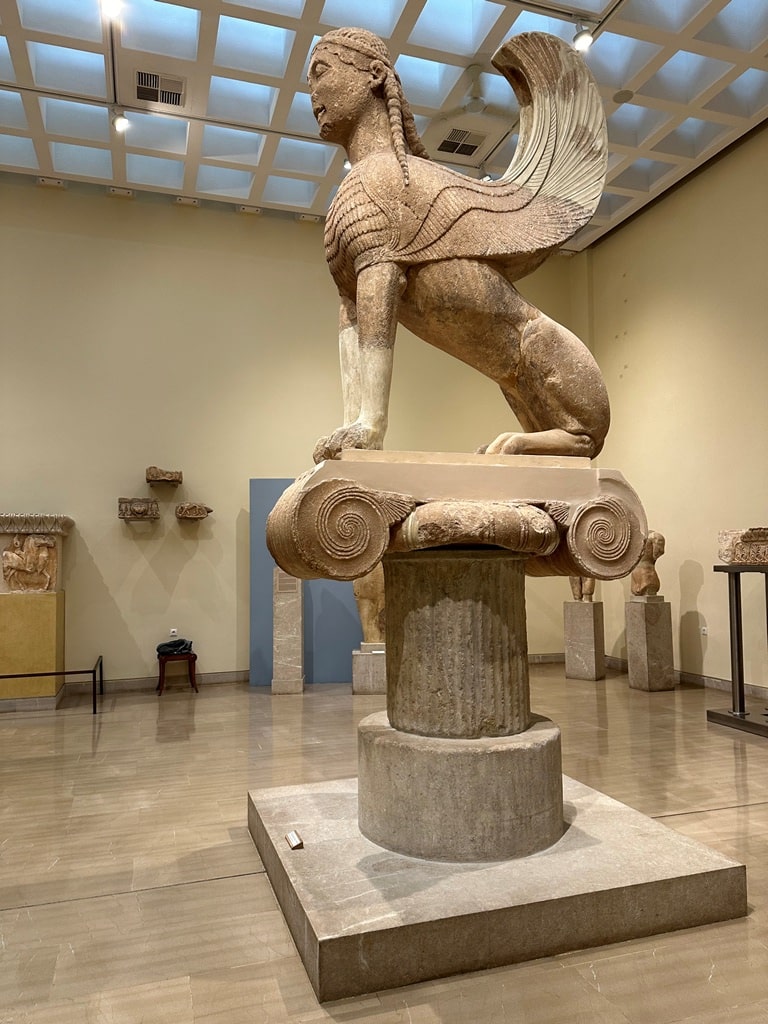
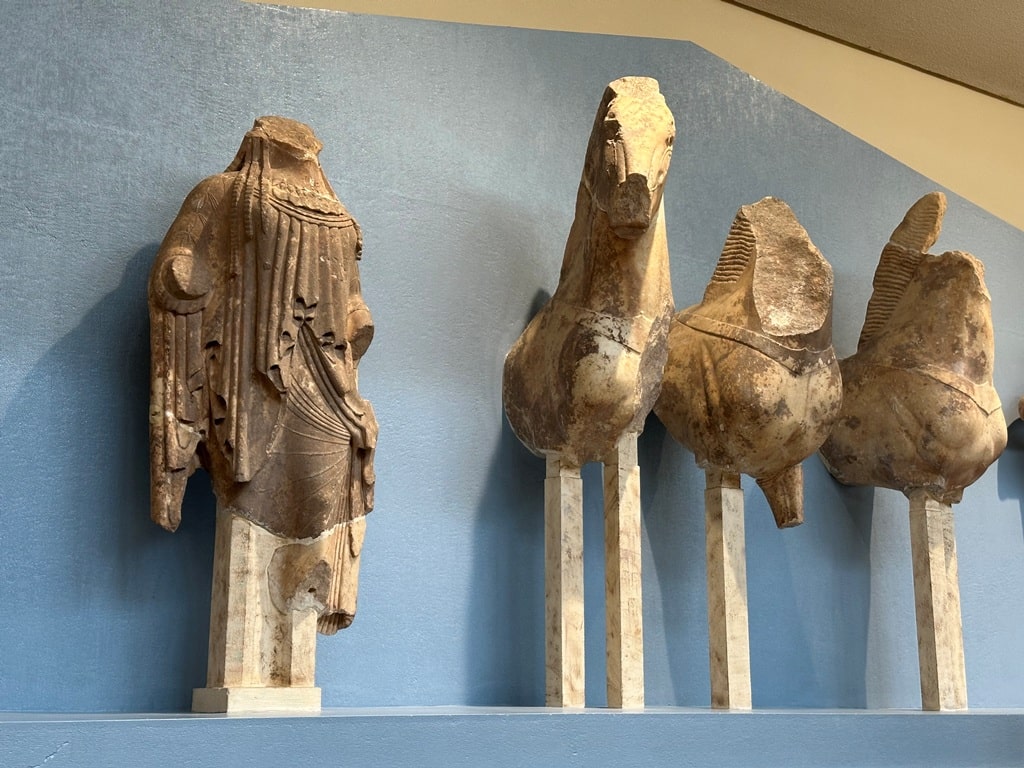
Don’t miss the museum, it’s one of Greece’s best. Inside, you’ll find treasures discovered on site, including the Bronze Charioteer, the Sphinx of Naxos, and the Twins of Argos.
The displays are well-organized, so even a short visit gives you a clear picture of Delphi’s history and artistry.
Castalian Fountain
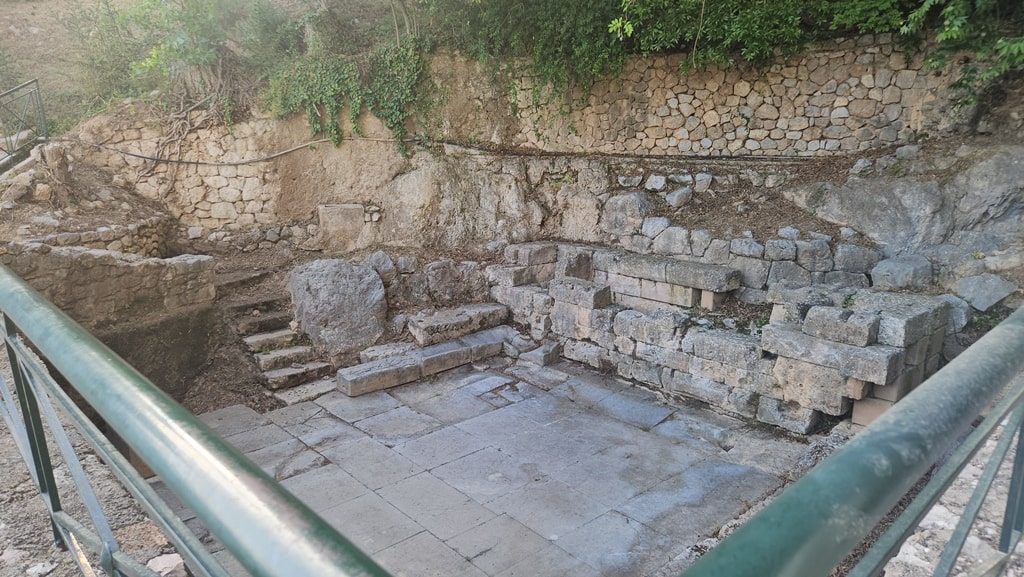
Just outside the main site, along the roadside, lies the Castalian Spring, where pilgrims once purified themselves before consulting the oracle. It’s an easy stop and worth a quick look, another layer of Delphi’s sacred ritual past.
No matter how many times I visit, Delphi never loses its magic. There’s something special about the air up there, the combination of history, myth, and mountain stillness that makes you slow down and take it all in. Whether you join a guided tour, arrange a private day trip, or make your own way there, Delphi is one of those places that truly deserves a spot on your Greece itinerary.
Prefer to Explore Delphi Privately?
If you’d like to visit Delphi without joining a group tour, you can arrange a private day trip from Athens with a professional driver and door-to-door pickup.
It’s a great choice for couples, families, and small groups who want more comfort and flexibility, with the option to include a stop in beautiful Arachova along the way.
→ Request a personalised quote for your private Delphi trip.