
When people think of Greece, they usually picture islands, beaches, and sunset views, and fair enough, they’re amazing. But as someone who has spent years exploring the country, I can tell you this: Greece’s cities are just as fascinating, full of history, food, culture, and everyday life you simply don’t experience on the islands.
Some of my favorite travel memories aren’t from beaches at all, but from wandering old neighborhoods in Thessaloniki, drinking coffee in tiny squares in Nafplio, watching the sunset from Ioannina’s castle walls, or getting lost in Volos between the sea and the mountains. Greek cities have personality, each one completely different from the next.
In this guide, I’m sharing 12 beautiful cities to visit in Greece, along with what makes each one special, what to see, and a few practical tips from my own trips. Whether you’re planning a mainland adventure or just want to add a city break to your island itinerary, these destinations are absolutely worth your time.

A Guide to the Best Cities in Greece
Athens

If you’re visiting Greece, Athens is the one city you simply can’t skip. I’ve lived here for years, and even now I still find new corners, new views, and new stories every time I wander around. It’s a city where ancient history and modern life sit side by side. You can hike to a hilltop, explore a museum, and end the evening in a rooftop bar overlooking the Acropolis.
Start with the Acropolis, the symbol of the city. Standing in front of the Parthenon or seeing the Caryatids up close never really gets old, no matter how many times you visit. Right below it, the Acropolis Museum is a must, beautifully designed and full of pieces that bring ancient Athens to life.
From there, wander down into the streets of Plaka, Anafiotika, and Monastiraki, three neighborhoods that show you three different faces of Athens. Plaka is the old-town charm, Anafiotika feels like a tiny island village, and Monastiraki is where all the energy and chaos of the city comes together. Stop for a coffee, browse the flea market, and just let yourself get lost.
For views, head up to Lycabettus Hill at sunset or take an easy walk up Philopappos Hill for an incredible look at the Acropolis from across the valley. And when you need a break from sightseeing, the National Gardens are one of the calmest places in the center.
If you have extra time, take a short trip out to Cape Sounion to see the Temple of Poseidon. Watching the sun set behind the marble columns is one of the most beautiful moments you can have near Athens.
Local tip: Athens is a city best explored on foot. Most major sights are close together, so wear comfortable shoes and take your time. Small details are what make this city special.
Thessaloniki
Thessaloniki feels like Greece’s “second capital,” but with a completely different rhythm from Athens, more relaxed, more coastal, and full of food, history, and culture at every turn. I’ve visited many times, and every trip reminds me why it’s one of the best city breaks in Greece. Everything is close together, the sea is always in view, and the mix of Byzantine, Roman, and Ottoman history gives the city a character you don’t find anywhere else.
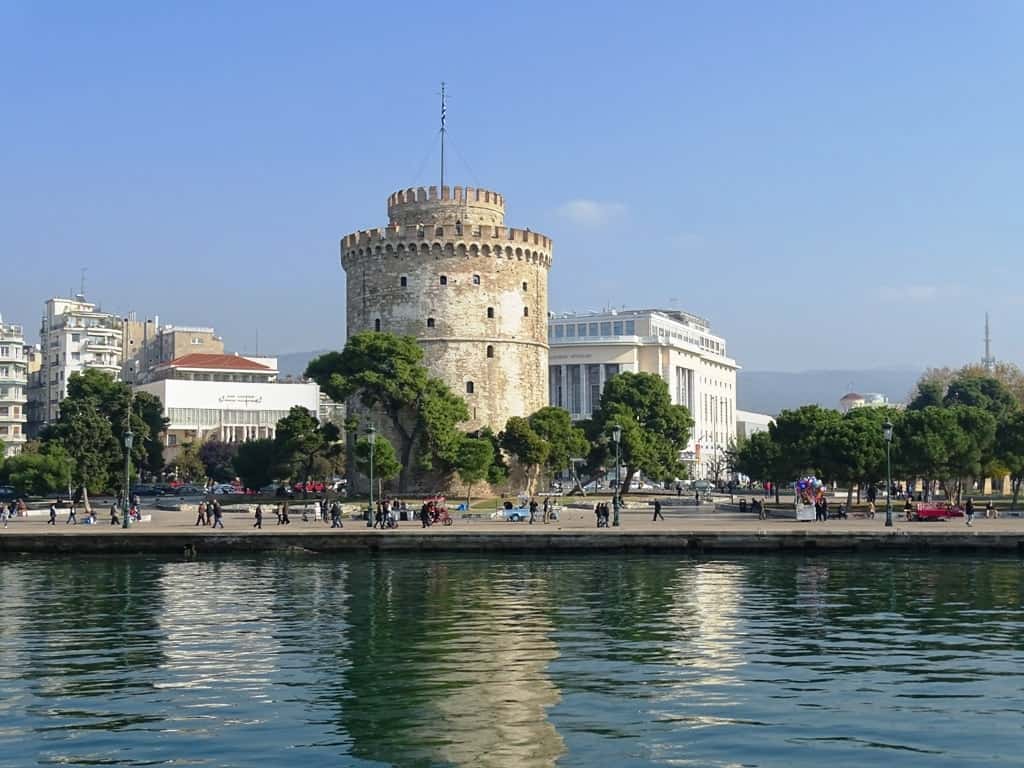
Start with the White Tower, the symbol of Thessaloniki. It once served as a prison and a fortress during Ottoman times, but today it’s a museum with one of the best viewpoints in the city. Climb to the top for sweeping views of the Gulf; it’s especially beautiful in the late afternoon.
From there, walk along the waterfront. The old promenade, Palia Paralia, is lined with neoclassical buildings and cafés. Keep walking, and you’ll reach the New Waterfront, a long, modern promenade filled with gardens, sculptures, and locals enjoying the sea breeze. Don’t miss the famous “Umbrellas” installation; it’s one of the most photographed spots in Thessaloniki for a reason.
Just a short walk inland, you’ll find the Arch of Galerius (Kamara) and the Rotunda, two of the most important Roman monuments in Greece. The Rotunda, in particular, is breathtaking inside, with its ancient mosaics and immense dome.
For museums, the Archaeological Museum of Thessaloniki is one of the best in the country, and MOMus (the Contemporary Art Museum) is perfect if you want something modern and inspiring. If you have time, head up to Ano Poli, one of the few parts of Thessaloniki that survived the great fire of 1917. The views from up there are incredible, and the neighborhood feels like a quiet village inside the city.
Local tip: Thessaloniki is one of Greece’s food capitals, don’t leave without trying bougatsa for breakfast, tsoureki from Terkenlis, and meze in Ladadika.
Volos

Volos is a city I know well. I lived here for three years, and it’s one of the easiest places in Greece to fall in love with. It sits between the sea and Mount Pelion, so you can go from a sunset walk on the waterfront to a mountain village in less than half an hour.
Spend time along the promenade, especially at dusk, and try a proper tsipouradiko. Volos is famous for them, and every drink comes with small meze plates. It’s one of the most authentic food experiences in Greece.
Volos is also the perfect base for exploring Pelion, with villages like Portaria and Makrinitsa, stone paths, and cool forest walks. If you have time, ride the old Moutzouris Steam Train for beautiful views.
And don’t forget the beaches, Pelion has some of the most impressive on the mainland, including Mylopotamos, Agios Ioannis, and Fakistra, though some require a bit of hiking.
If you want a city with good food, easy nature escapes, and access to the Sporades islands, Volos is a great choice.
Ioannina

Ioannina is one of those cities that feels completely different depending on the season, misty and atmospheric in winter, lively and full of energy in summer. Built around Lake Pamvotida, it’s a place where you can slow down, wander under plane trees, and feel a little removed from the rush of everyday life.
Start with a walk along the lake or take one of the small boats to the island. It’s the only lake island in Greece with permanent residents, and you’ll find tiny monasteries, museums, and beautiful old frescoes. It’s peaceful, green, and worth the short ride.
Back in the city, explore the Castle of Ioannina, the oldest Byzantine fortress in Greece. I love wandering through its quiet alleys. Inside, you’ll find the Silversmithing Museum, the Ethnographic Museum, and the Aslan Pasha Mosque. You get a real sense of how many cultures shaped Ioannina over the centuries.
If you want nature, don’t miss the Perama Cave, one of the most impressive cave systems in Greece. For ancient history, visit Dodoni, just outside the city, home to one of the oldest Greek theatres.
And of course, eat. Epirus has some of the heartiest cuisine in Greece. Try pies (they are famous here), slow-cooked meats, and local cheeses. Ioannina also has a fun nightlife scene, with bars around the old town and lakeside spots that stay lively until late.
Ioannina is a great escape if you want culture, nature, and good food all in one place and without the crowds.
Chania

Chania is one of those cities that stays with you. It’s lively, colorful, and full of character, a mix of Venetian elegance, Cretan warmth, and that easy, seaside rhythm that makes you slow down without even noticing. I’ve visited many times, and every trip reminds me why it’s one of the most loved places in Greece.
Start in the Old Venetian Harbour. No matter how many times I’ve walked along that waterfront, it always feels magical. Pastel buildings, the lighthouse in the distance, and narrow alleys filled with small shops and cafés. If you enjoy museums, the Maritime Museum and the Archaeological Museum are both close by and worth a visit.
Inside the old town, just wander. Chania is the kind of place where you can spend hours exploring hidden courtyards, tiny bakeries, and shops selling everything from Cretan herbs to local leather goods. And whatever you do, eat well, Cretan food here is exceptional and generous.
Beyond the city, you’ll find some of the best beaches in Greece. Balos and Elafonisi are famous for a reason, but they are full-day excursions, and absolutely unforgettable. If you want something equally beautiful but easier to reach, try Falassarna, especially for sunset.
For quieter spots, head to Seitan Limania for dramatic cliffs and icy blue water or Kedrodasos for a wilder feel among juniper trees. And if you love scenic hikes, the boat-and-walk trip to Glyka Nera (Sweet Water Beach) is always a favorite.
Chania blends history, food, and natural beauty so effortlessly that it works for every type of traveler, whether you’re here for beaches, city exploring, or a bit of both.
Kavala

Kavala is one of the most underrated cities in northern Greece, and every time I visit, I’m reminded of how much it offers in such a compact, walkable centre. Built amphitheatrically around the sea, it has that perfect mix of history, coastal scenery, and relaxed everyday life.
Start with the Kavala Castle, the best spot for sweeping views over the harbour, the bay, and the colourful houses stacked on the hillside. The walk up is lovely, and the views from the top make it one of the city’s highlights.
From there, explore the surrounding old neighbourhoods with their traditional houses and quiet streets. Make a quick stop at the House of Mehmet Ali and the equestrian statue, both important landmarks that tell you a lot about Kavala’s past.
If you want another great viewpoint, walk out to the Old Lighthouse. It’s simple but beautiful, especially in the late afternoon when the light hits the water.
For culture lovers, the Imaret, the Halil Bey Mosque, and the Tobacco Museum offer a really interesting look into Kavala’s Ottoman and industrial history, all within easy walking distance.
Kavala is coastal, friendly, and full of history without feeling overwhelming. It’s one of those northern Greek cities that’s easy to explore and surprisingly memorable.
Kastoria

Kastoria is one of those places that feels immediately calming the moment you arrive. Built on a narrow peninsula between the mountains of Grammos and Vitsi, the city curves around Lake Orestiada, giving you lake views no matter where you stand. It’s easily one of the most atmospheric cities in northern Greece.
Start with a lakeside walk. The water is usually still and reflective, and the area is a protected habitat, perfect if you enjoy nature or bird-watching. Along the shoreline, you’ll also find the Dragon’s Cave, a small but fascinating cave full of stalactites that kids and adults equally enjoy.
For the best view in town, head up to Agios Athanasios viewpoint. From there, you can see the whole peninsula, the lake, and the mountains surrounding the city. In warmer months, there’s also a small tourist boat that circles the lake, giving you a lovely way to see Kastoria from a different angle.
Kastoria is also one of Greece’s most important Byzantine cities. There are more than 60 surviving Byzantine churches scattered around town, many dating back to the 9th century. Two easy ones to visit are Panagia Mavriotissa, right on the lake, and the cluster of churches around Doltso, the most picturesque old neighbourhood. If you’re interested in art and history, don’t miss the Byzantine Museum on Dexameni Square.
Doltso itself is a highlight: stone mansions, quiet cobbled streets, and a feeling of stepping back in time. The Folk Art Museum in the Neratzi Aivazi mansion is worth popping into if you enjoy traditional interior architecture.
Kastoria is peaceful, beautiful, and full of cultural layers, a perfect escape if you want a Greek city with scenery, history, and charm, all in one place.
Preveza

Preveza is one of those places that instantly feels relaxed. I’ve spent a lot of time exploring the Epirus region, and Preveza has that perfect mix of seaside charm, great food, and easy day trips. Built along the Ambracian Gulf, famous in Greece for its delicious local shrimp, it’s a city that’s quiet, coastal, and full of little surprises.
Start with a walk along the waterfront promenade, especially in the late afternoon when the light softens over the boats. This is one of the nicest places in town to sit down for seafood or a coffee and watch the world go by. Preveza’s old town behind the promenade is also lovely: narrow streets, neoclassical buildings, and lots of casual tavernas.
One of the highlights nearby is Ancient Nicopolis, founded in 31 BC by Octavian after the Battle of Actium. The site is huge and far less crowded than most ancient cities in Greece, which makes exploring the theatre, stadium, and Roman ruins a really enjoyable experience.
For nature lovers, you’re incredibly close to one of Greece’s most magical spots: the Acheron River Springs. You can walk, hike, or even wade through the icy blue water between steep cliffs, it’s refreshing, wild, and completely different from anything else in Epirus.
And if you want some beach time, Preveza has plenty of choices. Alonaki is a favourite for its dramatic setting, while Lichnos and the beaches around Parga make for an easy and beautiful day trip.
Preveza may be quieter than the more famous Greek cities, but that’s part of its charm. It’s relaxed, authentic, and surrounded by some of Epirus’ best nature and archaeological sites.
Nafplio

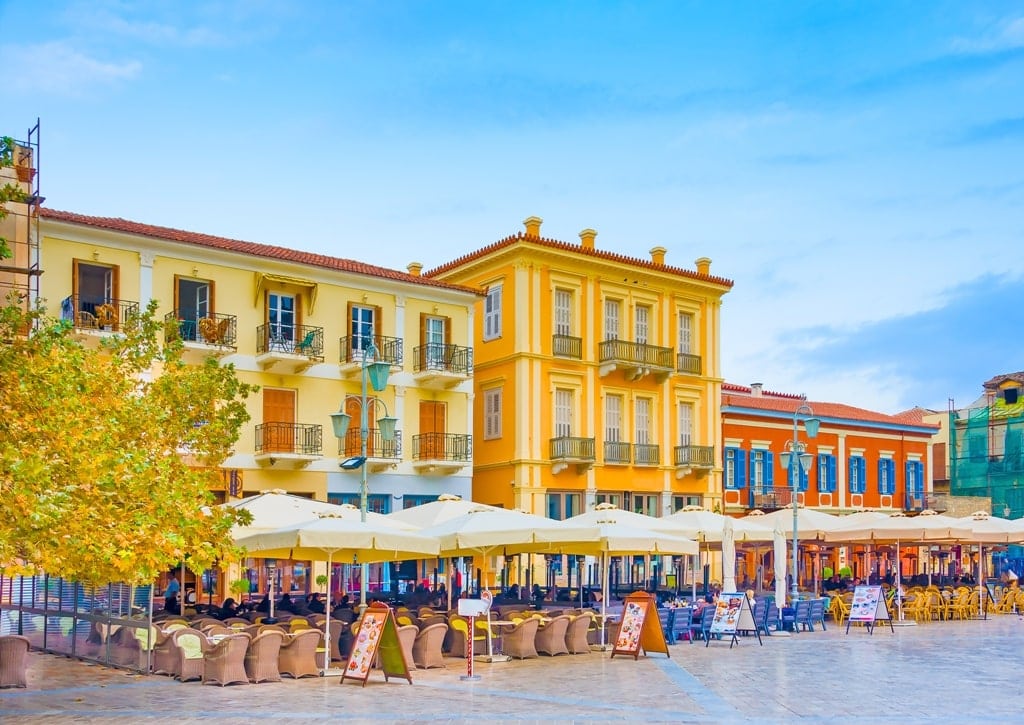
Nafplio is one of those Greek cities that you fall in love with instantly. I’ve been back several times for quick weekend escapes, and every visit feels just as special. The old town is all pastel houses, Venetian balconies, narrow lanes full of bougainvillea, and a beautiful promenade right by the sea.
Start your day at Palamidi Fortress, towering above the city. Whether you climb the famous steps or take the road up, the view over the Argolic Gulf is absolutely worth it. Deep blue water, red rooftops, and the small Bourtzi fortress sitting like a floating castle in the bay.
After coming back down, wander through Nafplio’s old town. It’s one of the most atmospheric historic centres in Greece, full of little shops, elegant neoclassical buildings, and lively cafés. From here you can hop on a small boat to Bourtzi and see the town from the water, which is always a highlight.
One of my favourite things in Nafplio is the Arvanitia promenade, a gorgeous coastal walk wrapped around the cliffs. It’s an easy one-kilometre stroll with sea views the entire way, especially beautiful at sunset. And if it’s warm, head to nearby Karathona Beach for a swim, it’s long, sandy, and perfect for a relaxing afternoon.
Don’t leave Nafplio without stopping for gelato at Antica Gelateria di Roma and enjoying a coffee in Syntagma Square, where locals gather throughout the day. Between the fortresses, the sea views and the charming old streets, Nafplio is the kind of place where you slow down naturally and wish you could stay a little longer.
Kalamata

Kalamata often surprises people, and honestly, it surprised me too the first time I visited. Most travellers know it only for its famous olives, but the city itself has a warm, relaxed vibe and a beautiful setting between the sea and the Taygetos mountains.
Start in the Old Town, just below the castle. It’s one of the most atmospheric parts of the city, full of neoclassical buildings, little cafés, and quiet streets where life moves at its own rhythm. From here you can walk up to the Castle of Kalamata, often called the “castle of Isabeau.” The views over the city and the Messinian Gulf are stunning, and if you visit in July, this is where the International Dance Festival takes place, one of the biggest cultural events in Greece.
Kalamata also has great museums. The Archaeological Museum of Messinia is the best place to understand the region’s history, with finds from ancient cities scattered across the area. The Church of the Holy Apostles and the Cathedral of Ypapantis are also worth a stop, both for their architecture and their importance to the city.
One thing I love about Kalamata is that you can combine city life with nature so easily. The long seafront promenade is perfect for an afternoon walk, and the beach right next to it makes the city feel instantly holiday-like.
And if you have more time, Kalamata is the ideal base for exploring Mani. In under two hours, you can be in some of the most dramatic landscapes in Greece: stone tower villages, hidden coves, the turquoise waters of Limeni, the caves of Diros, and the wild southern tip of the Peloponnese at Cape Tenaro.
Kalamata may not be the first city people think of when planning a trip to Greece, but it’s definitely one of the most rewarding.
Xanthi

Xanthi is one of those cities that instantly pulls you in with its mix of cultures, colours, and stories. Built at the foot of the Rhodope mountains in Northern Greece, it has a completely different atmosphere from the islands and the big southern cities. It’s lively, warm, and full of character.
Start in the Old Town, where the architecture tells the story of Xanthi’s past. Ottoman mansions, neoclassical homes, and narrow cobblestone alleys create a setting that feels almost cinematic. I love wandering here in the late afternoon when the light hits the colourful façades and the whole neighbourhood feels alive.
Xanthi also has a strong artistic side. Visit the Folk and History Museum, the Public Art Gallery, and especially The House of Shadow, a unique modern art space where everyday objects turn into incredible shadow sculptures. It’s one of the most surprising museums in Greece.
If you love nature, you will want to head towards the Nestos River. The Nestos Straits are close by and perfect for kayaking, hiking, or simply relaxing by the water. The scenery is stunning, and in summer you can even enjoy a swim in the river’s calm, clear waters.
Xanthi is a city with many layers and a charm that stays with you long after you leave.
Trikala
Trikala is one of those places that feels instantly welcoming. I’ve always loved visiting because it has this relaxed, friendly energy that makes you slow down and enjoy the little things. It’s in the heart of Thessaly, surrounded by mountains and rivers, and although many people know it for its famous Christmas village, Trikala is a beautiful destination all year round.
Start with a walk up to the Kastro, the Byzantine fortress from the 6th century. The views from the top stretch across the town and the green valley around it. Nearby, the Clock Tower stands above the city and is one of its most recognisable landmarks.
Trikala is also a genuinely enjoyable city to explore on foot or by bike. One of my favourite areas is the Matsopoulos Mill, right by the river. It’s a cultural space now, and the whole district has a lovely, nostalgic feel. The city’s stone bridges, especially the ones crossing the Lithaios River, add to the charm and make every stroll feel special. If you have time, visit the impressive Palaiokarya Stone Bridge, surrounded by waterfalls and lush nature.
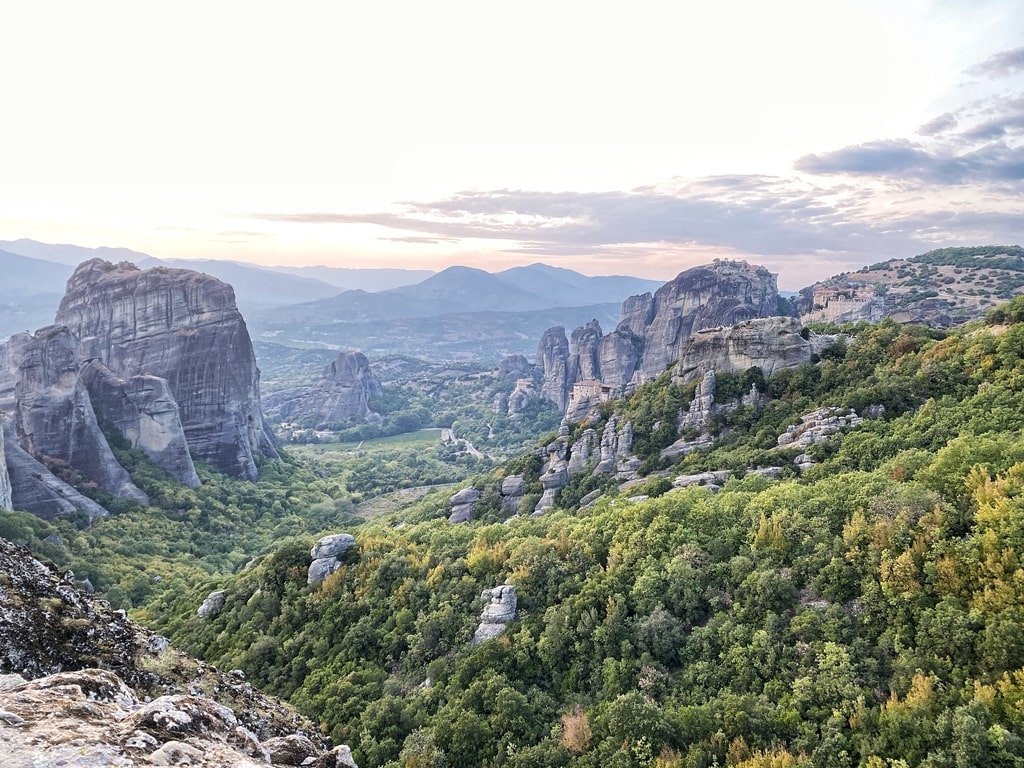
And of course, being so close to Meteora makes Trikala even more special. In less than half an hour, you can reach one of the most unforgettable landscapes in Greece. Those towering rock formations with monasteries balancing on top are breathtaking, no matter how many times you see them.
Trikala may not be the biggest city in Greece, but it has heart, atmosphere, and easy access to some of the country’s most remarkable sights.
Greece has so many cities worth exploring and each one offers something different. I’ve visited all of them over the years, and they continue to surprise me with their history, food, and local character. I hope this guide helps you choose your next getaway and inspires you to look beyond the islands. If you need help deciding where to go next, I’m always happy to share ideas. Enjoy your trip.