
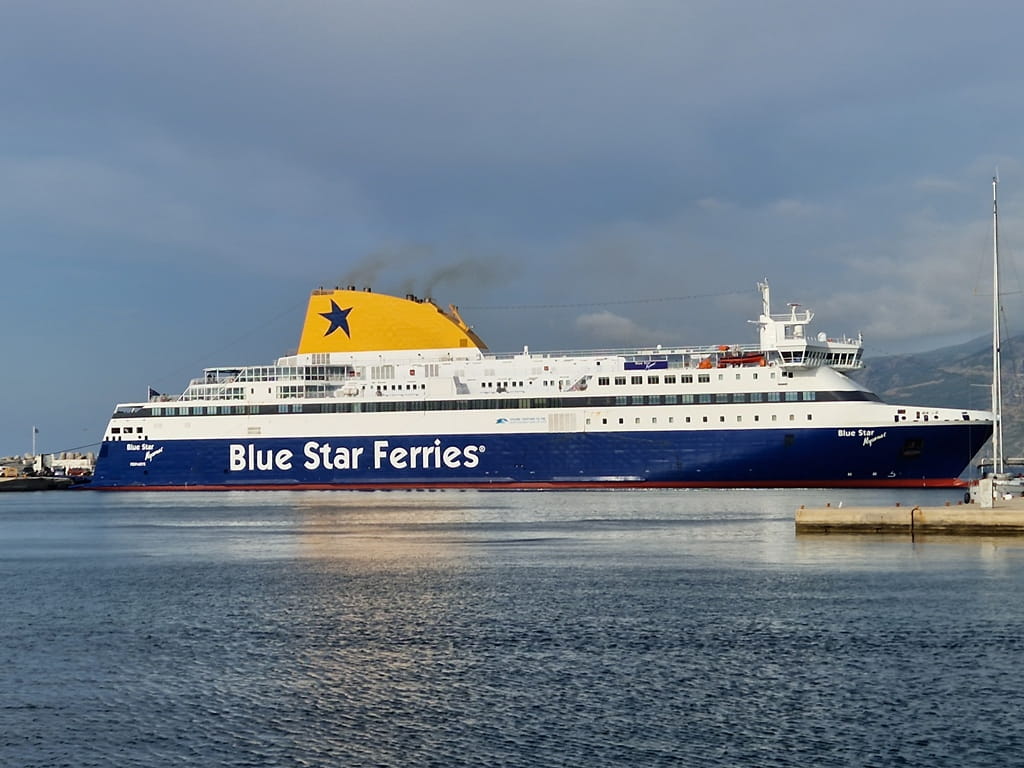
Planning to travel between the Greek islands but not sure how ferries actually work?
Ferries are an essential part of getting around Greece, especially if you’re visiting the islands. They connect destinations that flights often don’t, and they’re often the most practical and scenic way to travel.
At the same time, ferry travel in Greece can feel confusing at first. There isn’t a single system, ports can be busy, and if you’re not familiar with how things work, it’s easy to feel unsure on the day of your trip.
I’ve been taking ferries in Greece since I was a child, as both of my grandmothers are from different Greek islands. What might feel unfamiliar at first is something I grew up with, and once you understand how it works, it becomes a very easy and even enjoyable way to travel.
This guide breaks down everything you need to know, from how ferry schedules work and how to book tickets, to what to expect at the port and how to avoid common mistakes.
Want to see what ferry travel in Greece is really like?
Watch my full video where I walk you through the experience step by step and share practical tips to make everything easier.
Watch the full video on YouTube and subscribe for more Greece travel guides and local insights.
Disclosure: This post contains affiliate links. That means I may earn a small commission if you book through them, at no extra cost to you. Thank you for supporting Greece & Beyond and helping me keep this site going!
How Ferries Work in Greece
Ferries are the main way to travel between the Greek islands, and once you understand how the system works, it’s actually quite easy to navigate.
In Greece, multiple ferry companies operate across different routes, using a mix of vessel types and schedules. This is why, at first, things can feel a bit unclear, especially when you’re trying to plan your route or compare options.
One of the most important things to keep in mind is that ferry schedules are seasonal.
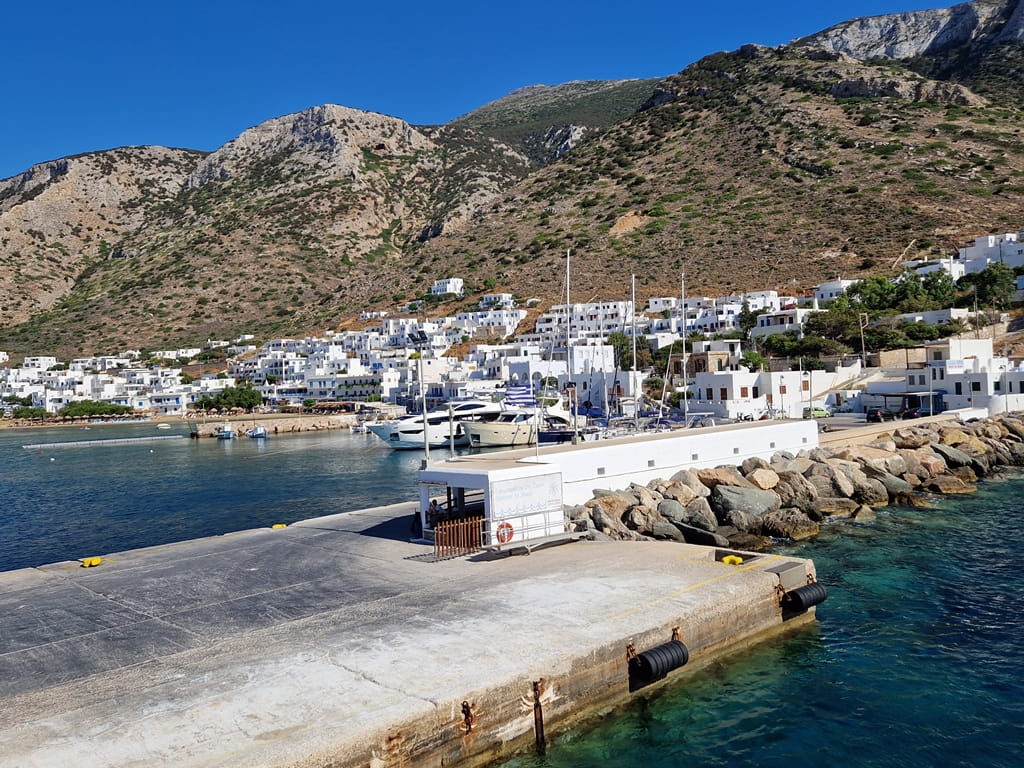
In the summer, routes are more frequent and better connected, making it easy to move between islands. In the winter months, schedules are more limited, and some islands may only have a few connections per week.
Ferry schedules are also released gradually, usually from late winter into early spring. So if you’re planning ahead and can’t find your route yet, it often just hasn’t been announced.
Understanding these patterns makes a big difference when planning your trip, as it helps you know when to book and what to expect depending on the time of year.
Tip: If your route isn’t showing yet, check again closer to your travel dates — especially from March onwards.

Main Ferry Ports in Athens
Before booking a ferry in Greece, there’s one important detail that can easily be overlooked: Athens is served by more than one port.
This is a common source of confusion, especially for first-time visitors, and it can lead to unnecessary stress on the day of travel if not checked in advance.
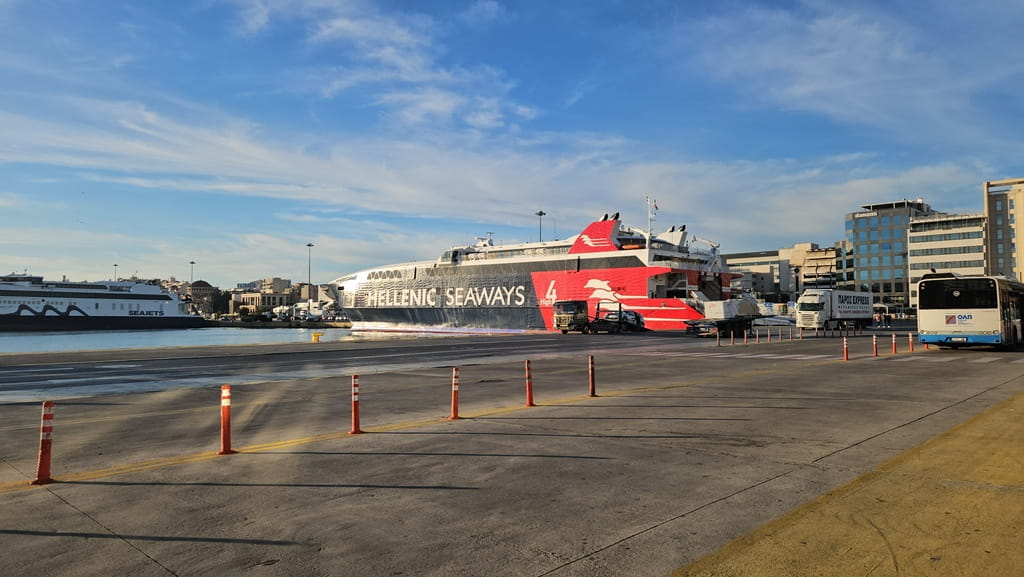
The main ferry hub is Piraeus, the largest port in Greece and the one most travelers will use. It connects Athens with the Cyclades, the Argo-Saronic islands, Crete, the Dodecanese, and the North Aegean. It’s also the most accessible port from central Athens, with direct metro connections.
A second option is Rafina, a smaller port located closer to Athens International Airport. It mainly serves routes to nearby Cycladic islands such as Andros, Tinos, and Mykonos. While it can be convenient if you’re heading straight to the islands after landing, the number of routes is more limited compared to Piraeus.
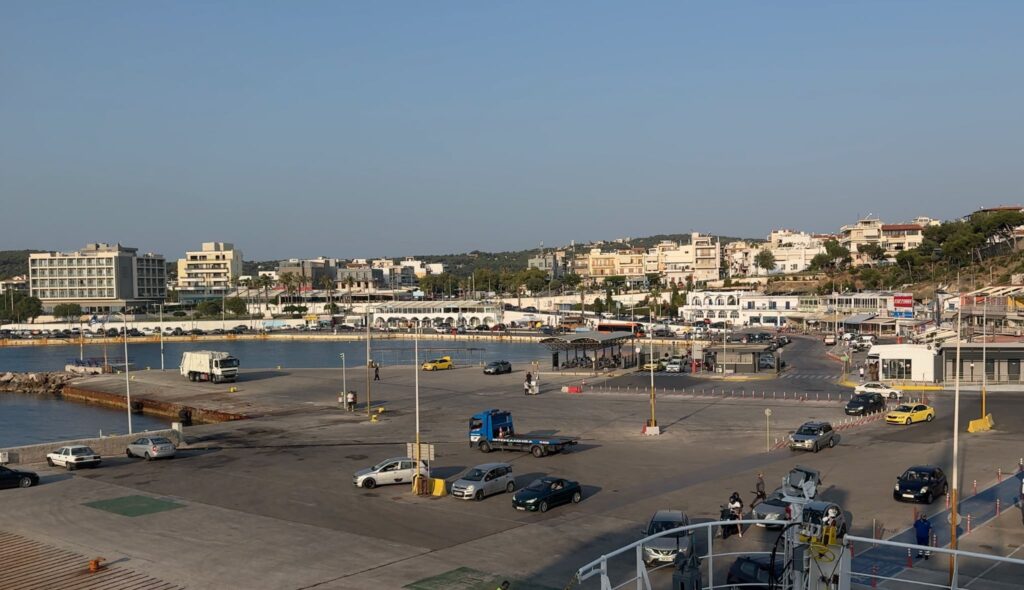
The third port is Lavrio, which is the smallest of the three and operates only a handful of routes, mostly to islands like Kea and Kythnos. It’s typically used for specific itineraries rather than general travel.
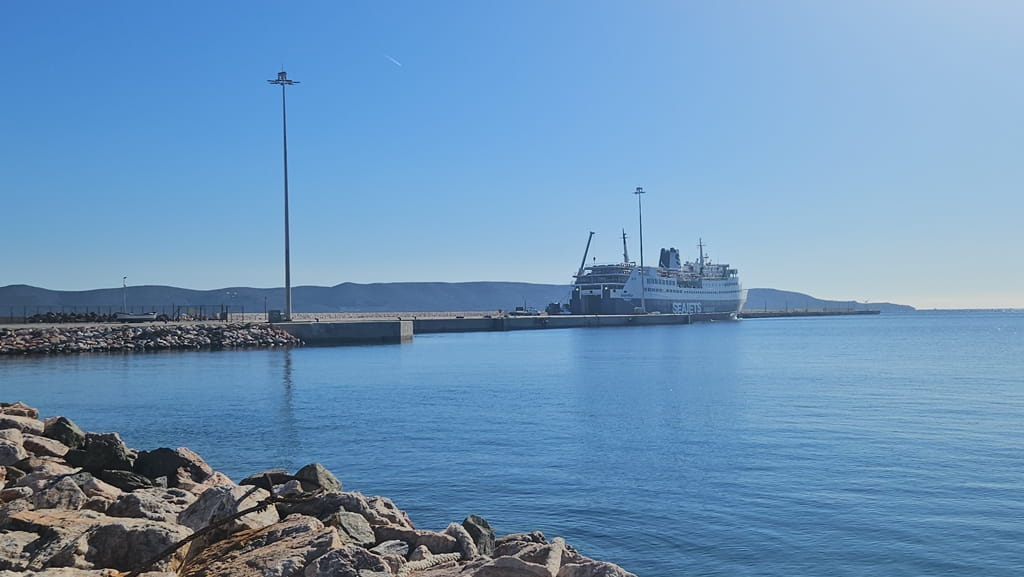
Because these ports are located in different areas around Athens, they are not interchangeable. Choosing the right one from the beginning is important, as getting from one port to another on the same day is not always practical.
Tip: Always check your departure port carefully when booking, it’s one of the easiest details to miss and one of the most important.
Types of Ferries in Greece
Not all ferries in Greece are the same, and the type you choose can make a big difference in terms of comfort, travel time, and overall experience.
The most common option is the conventional ferry. These are larger vessels that move at a slower pace but offer a more stable journey, especially on windy days. They usually have indoor and outdoor seating areas, cafés, and plenty of space to move around. On longer routes, these ships may also offer cabins, which are ideal if you’re traveling overnight. They are typically the most budget-friendly option as well.
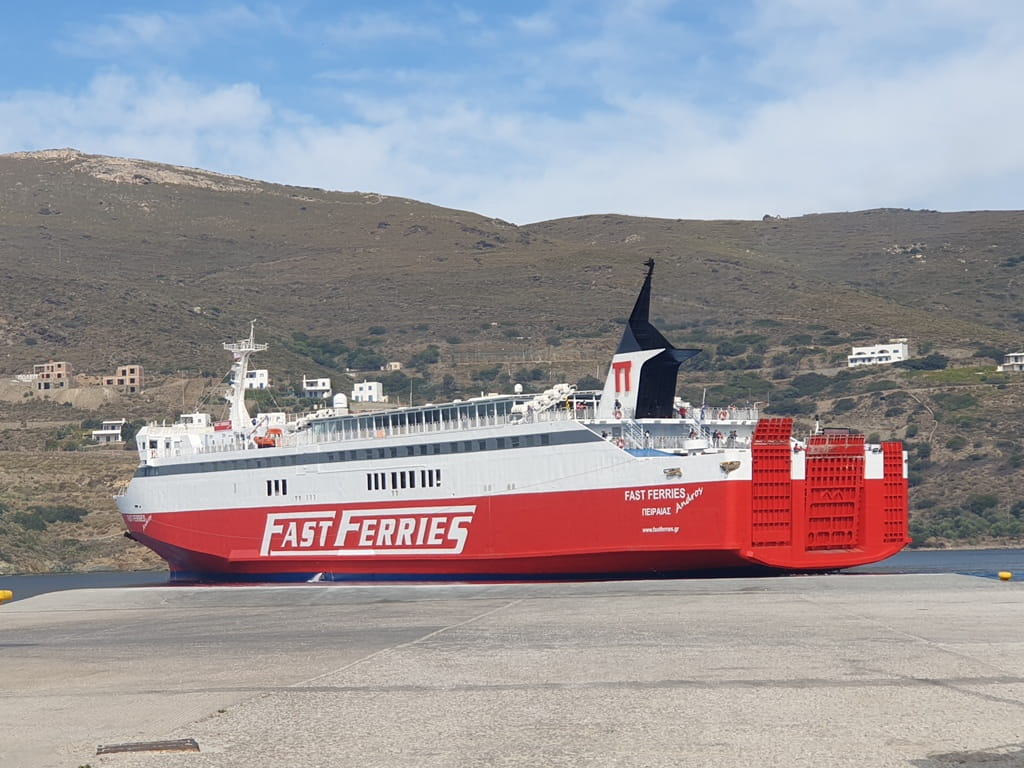
You’ll also come across faster ferries that carry vehicles. These are quicker than conventional ferries but still relatively stable, and they often include both indoor seating and some outdoor deck space. For many travelers, they offer a good balance between speed and comfort.
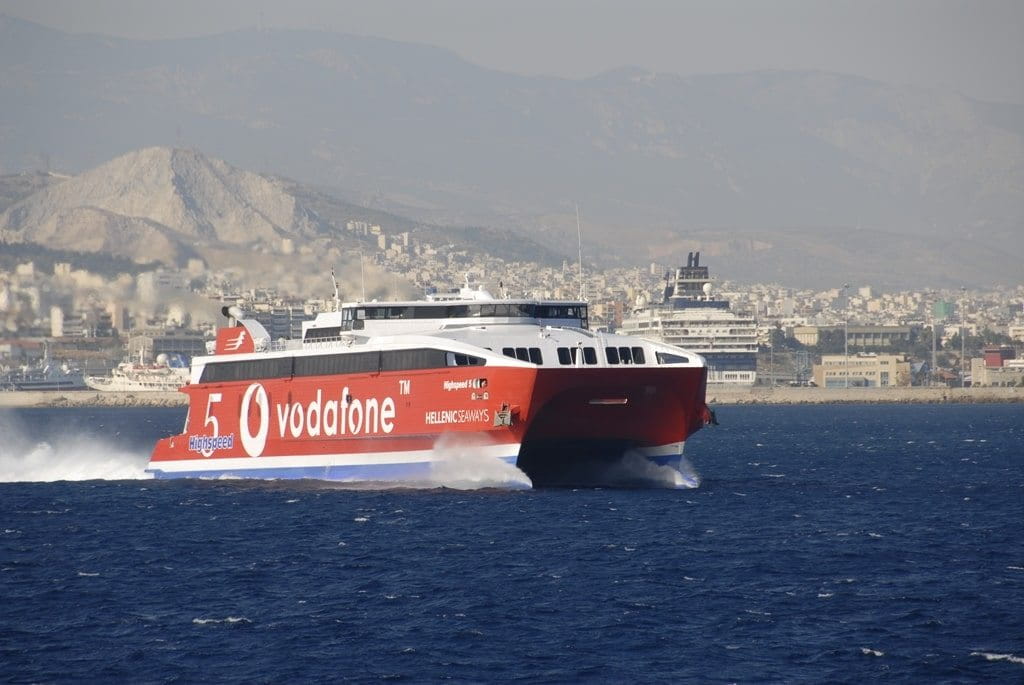
Then there are high-speed ferries, which are the fastest option available. They can significantly reduce travel time, but they tend to be more affected by wind and sea conditions. On these ferries, passengers usually remain seated indoors for the duration of the trip, with limited or no outdoor space. They are also generally the most expensive option.
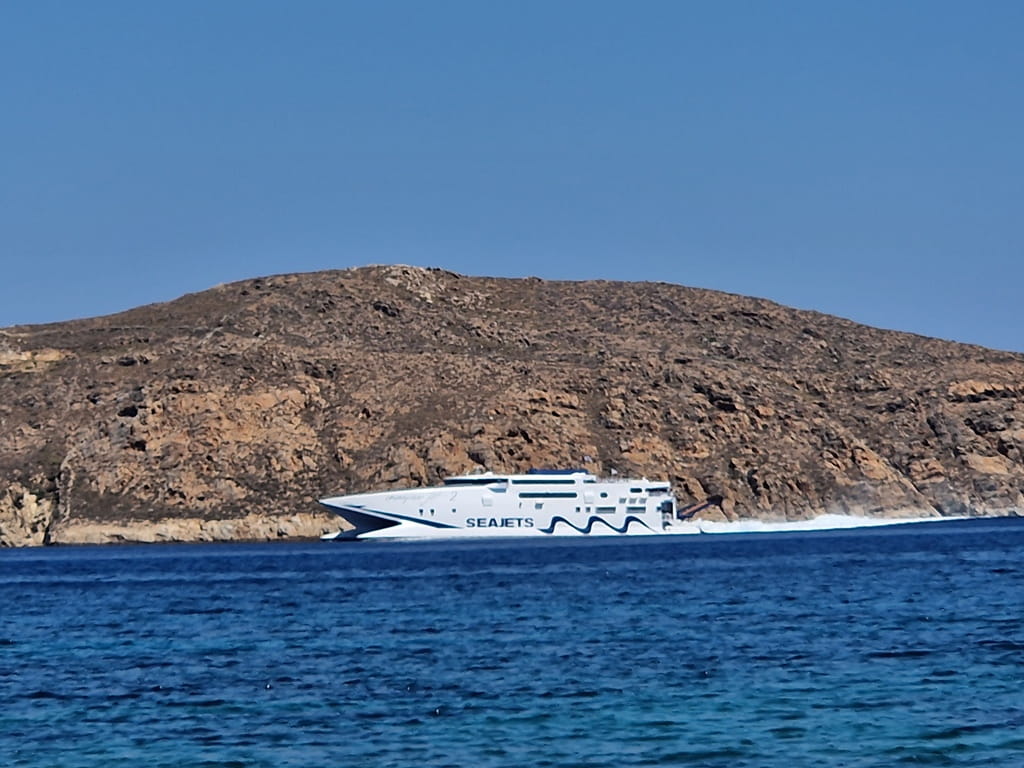
On shorter routes, particularly around Athens, you may see smaller vessels such as Flying Dolphins. These are fast and efficient for nearby islands, but they can feel less stable in rough weather.
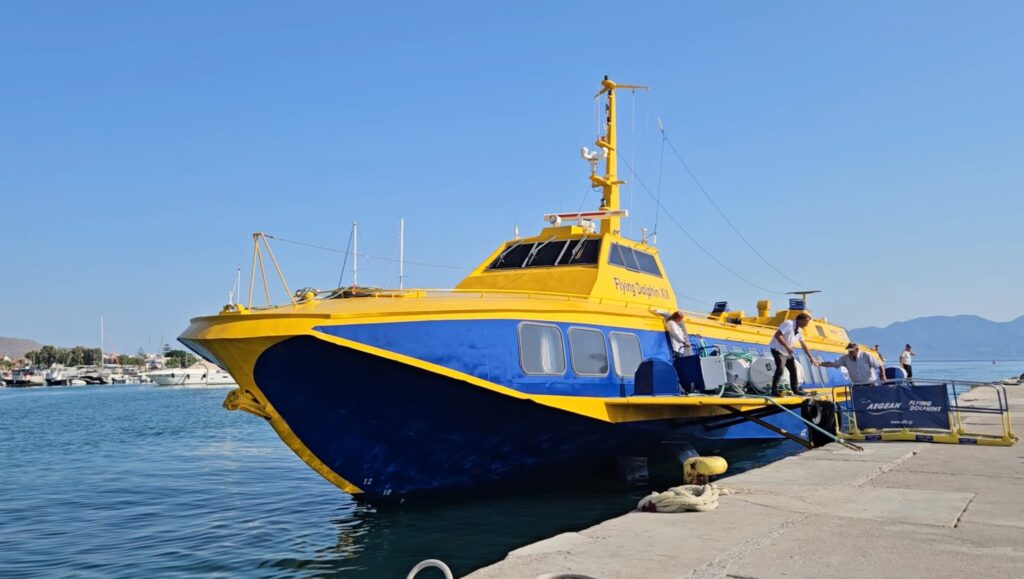
In practice, the fastest option isn’t always the best choice. If the difference in travel time is small, choosing a more stable and more affordable ferry can often make the journey much more comfortable.
Tip: If you’re traveling during windy periods, conventional ferries are usually the most comfortable choice.
Fly or Ferry?
One of the most common questions when planning a trip in Greece is whether it’s better to fly or take the ferry.
The answer really depends on your route and how much time you have.
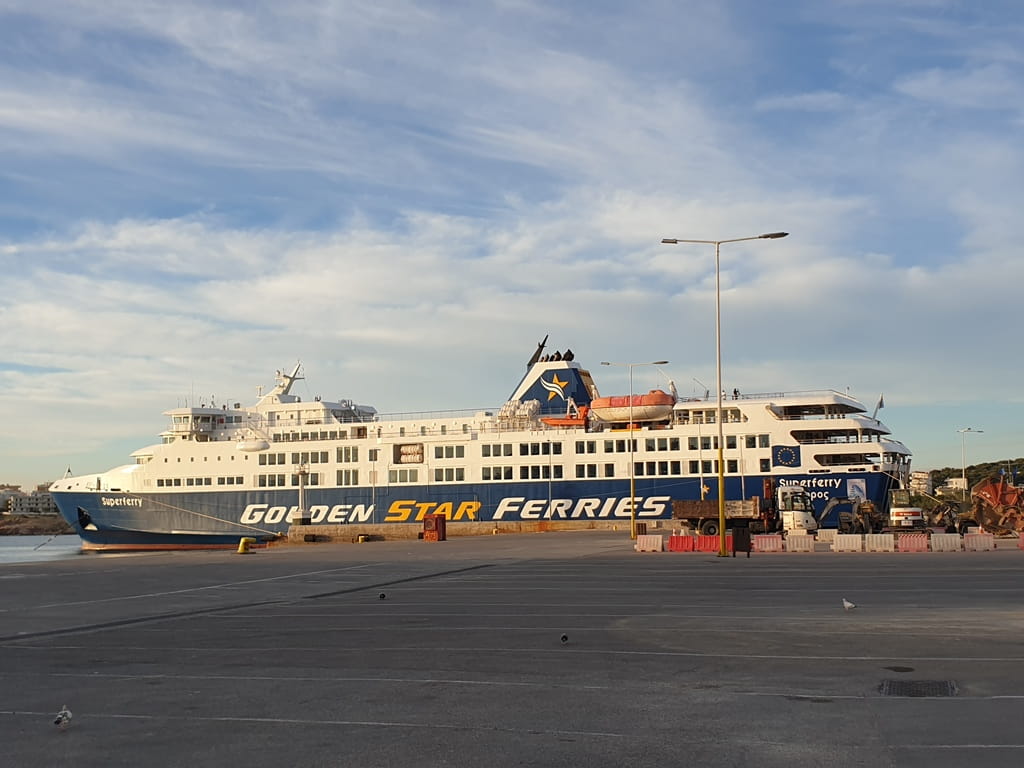
For longer distances, especially to islands like Crete or Rhodes, flying is usually the most efficient option. It saves time and can often be more convenient if you’re working with a tight schedule.
On the other hand, ferries make much more sense when traveling between islands, particularly within the same island group. They allow you to move more easily from one destination to another without needing to return to Athens, which is why they’re the preferred option for island hopping.
Another advantage of ferries is the flexibility they offer. Luggage is much less restrictive compared to flights, and the overall experience tends to feel more relaxed, especially on larger vessels where you can move around freely.
In many cases, the best approach is to combine both. You might choose to fly to a more distant island and then continue your trip by ferry, depending on your itinerary.
How to Book Ferry Tickets in Greece
Booking ferry tickets in Greece is relatively straightforward, but knowing your options can make the process much easier, especially during peak travel season.
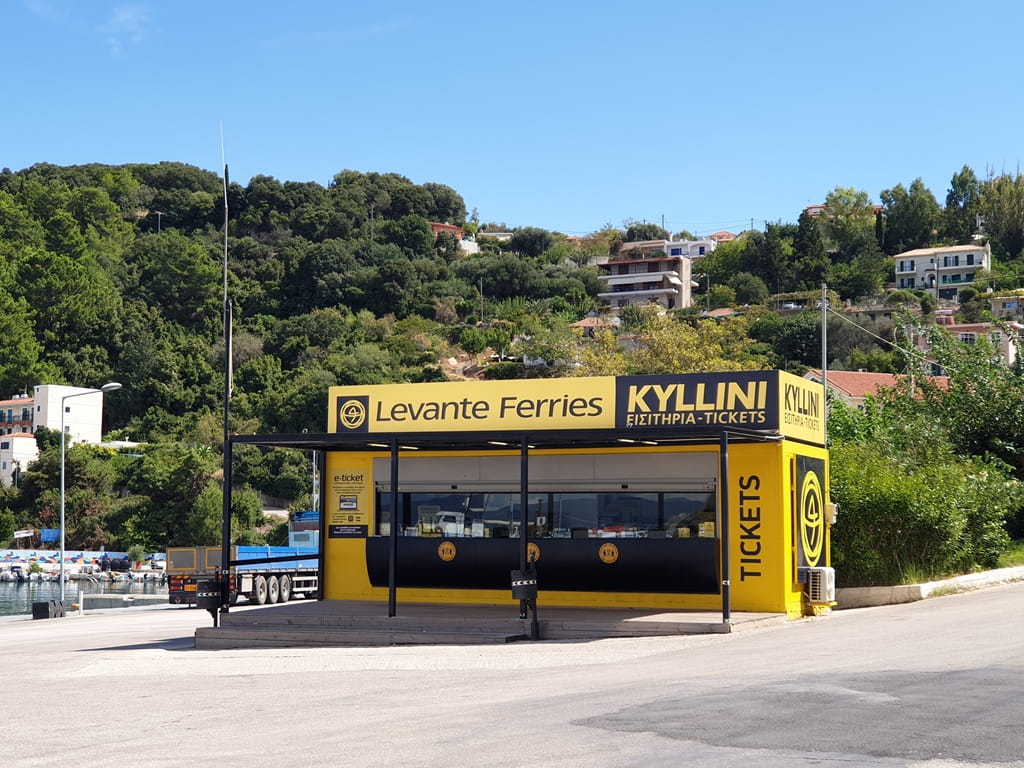
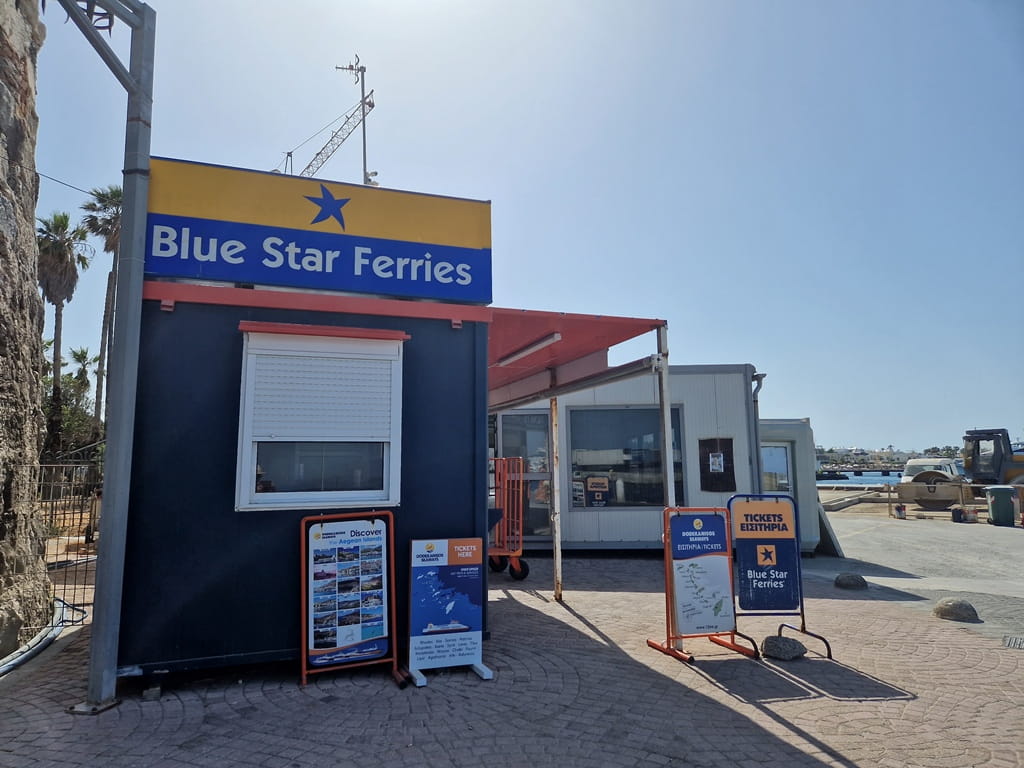
You can book tickets in three main ways: at the port, through a local travel agency, or online.
While buying tickets at the port or from an agency is still common, it’s not something you should rely on during the summer months. Popular routes can sell out, particularly in July and August, and leaving it until the last minute can add unnecessary stress to your trip.
For most travelers, booking online is the easiest and most reliable option. It allows you to compare different routes, ferry companies, travel times, and prices in one place.
Platforms like Ferryhopper are especially useful, as they bring together multiple ferry options and make it easy to see connections between islands. The interactive map feature is particularly helpful if you’re planning an island-hopping itinerary and want to understand how routes link together.
In most cases, ferry tickets are issued as e-tickets, meaning you can simply show them on your phone along with your ID when boarding. However, it’s still important to pay attention during booking, as some ferry companies require you to pick up a printed ticket at the port or from a local agency before departure.
If you’re traveling with a car or planning to book a cabin on an overnight ferry, it’s best to secure your tickets in advance. These spots are limited and tend to sell out first, especially during high season.
Timing also plays an important role. If you’re traveling in July or August, or during busy Greek holidays such as Orthodox Easter or the Agiou Pnevmatos (Holy Spirit) long weekend, booking in advance is strongly recommended, as ferries can fill up quickly.
In the lower season, you’ll usually have more flexibility, but it’s still a good idea to check availability ahead of time.
Seats, Classes & Cabins
When booking a ferry in Greece, you’ll usually have a few different seating options, and the right choice depends mostly on the length of your trip and the time of year.
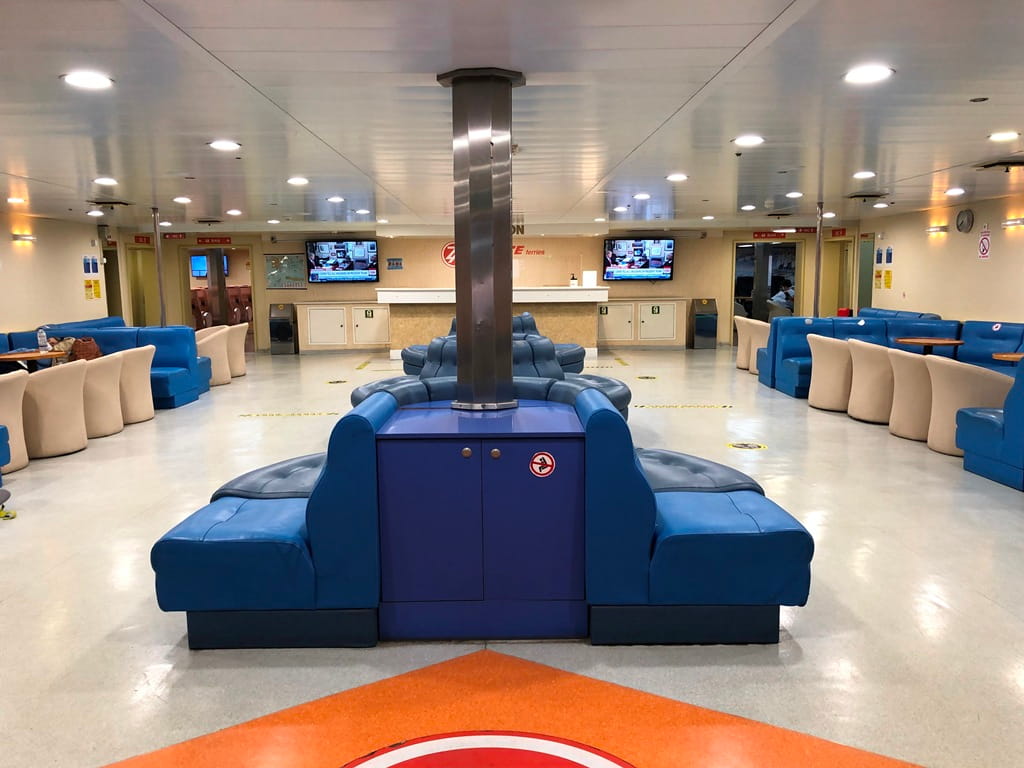
The most common option is economy class, which works well for most routes, especially on larger ferries. Instead of having an assigned seat, you’re free to sit wherever you like indoors or outdoors and move around during the journey. It’s the most flexible option, and the one most people choose.
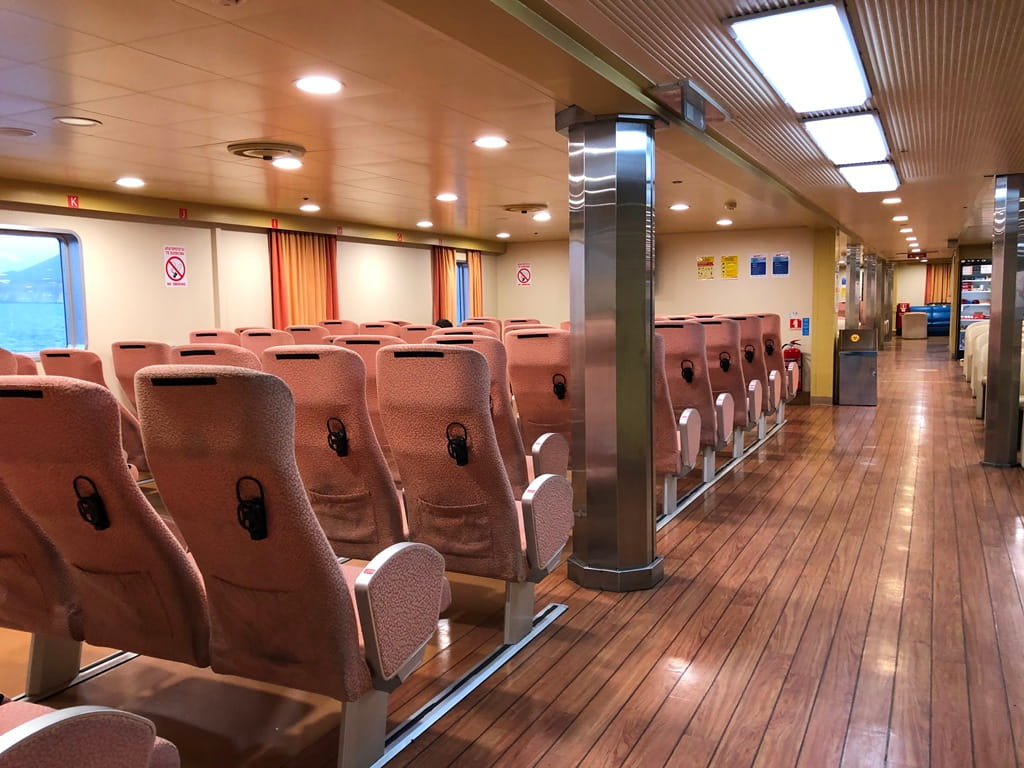
If you’re traveling during high season, you might prefer to book a numbered seat. This gives you a specific indoor seat, which can be helpful when ferries are busy and finding a comfortable spot isn’t always easy.
There’s also business or VIP seating, which offers a quieter environment and more comfortable seats. It’s more expensive, but on longer journeys, some travelers find it worth the upgrade.
For overnight routes or longer crossings, larger ferries often offer cabins. These can be shared or private and provide a much more comfortable experience if you want to rest or sleep during the journey. Since cabins are limited, they tend to sell out quickly, especially in the summer months.

In most cases, economy class is perfectly sufficient, but if you’re traveling at peak times or on longer routes, choosing a reserved seat or a cabin can make the trip much more comfortable.
Boarding & What to Expect at the Port
For many travelers, the most confusing part of ferry travel in Greece is not the journey itself, but what happens at the port.
Ports can feel busy and unstructured at first, especially in Piraeus, which is large and organized into different gates. Your ticket will indicate the gate your ferry departs from, so this is the first thing you should check. Once you’re in the right area, focus on finding your ferry name and company, as announcements are often limited.
Because the port is so large, there is also an internal shuttle bus that connects the different gates. This can be very helpful if your departure point is far from the metro station or if you’re short on time.
In smaller ports, including most islands, there are no gates. Ferries arrive and depart from the main dock, so boarding is usually more straightforward; you simply wait near your ship and board when it arrives.
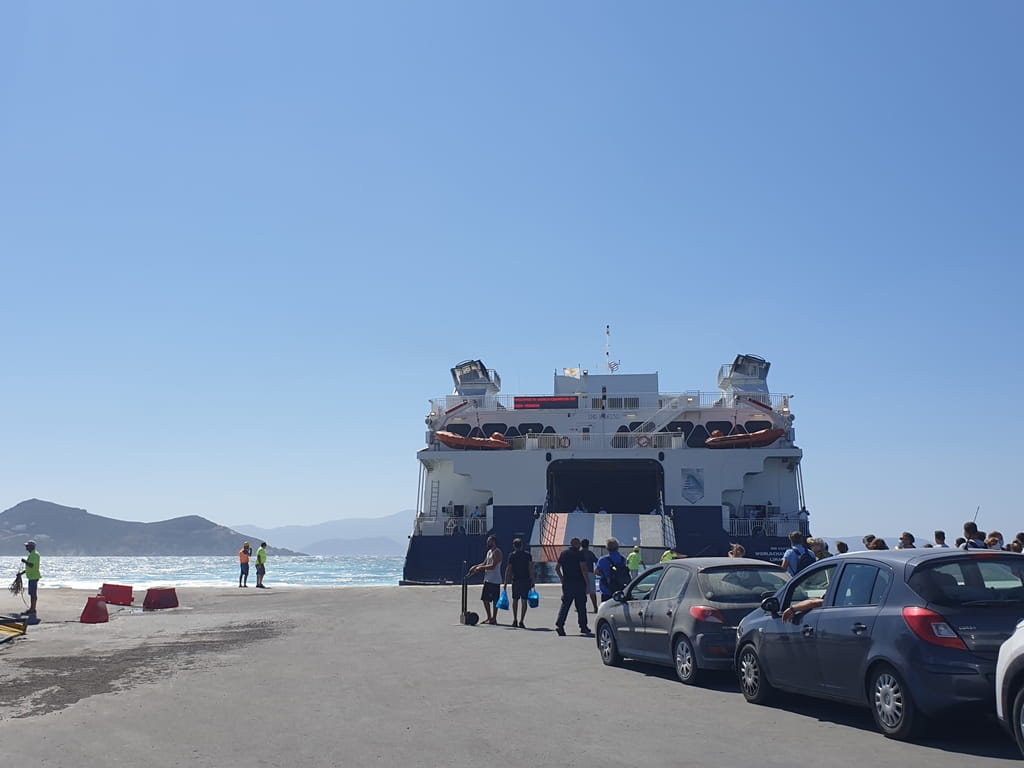
Timing also depends on where your journey starts. If your ferry departs from Athens, boarding is generally more relaxed. On the islands, however, ferries often stop only briefly, so boarding can feel quicker and more rushed.
As a general rule, it’s best to arrive at the port around 30 to 45 minutes before departure if you’re traveling on foot. If you’re bringing a vehicle or need to collect tickets, arriving earlier is recommended.
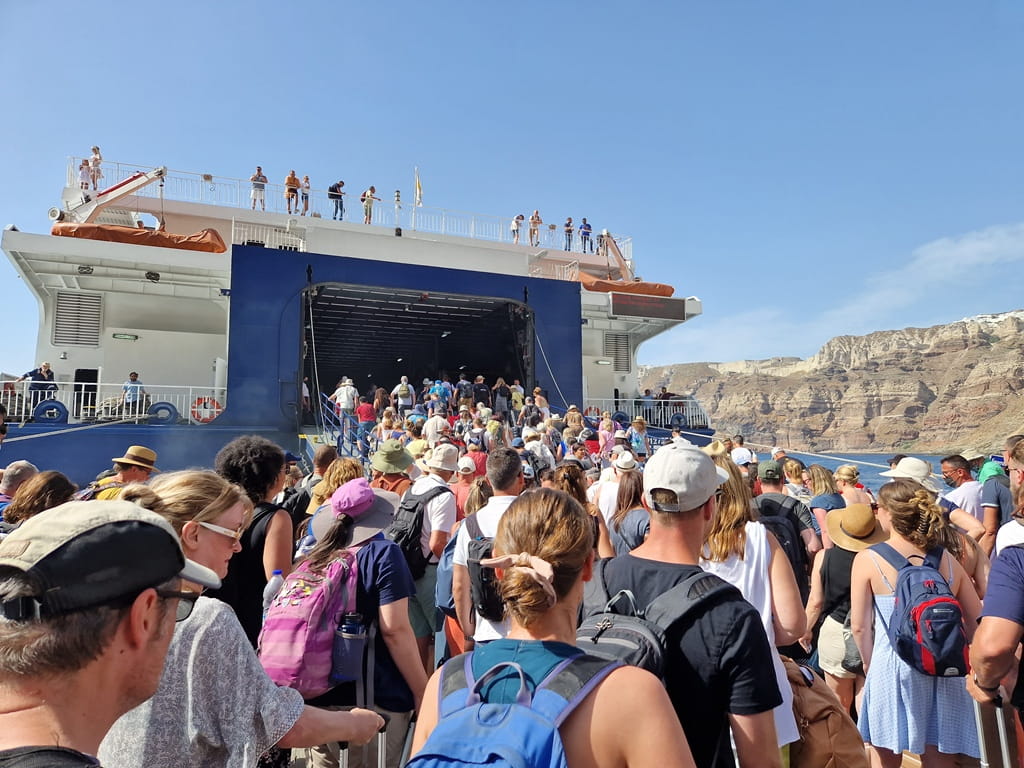
Once boarding begins, foot passengers follow the line onto the ferry, while vehicles are guided separately by the crew.
Tip: Always check your departure gate in Piraeus and allow extra time — the port is large, but the shuttle bus makes getting around much easier.
Luggage Rules
One of the easiest parts of ferry travel in Greece is luggage.
Unlike flights, there are no strict limits, no weighing, and no extra fees for typical luggage. You simply bring your bags with you on board, which makes ferries a much more relaxed option, especially if you’re traveling between islands.
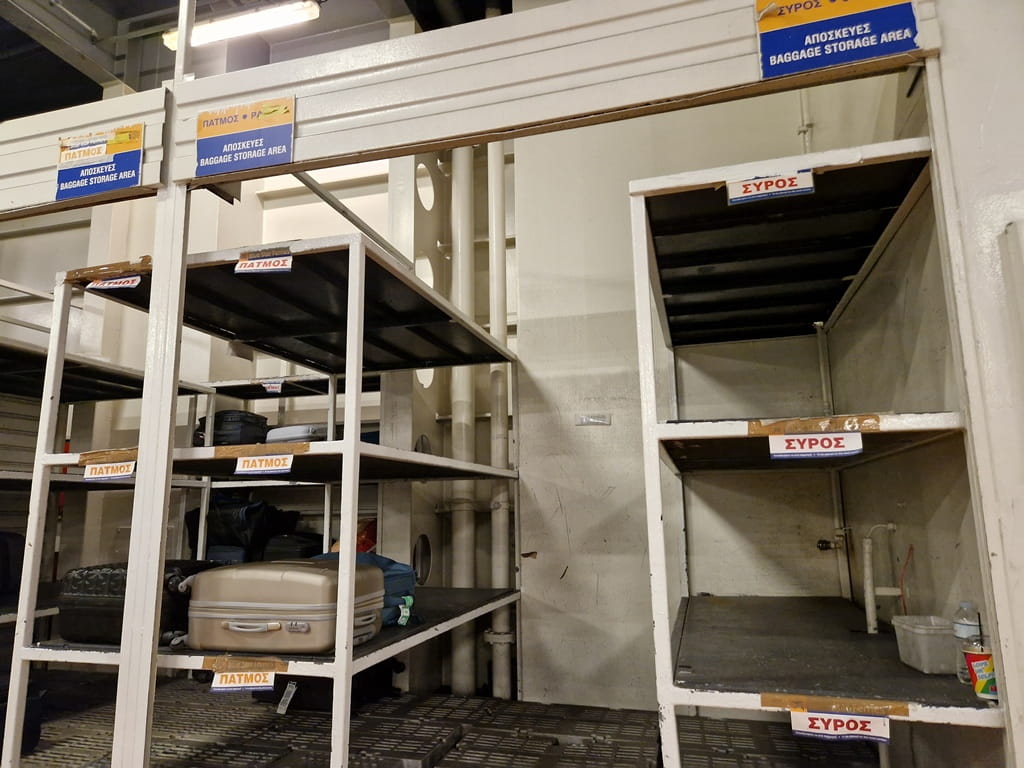
When you board, you’ll usually find designated luggage areas near the entrance or on the lower deck, where passengers leave larger suitcases. This is completely normal and widely used.
If you’re carrying a smaller bag or a backpack, you can keep it with you at your seat.
One important thing to keep in mind is that once the ferry departs, access to the luggage storage area is often limited or not allowed during the journey. For that reason, it’s best to take anything you might need with you before leaving your suitcase.
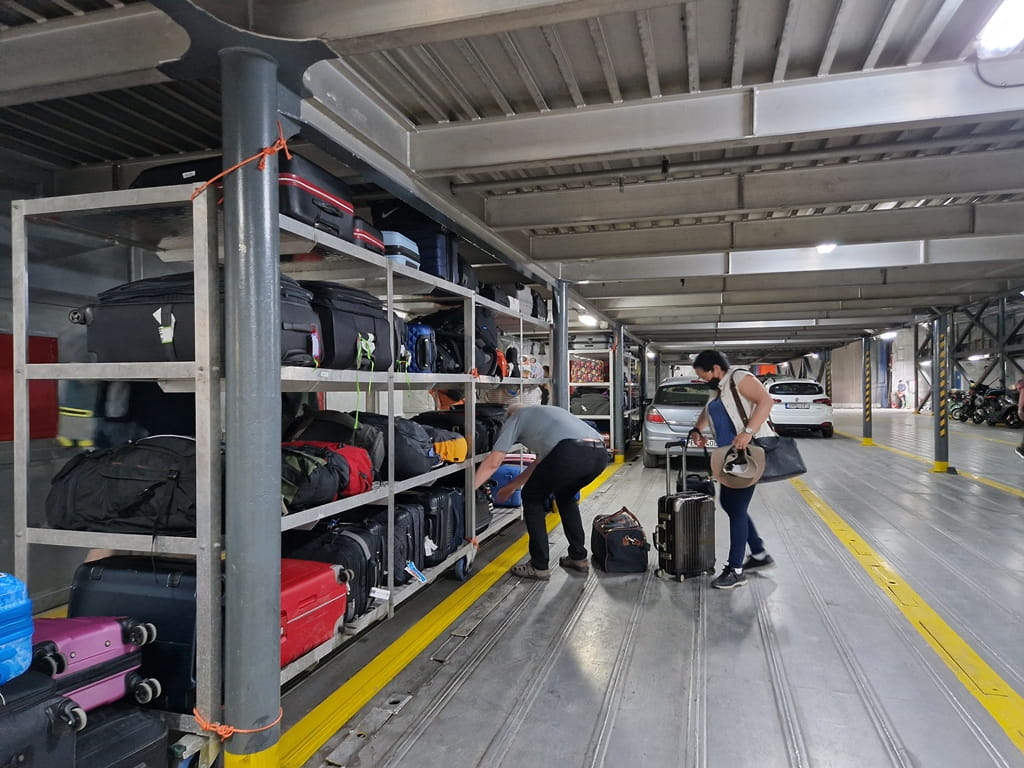
This includes valuables, travel documents, electronics, medication, or anything you may want during the trip. It’s also important to never leave valuables inside your suitcase and to always lock your luggage before placing it in the storage area.
Food on Board

Most ferries in Greece offer basic food and drink options during the journey.
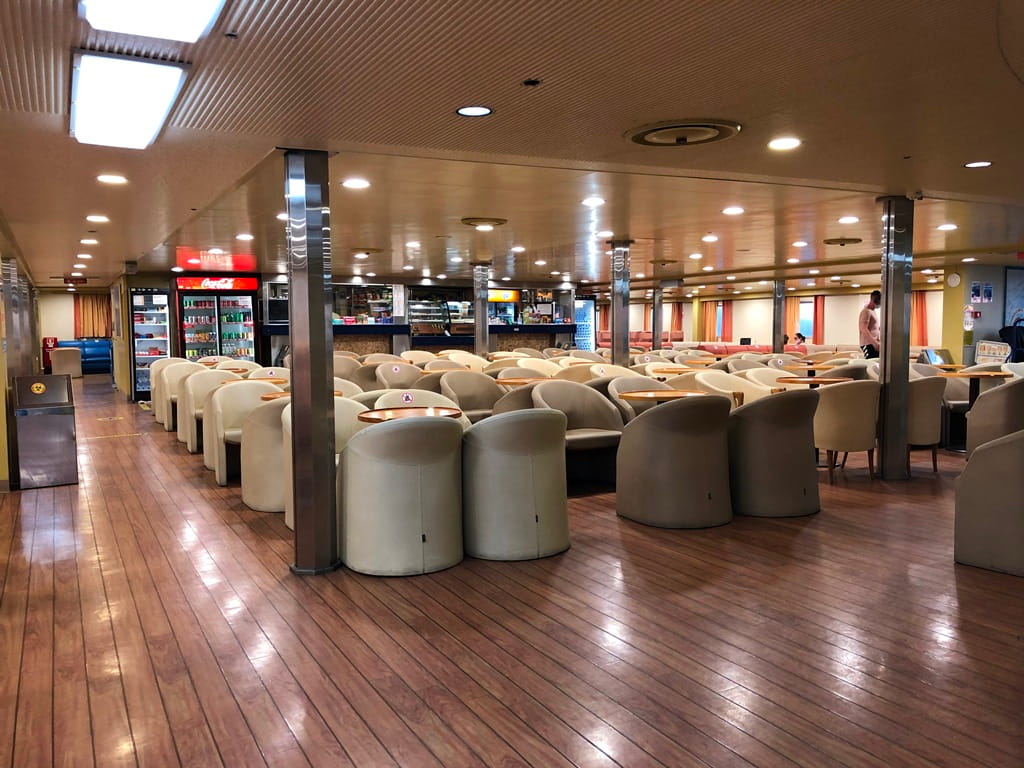
On board, you’ll usually find a café or snack bar where you can buy coffee, soft drinks, sandwiches, and light meals. On longer routes, the options are often more varied, and some ferries may also have a more organized restaurant-style area.
That said, prices on board tend to be higher than on land, and the selection can be limited depending on the ferry.
For this reason, many travelers choose to bring their own snacks, water, or even a light meal, especially on longer trips.
Local Tips: Weather, Comfort & Common Mistakes
A few small details can make a big difference when traveling by ferry in Greece, especially depending on the season.
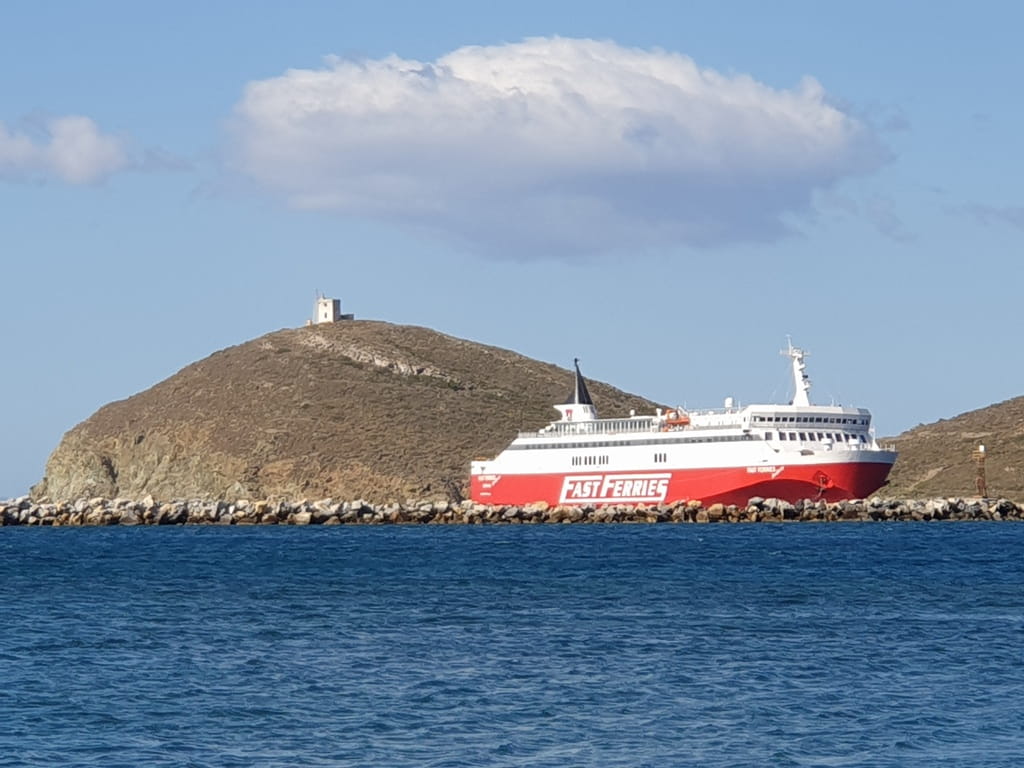
Weather plays an important role. Strong winds, known as the meltemi, are common in summer and can affect ferry schedules, causing delays or cancellations. In winter, ferries are also frequently affected by wind and rough seas, so disruptions are not unusual.
Because of this, it’s always a good idea to leave some flexibility in your itinerary. If you’re flying out of Greece, I strongly recommend adding a buffer day in Athens at the end of your trip, rather than planning to arrive at the airport straight after a ferry.
Another factor to keep in mind is that strikes do occasionally happen in Greece, and they can affect ferry schedules. While they’re not everyday occurrences, they’re something to be aware of when planning your trip.
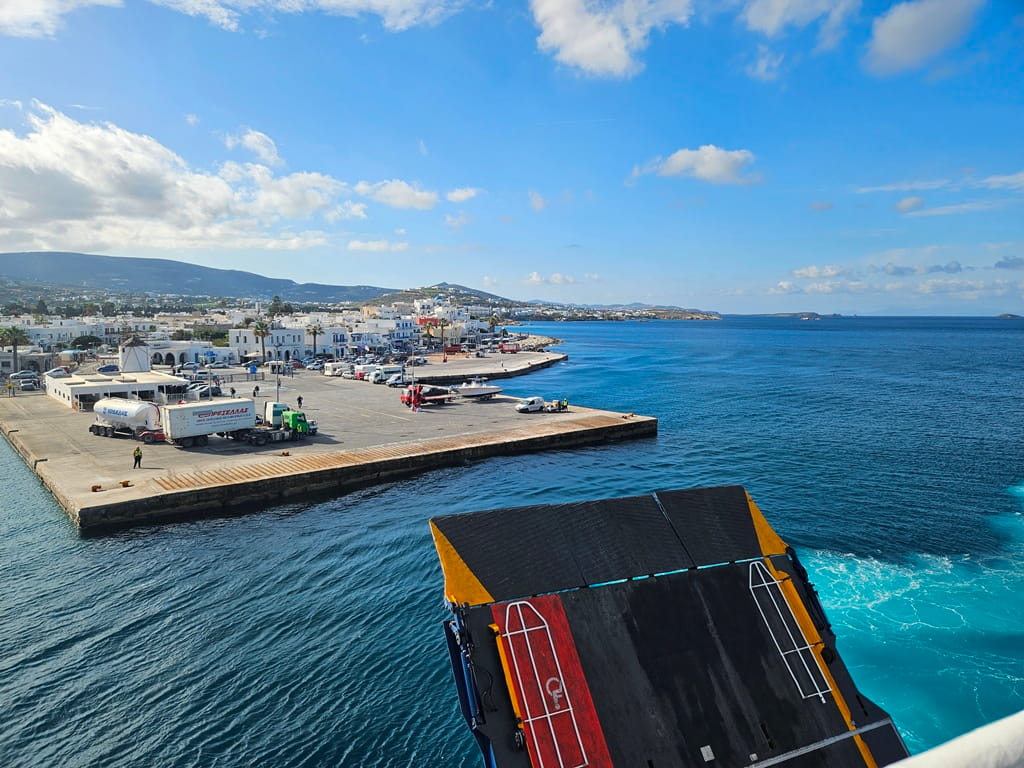
If you’re prone to seasickness, it’s worth being prepared, particularly on windy days or when traveling on high-speed ferries, which are more affected by sea conditions.
One thing many travelers don’t expect is how cold it can feel inside the ferry. Even in summer, air conditioning can be quite strong, and in winter it can still feel cold inside, so having a light jacket or sweater with you is always a good idea.
One of the most common mistakes is trying to do too much in a short time — visiting too many islands or choosing routes that don’t connect easily. Another very frequent issue is not checking the departure port in Athens, which can lead to unnecessary stress on travel day.
Traveling with Pets
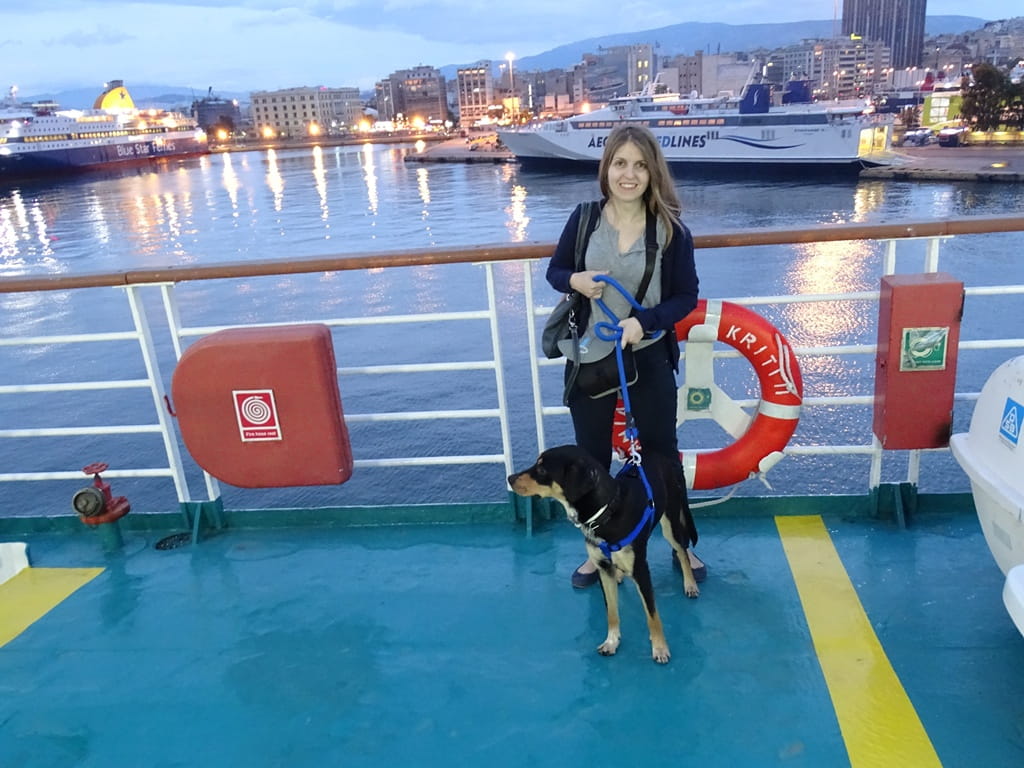
If you’re traveling with a pet, ferries in Greece are generally quite accommodating.
Depending on the ferry company and the size of your pet, animals can travel in different ways — in a carrier, in a designated outdoor area, or in a pet-friendly cabin on larger vessels.
Smaller pets are usually kept in carriers and can often stay with you, while larger animals may need to use specific areas on board or travel in a kennel space.
Pets typically need their own ticket, but the cost is usually minimal or even free, depending on the company and the type of travel.
You may also be asked to show a pet passport or health booklet, and for larger dogs, a muzzle may be required.

If you’re planning to book a pet-friendly cabin, it’s best to do so in advance, especially during the summer, as availability is limited.
Ferry travel is a big part of exploring Greece, and once you understand how it works, it becomes much easier and often part of the experience itself.
With a bit of planning, it’s a simple and enjoyable way to move between destinations and explore the islands at your own pace.